New · The first release powered by Carrot AI
Every visual field, objectively staged.
AI Severity Index is the first AI-powered assistive tool for objective visual field severity staging. It stages each reliable 24-2 as Normal, Mild, Moderate or Advanced, right inside the Carrot report you already read.
5M+
exams completed in the US & Canada
2.5k
eye care clinics prefer Carrot
6x
average ROI
Already on Carrot? It's in your 24-2 reports now, on Basic and Pro. Log in
Get a demo
See AI Severity Index on a real 24-2 report, plus the rest of the Carrot platform, in 20 minutes.See it on a real 24-2 report in 20 minutes.
Design preview. On carrot.io, the live demo form loads here.
Trusted by 2.5k+ practices








Why it matters
Severity shouldn't depend on who reads the report.
One clinician reads a field as mild loss. Another reads the same field as moderate. That isn't a lack of expertise. For decades, severity staging has relied on subjective interpretation of complex data, and it leaves the hardest questions to you.
- How severe is this loss?
- Is this real change, or noise?
- Should I monitor, or refer?
- Can I explain this decision later?
Deeper tone = greater loss
AI Severity Index Carrot AI
An illustration of the report layout, not patient data. Tap a stage.
One objective reference point.
AI Severity Index applies the same method to every reliable 24-2, so every provider in your practice starts from the same objective stage. Your clinical judgment decides what happens next.
How it works
Nothing changes in the test. Everything changes in the report.
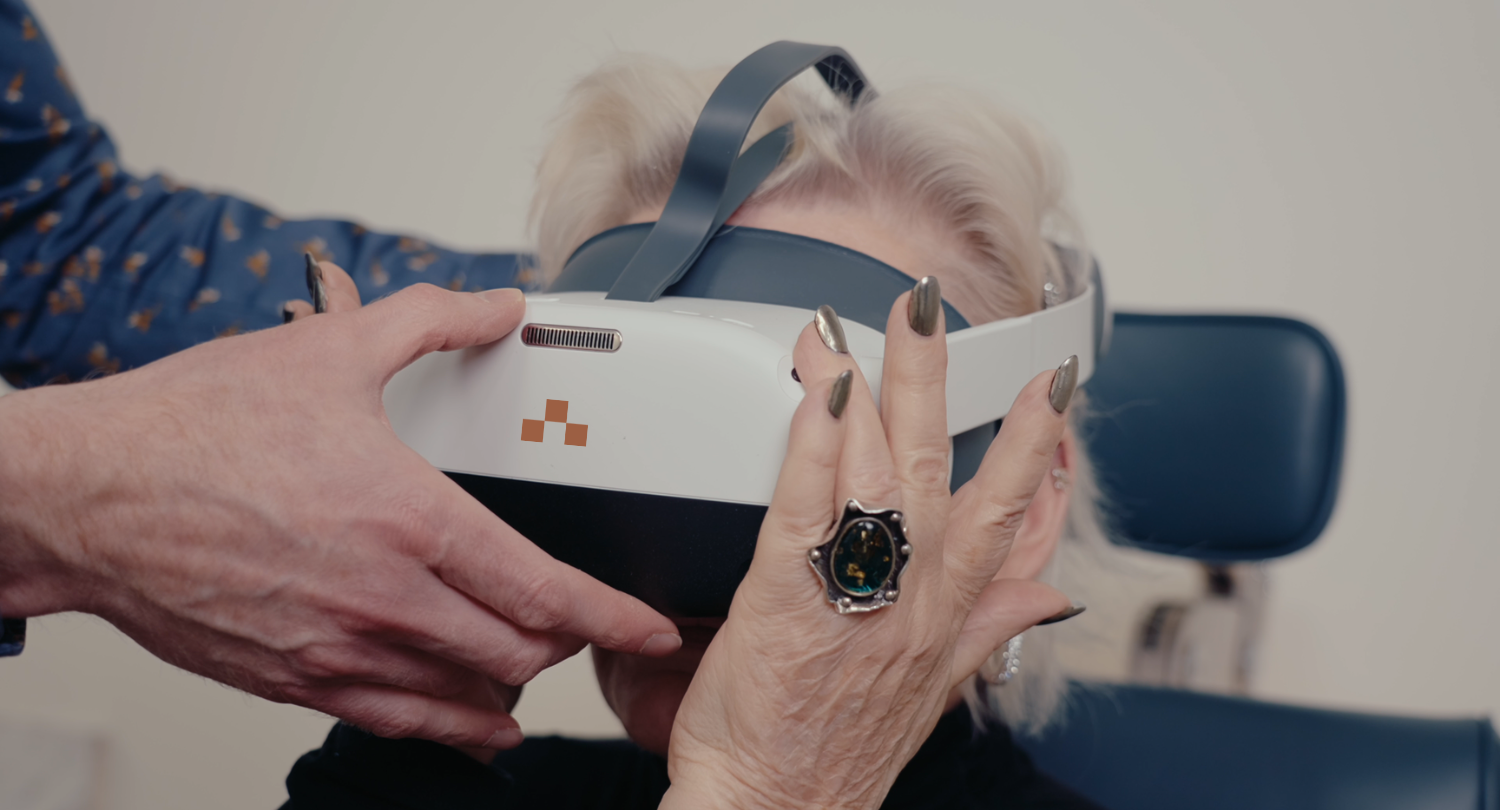
Patients take the same 24-2 on the same headset. Your doctors get an objective stage in the report, with nothing new to install or learn.
Run the 24-2
The same test on the Carrot headset. No extra technician steps.
Open the report
The redesigned 24-2 report, organized around how clinicians review.
See the stage Carrot AI
Normal, Mild, Moderate or Advanced, generated automatically beside MD, PSD and VFI.
Make the call
Use it as a second set of eyes. You stay responsible for interpretation and care.
The science
The data determined the stages.
AI Severity Index wasn't trained to copy anyone's labels. Using unsupervised machine learning, the model found objective severity groups in real-world visual field data, then set the thresholds between them.
50,000
Reliable 24-2 visual fields
Drawn from one of the world's largest VR visual field datasets.
4 groups
Found in the data
Patterns of total deviation formed four distinct, objective severity groups, with no expert labels supplied.
Locked
Same data, same stage
Objective mean deviation thresholds separate the stages, and a fixed, non-generative model returns the same stage every time.
How it compares with expert-defined staging
| Expert-defined frameworks, such as Hodapp-Parrish-Anderson | AI Severity Index | |
|---|---|---|
| How stages are set | Predefined clinical criteria and expert thresholds | Found in the data by unsupervised machine learning |
| How they're applied | Manually, by each reviewer | Automatically, in every reliable 24-2 report |
| Consistency | Can vary with the reader's interpretation | The same method for every field and every provider |
Expert-defined frameworks remain foundational to glaucoma care. AI Severity Index is a complementary, objective reference point.
Who it's for
Built for everyone who reads a visual field.
Optometrists
A second set of eyes when the call is yours: an objective stage to check your read against, standardized severity language for referrals, and a stage patients can understand.
Ophthalmologists
A data-derived framework you can examine: unsupervised learning on 50,000 reliable fields, objective mean deviation thresholds, and clearer referral context from optometry partners.
Practice owners
Visible AI with no added workflow: no new testing steps, software or training, and it's included on Basic and Pro.
Multi-location groups
One framework across every provider: more consistent review across sites, easier onboarding for new clinicians, and standardized severity language for quality initiatives.
Augmentation, not automation
Built to support clinicians, not replace them.
AI Severity Index adds an objective reference point to your review. Every clinical decision stays with you.
What it is
- An assistive AI tool for objective severity staging
- A standardized reference point inside the 24-2 report
- A second set of eyes during report review
- Built for visual fields, not retrofitted from generic AI
What it isn't
- A diagnostic or glaucoma detection tool
- A treatment or referral recommendation
- A replacement for clinical judgment
- An autonomous decision-maker
AI Severity Index is an assistive AI tool designed to support visual field review. It is not a diagnostic tool and does not replace clinician judgment, diagnosis, treatment decisions, or patient management. Clinicians remain responsible for all clinical interpretation and care decisions.
Our partners
Built by leaders in glaucoma, ophthalmology and AI.
AI Severity Index was developed with Eyelomics, the ophthalmic AI company behind the methodology.
Recorded live at Eyes on Glaucoma
Go behind the science.
Dr. Siamak Yousefi and Dr. Rehan Ahmed discuss why severity staging is hard, the machine learning behind AI Severity Index, and what objective AI support means for glaucoma care.
Exclusive to Carrot
Built on the most widely used VR testing platform in eye care.
AI Severity Index runs on Carrot, the platform behind validated VR visual fields and 15 exams on one portable headset.
6M+
eye exams run on Carrot
2.5k+
clinics, from independent practices to enterprise networks
15
exams on one portable headset
r = 0.93
Visual Field Index correlation with the Humphrey 24-2 SITA Standard (ASCRS)
2.4 min
faster per visual field than standard perimetry, with fewer false positives (Stony Brook)
p<.001
patients rated ease, clarity, comfort and focus significantly better (Weill Cornell / NewYork-Presbyterian)
Chiang H, Hoang A, Waldman C, Rubin JM. ASCRS 2020 · Nanti NB, Lenoci J. IOVS 2021;62:3486 · Li A, Lee K, Vassiliou N, Petrakos P. Weill Cornell / NYP, 2023. Individual results vary. See the clinical evidence
Which plans include AI Severity Index?
Which tests does it stage?
Does it diagnose glaucoma?
Will the same field always get the same stage?
How was it built?
Does my technician need to do anything differently?
Can I see it before I commit?
See AI Severity Index in action.
In 20 minutes, see objective severity staging in the redesigned 24-2 report, plus the rest of the Carrot platform.
Get a DemoAI Severity Index is an assistive AI tool designed to support visual field review. It is not a diagnostic tool and does not replace clinician judgment, diagnosis, treatment decisions, or patient management. Clinicians remain responsible for all clinical interpretation and care decisions.