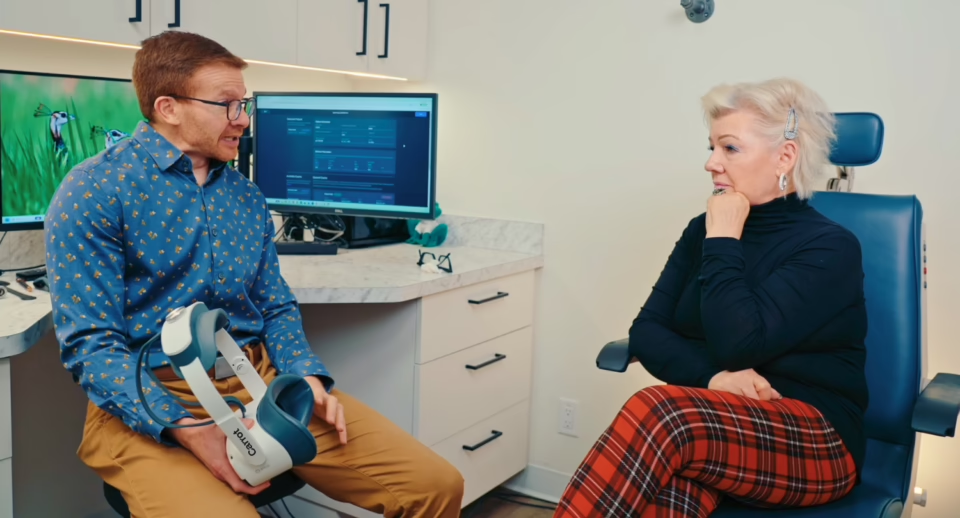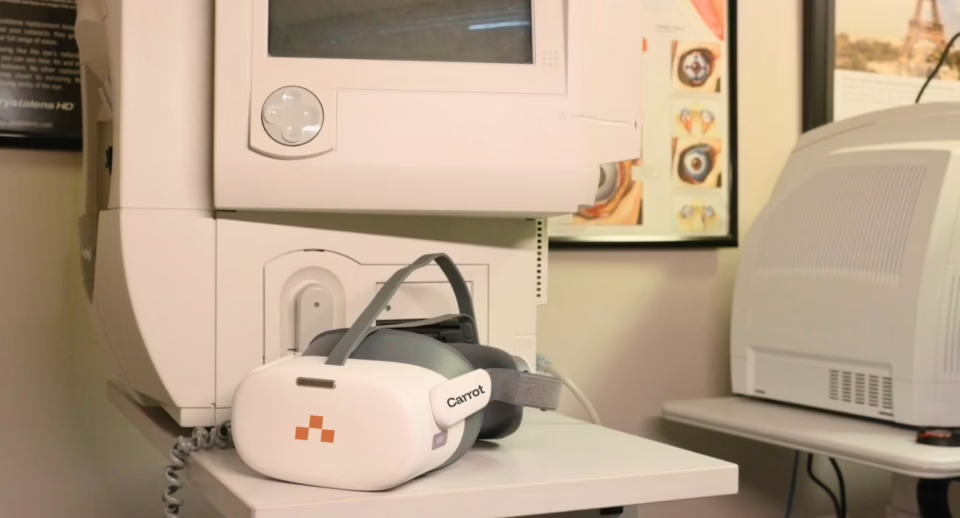
Perimetry, crucial in eye care, traditionally relies on tabletop perimeters but faces limitations in mobility and accessibility. Virtual perimetry, a portable and flexible option, actually complements tabletop devices by delivering accurate results with added accessibility and minimal overhead. This article dives into the transformative potential of virtual perimetry, exploring its benefits in improving diagnostic accuracy, streamlining workflows, and delivering patient-centric care, helping eye care professionals provide a more efficient and enjoyable experience.
Understanding Virtual Visual Field Testing
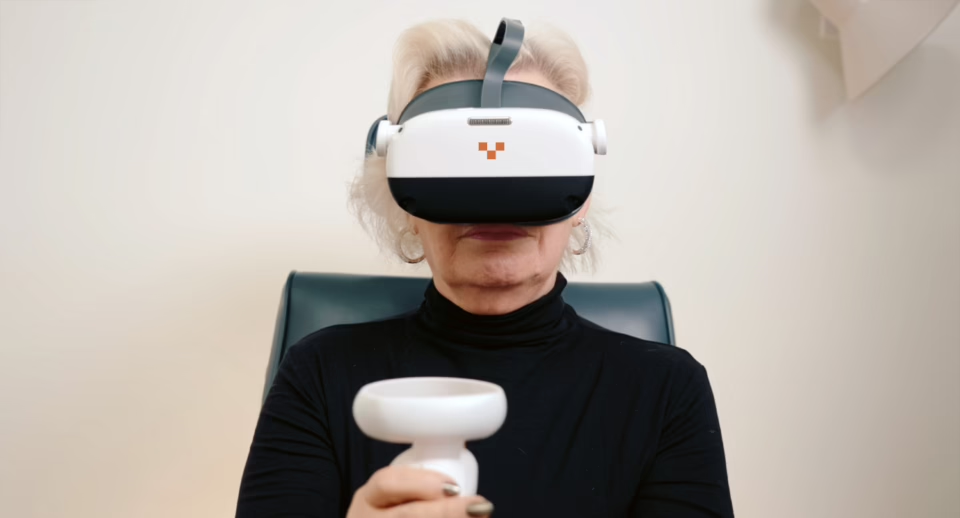
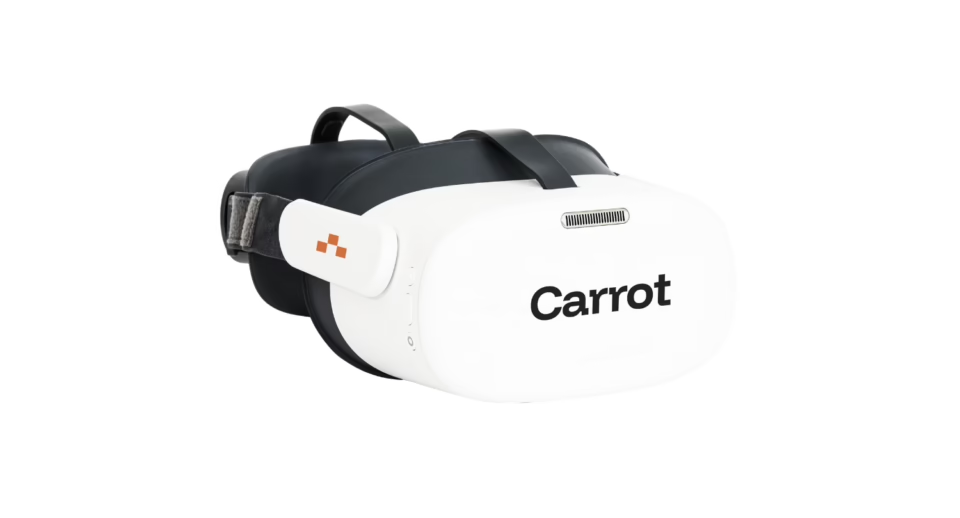
Virtual visual field (VVF) testing utilizes portable devices to assess a patient’s visual field. Unlike traditional tabletop perimeters, which are stationary and require a dedicated space in the clinic, virtual perimeters are compact and can be used in various settings. These user-friendly devices use a headset to project visual stimuli and record responses, making the testing process more flexible and accessible.
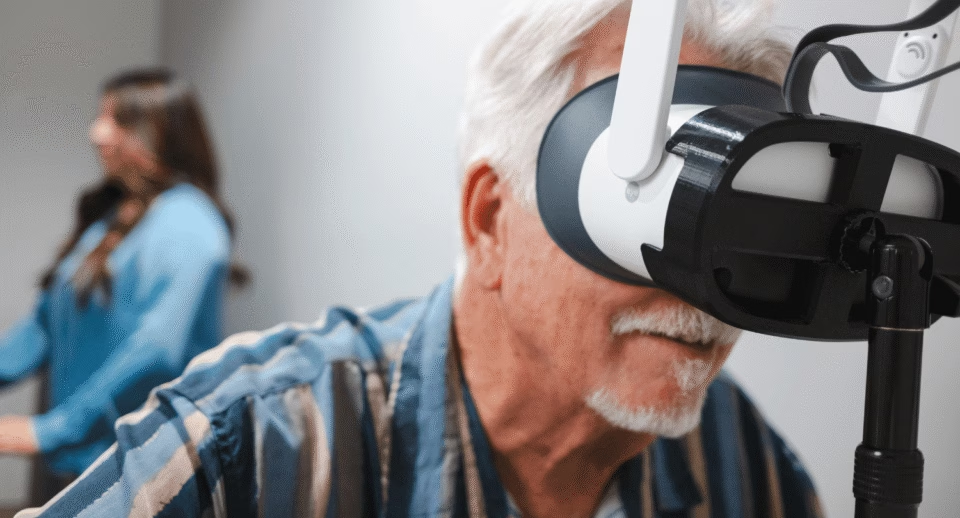
Key differences between virtual and traditional tabletop perimeters include size, portability, ease of setup, and price. Virtual perimeters are lightweight and wireless, enabling quick deployment and testing without extensive calibration. This portability is particularly advantageous for patients with mobility issues or those in remote locations, as it brings essential diagnostic capabilities directly to them. The ease of use of virtual perimetry also enhances patient comfort and compliance, potentially leading to more accurate test results.
Complementing Existing Diagnostic Tools
Virtual perimetry can complement existing diagnostic tools like tabletop perimeters by offering additional benefits such as:
- Extended Accessibility: Patients with mobility issues or who typically require an interpreter can take a visual field exam without difficulty.
- Enhanced Patient Experience: Even patients without mobility issues will benefit from the headset’s comfort and ease of use.
- Time Savings: Not only does Carrot allow multiple exams to be queued at once if you have more than one headset, but the department of ophthalmology at Stony Brook University found that, on average, Carrot tests were 2.4 minutes shorter.
Cost-Effectiveness of Virtual Perimetry
Although you may assume virtual visual field devices are expensive, it’s actually the opposite. Virtual perimetry is cost-effective, resulting in potential savings on cost, space, and maintenance. Let’s break this notion down.
The cost of Carrot starts as low as $199 per month, and there’s no additional cost for ongoing maintenance, as it comes with a lifetime warranty. If the average reimbursement for one visual field exam is roughly $65, it only takes a few exams per month to pay it off. Any additional exams are purely profit.
What’s more, the device is small, so it doesn’t need a dedicated exam room. This allows you to be more flexible with your office space, potentially saving money on overhead.
Integrating Virtual Perimetry into Your Practice
Integrating virtual perimetry into your practice is straightforward and minimally disruptive. The device’s portability and user-friendly interface allow for quick setup and operation, fitting seamlessly into existing workflows.
In fact, Dr. Alexandra Copeland, optometrist and owner of Innovative Eye Care, was drawn to Carrot for its ease of use. The device was seamlessly incorporated into her existing pretest workup routine alongside auto-refractor tests and Optos pictures. In Dr. Copeland’s case study, it was also reported that she found the onboarding experience to be smooth and user-friendly, with an intuitive, quick-start guide and helpful training resources.
Here are four tips on how to integrate virtual perimetry without disrupting existing workflows:
- Pilot Testing: Ease into virtual perimetry by starting with a small-scale pilot program within your practice. This approach allows you to gather valuable feedback from both staff and patients, identify areas for improvement, and gradually integrate the technology into your clinic’s operations without major disruptions. Carrot makes this easy with a risk-free 30-day trial.
- Training and Education: Invest time and resources in comprehensive training for your staff. Ensure they are proficient in using virtual perimetry devices and accurately interpreting results. Carrot offers training videos, a quickstart guide, an online user manual, and unlimited onboarding staff calls to help facilitate this process. Ongoing education sessions can cover best practices, troubleshooting common issues, and optimizing patient interactions during virtual visual field testing.
- Streamlined Workflow: Integrate virtual perimetry seamlessly into your existing clinic workflow. Designate specific times or rooms for virtual visual field testing to avoid conflicts with other appointments. Utilize electronic medical records (EMR) systems to streamline data entry, result documentation, and communication with patients, ensuring a smooth and efficient process.
- Patient Engagement: Engage with patients effectively by clearly communicating the benefits of virtual perimetry. Highlight the convenience for those with mobility challenges. Provide educational materials and seek patient feedback to enhance their experience and address their concerns.
Comparing Results – Carrot versus Humphrey Visual Field
Study #1: A study conducted at Stony Brook University compared Virtual Visual Field (VVF) testing using the BOLT strategy from Carrot with traditional Humphrey visual field testing. The results showed that VVF is comparable in accuracy to Humphrey, with no significant differences in mean deviation or fixation losses, and notably fewer false positives. Additionally, VVF testing proved to be more efficient, reducing test duration by an average of 2.4 minutes. These findings suggest that VVF offers a viable, cost-effective, and more patient-friendly alternative to conventional methods, supporting its further evaluation and use in clinical settings.
Study #2: A study assessing Carrot against the Humphrey Field Analyzer (HFA) in subjects with glaucoma or optic nerve head disease found that Carrot provides functionally comparable results, making it a viable, portable, and low-cost alternative for perimetric testing. Both devices were used to test one eye of 43 subjects, showing a strong correlation in mean deviation (MD) and pattern standard deviation (PSD) across tests. Despite some differences in reported decibel values due to different background luminances affecting retinal adaptation and a slight variance in defect detection, overall disease identification was consistent between the two devices. This parity underscores Carrot’s potential as an effective tool in diverse clinical settings, especially where traditional, bulkier perimetry systems are impractical.
Study #3: A study comparing the Carrot to the Humphrey-Zeiss 24-2 Sita Standard in established glaucoma patients revealed strong correlations between the two devices in visual field index, mean deviation, and pattern deviation, with Pearson’s correlation coefficients of 0.93, 0.85, and 0.79, respectively. Although the Carrot demonstrated slightly lower visual field index and mean deviation values, the overall results showed good to excellent agreement in their ability to measure visual field defects. This supports the potential of Carrot as a cost-effective, efficient, and virtual alternative in clinical practice settings, maintaining accuracy in visual field testing comparable to the established Humphrey standard.
Please note: As with any new machine, make sure to rebaseline your patients. When comparing results with another visual field machine, do not directly compare the absolute value graph (top left) or the grayscale graph (bottom left). Instead, compare the general pattern shown on the total and pattern deviation graphs. The exact deviations will vary between devices.
Professional Feedback
Testimonial by Dr. Taylor Hall, OD/MD – Dr. Hall, an optometrist at Price Vision Group, praises Carrot, due to its accessibility. She said not only is it easy for optometrists and their staff to incorporate into their offices, but also for patients to use and understand.
“I have so many patients with physical limitations, whether it’s wheelchair-bound, Parkinson’s, or something that’s just limiting their functionality; and so having a physical headset – something that I can place on their head and they can just take the test where they’re most comfortable – has been a total game-changer with my care,” said Dr. Hall. “Not only do I feel like their visual testing is more reliable and accurate, but the patients are happier because it’s a little bit faster and they feel like they understand more.”
Testimonial by Dr. James Murphy, MD – Dr. James Murphy, a board-certified ophthalmologist and a fellowship-trained glaucoma specialist, said that Carrot has proven beneficial in examining his older patients, many of whom have spine and neck issues, are wheelchair-bound, or otherwise have mobility and stamina limitations.
“Elderly patients love the experience of a wearable headset and, contrary to what one might assume, are very capable of reliably performing SAP if allowed a higher degree of comfort for the duration of the test compared to traditional, tabletop perimetry,” said Dr. Murphy. “There are a lot of benefits to having this technology in your office simply from a patient satisfaction perspective.”
Furthermore, Carrot’s audio instructions in 38 languages eliminate the need for interpreters, ensuring effective communication and testing for diverse populations. This feature is crucial for practices serving multicultural communities, as it enhances patient comfort and understanding, leading to more reliable test results.
A study conducted by Weill Cornell Medicine supports this claim by finding that patients prefer Carrot, over tabletop perimeters. “Overall, the VVF testing was well received by the participants, scoring high in all aspects,” the study reported. “Positive comments were largely focused on comfort – endorsing less constrained head/neck positions, lack of contralateral eye taping, and more comfortable clicker.”
Conclusion
In conclusion, virtual perimetry exemplified by Carrot is not just an alternative, but a complementary tool to traditional tabletop perimeters like the Humphrey Field Analyzer. It addresses the inherent limitations of stationary devices by offering enhanced mobility, accessibility, and patient comfort. The compelling testimonials from eye care professionals and robust findings from comparative studies affirm that Carrot provides comparable accuracy and often superior patient experiences. These attributes make it an invaluable adjunct in modern eye care practices, allowing clinicians to extend their diagnostic reach without compromising quality. By seamlessly integrating with existing workflows and diagnostic tools, Carrot helps to expand the capabilities of eye care professionals, ensuring comprehensive care that accommodates a wider range of patient needs and clinical settings. This dual-device strategy enriches perimetric practice, ensuring patients receive the most thorough and considerate care possible.