Your Comprehensive Guide to Digital Pupil Testing
Pupil reaction can be revealing. An automated pupillometry test using a digital pupillometer device provides critical insight for patients with neurological conditions, injuries, or optic neuropathies. With Carrot’s advanced tools, you can perform a portable pupil light reflex exam and assess the health of the optic nerve, brainstem, and autonomic nervous system in seconds. In seconds, you can gain non-invasive insight into your patient’s neurological health and identify health issues ranging from manageable conditions to medical emergencies.
The automated pupillometry test becomes even more efficient when performed with Carrot. Learn how you can make the most of the pupillometry test with Carrot and gain the most accurate insights possible.
Pupillometry Test Overview
The automated pupillometry test is designed to measure the patient’s pupillary reaction to light in a highly controlled, objective manner using a digital pupillometer device. Carrot’s Pro subscription includes a pupil test mode for consistent, reproducible results.
Through this exam, an automated pupillometer emits a pulse of light, then records the pupil’s response to the stimulus. It measures pupil size, the pupil light reflex, energy of the pupil movement, relative apparent pupillary defects, and other key details. The test duration can vary depending on your tools, the patient’s cooperation, and pupil response.
Pupillometry is used in both ophthalmology practices and in critical care settings. Traditional manual pupillary assessment using a flashlight may provide some insight, but it’s not quantifiable and is highly subjective. With a specialized test, you can observe and measure the pupil’s response. This way, you can diagnose and treat neurological conditions with better accuracy.
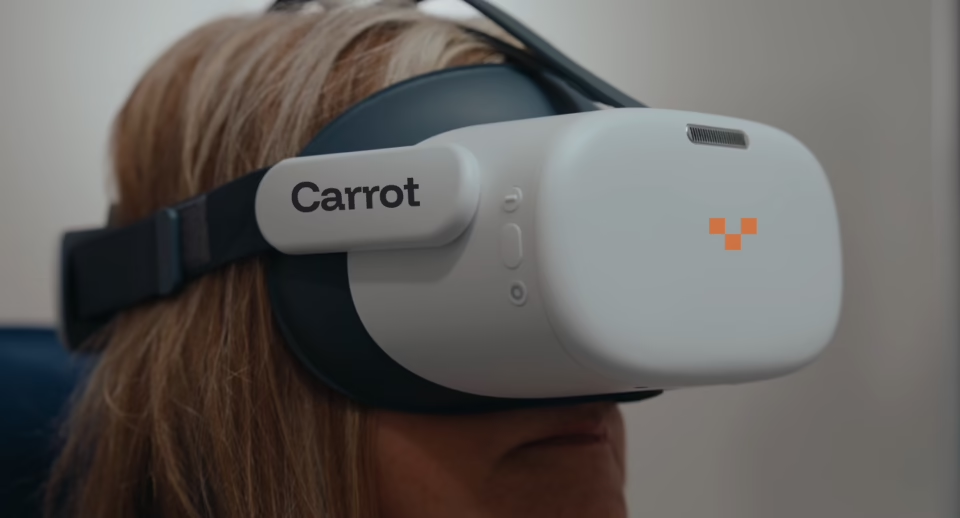
Using traditional pupillometers can require a long setup process to achieve proper fixation. It can also be an expensive investment if you only conduct this test occasionally. Carrot is a much more affordable choice for ophthalmology and optometry practices. This virtual reality headset is comfortable for patients to wear and automatically adjusts to deliver the most precise data possible, so you can make faster, more accurate clinical decisions.
For clinics exploring options to buy an infrared pupillometer alternative, Carrot offers a seamless solution with EHR integration, low overhead, and clinical-grade accuracy.
Academic references and clinical validation
As adoption of digital pupillometer devices grows in neurology and ophthalmology, studies continue to validate their value for early detection of neurological disorders.

|
Pupillometry is extremely relevant and growing in ophthalmology, neurology, oncology, and even human behavior. XR and VR are helping expand this technique’s uses and accessibility. |
|
|
Research shows that the pupillary light reflex is especially helpful in assessing patients with TBI and helping drive better outcomes. |
|
|
Pupillometry can even provide insight into general neurological behavior. This study found that pupillometry is a reliable and time-sensitive measure for sustained attention. |
Our customers realize an average of 902% return on investment with the Carrot Visual Diagnostics Platform.
The Pupillometry Test at a Glance
In its simplest form, this test measures the pupil’s response to light stimulation using a portable pupil light reflex system. These digital tools replace subjective flashlight exams with reliable, reproducible data.
Historically, this was done with a flashlight, but today automated pupillometer exams provide a detailed, objective analysis of the pupil’s responses. It’s non-invasive but highly sensitive, detecting subtle abnormalities in the autonomic nervous system, optic nerve, and brainstem — even before symptoms become apparent. It’s extremely useful, but it is limited. This test doesn’t provide insight into visual field changes, visual acuity, or any non-neurological conditions.
Pros and cons of Automated Pupillometry
The pros and cons that follow can help guide you toward the ideal scenarios to incorporate this test into your patients’ diagnostic assessments.
|
Pros
|
Cons
|

List of Ocular Diseases Monitored and Diagnoses Identified by Pupillometry Testing
|
|

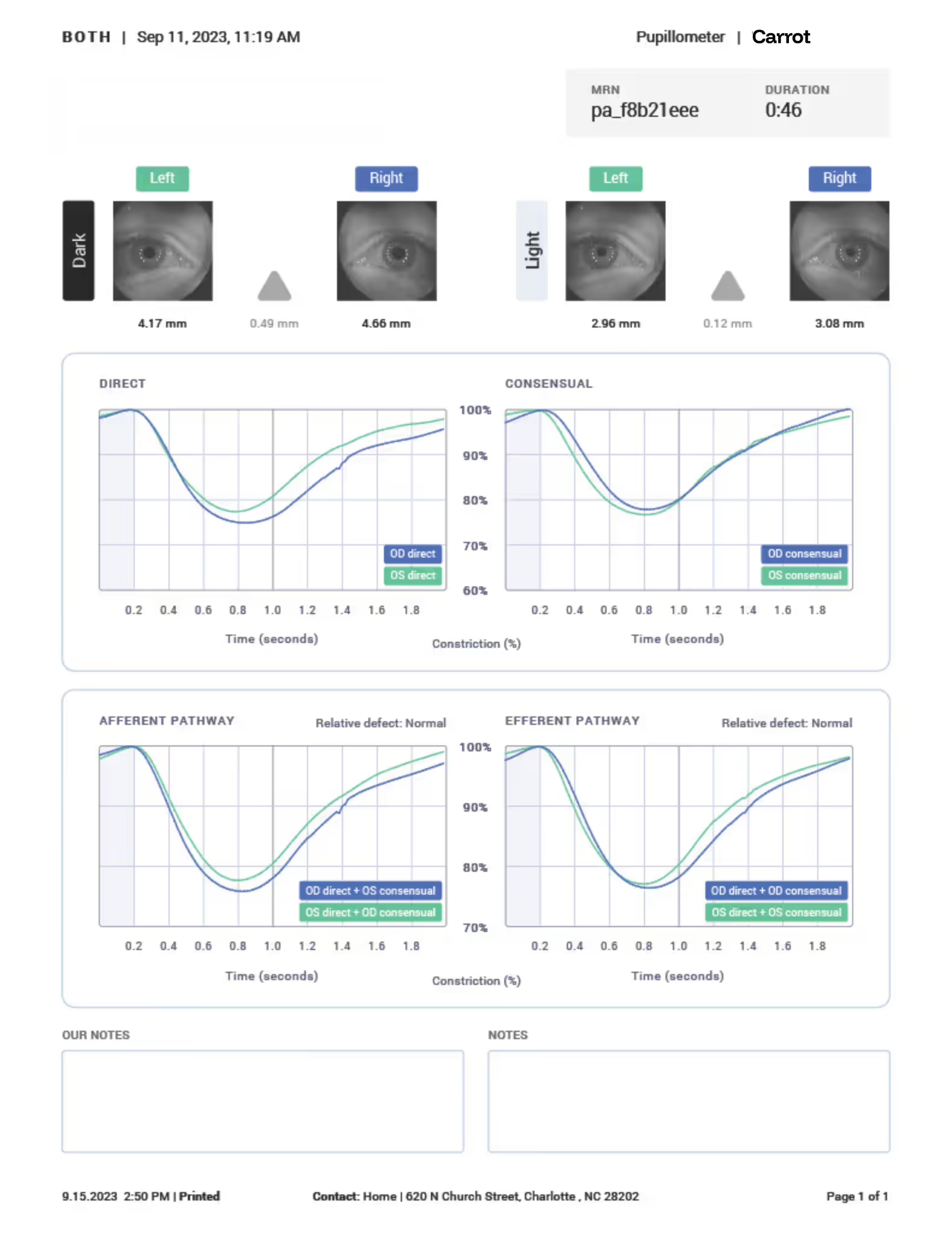
Example Pupillometry Report
Pupillometer Device for Ophthalmology Price: What to Expect
When evaluating your pupillometer device for ophthalmology, price options can vary widely depending on the technology, features, and clinical needs. At the most basic level, a manual flashlight test used for Pupillary Light Reflex assessments is inexpensive but lacks objectivity, quantifiable data, and recorded documentation.
On the higher end, dedicated handheld or desktop pupillometer devices may offer more advanced analytics but often come with a high upfront cost — sometimes reaching several thousand dollars — and require a significant upfront investment and ongoing maintenance.
The Carrot Pro subscription offers an accessible alternative: a virtual reality-based device that features pupillometry within a comprehensive vision testing suite. This solution is available through an affordable monthly subscription, significantly lowering the barrier to entry for ophthalmology and optometry practices that want to add automated pupillometry to their diagnostic toolkit without a large capital investment.
Billing and Coding for Pupillometry
The updated CPT code for this test is 95919. This code is used specifically for automated quantitative pupillometry tests, and you must interpret both unilateral and bilateral results. With Carrot, this data is instantly uploaded to your EHR to help expedite interpretation, treatment, and billing.
The Medicare Physician Fee Schedule (MPFS) indicates reimbursement between $6 and $20, depending on your location, setting, modifiers, and other practice factors.
When is pupillometry required?
This test is essential for patients with suspected or diagnosed neurological conditions, including traumatic brain injury, optic neuropathy, and autonomic dysfunction. It’s not usually part of routine screenings.
For patients with known neurological conditions, regular monitoring and pupillometry measurements can help track progression, guide treatment decisions, and measure the effectiveness of current interventions. Pupillometry is also useful for monitoring patients with high-risk conditions, such as those recovering from brain injury or surgery.
Is pupillometry required for driver’s licenses?
No, the pupillometry exam isn’t a requirement for standard driver’s licenses or CDLs. However, for patients with neurological conditions that affect pupil response — like TBI, MS, or optic neuropathy — it’s important to assess their ability to drive safely. The pupillometry exam cannot answer that question but can help inform treatment.
Start Conducting Pupillometry Exams with Carrot
Monitoring pupil response has been a key diagnostic tool for centuries, and now it’s incredibly precise — thanks to automated pupillometry delivered through a pupil test. With our digital pupillometer device built into the Carrot headset and available with a Pro subscription, you can offer a portable pupil light reflex exam at scale.
Want all 23 of our comprehensive test guides in your inbox? Fill out the form below.

Frequently Asked Questions
Carrot measures initial diameter, latency (ms), peak constriction %, velocity (mm/s), and T75 recovery time, all exported numerically and graphically. Also, with DICOM 360 Sync, available with a Pro subscription, Carrot pushes finalized exam reports automatically to your EMR/EHR. The moment the test ends, the report is securely filed in the correct PACS record and automatically paired with the correct patient record, giving doctors immediate access with zero manual uploads.
Bill 95919 (ocular vestibular-evoked test battery); append -26 if you provide only the professional interpretation.
A latency increase > 20 % or asymmetry > 0.3 mm versus baseline is linked to acute TBI, making the test valuable for return-to-play decisions.
Yes. Carrot compares right/left constriction amplitude; a ratio > 1.2 triggers an on-screen RAPD alert.
With Carrot, both eyes are captured in approximately 15–20 seconds thanks to simultaneous infrared imaging.
No. Carrot’s headset eliminates room-light variability.