Your Comprehensive Guide to the Carrot 30‑2 Test
When patients present with unexplained or vague vision concerns, increased eye pressure, migraine, or risk factors for glaucoma, the 30-2 visual field exam could shed some light on their condition. This relatively broad exam assesses 30 degrees from fixation and covers a wider area of the visual field. This way, you can identify symptoms that may or may not be noticeable and intervene proactively.
The 30‑2 is traditionally performed on tabletop perimeters in a darkened room over the course of 15 – 20 minutes, but Carrot’s neuro‑ophthalmology visual field device—a fully portable threshold perimeter — is a faster, more patient‑friendly way to conduct the exam. By incorporating the Carrot 30‑2 test into routine eye care, you can monitor changes over time and take steps to protect a patient’s sight before damage becomes permanent.
30-2 Visual Field Exam Overview: Testing with a Portable Threshold Perimeter
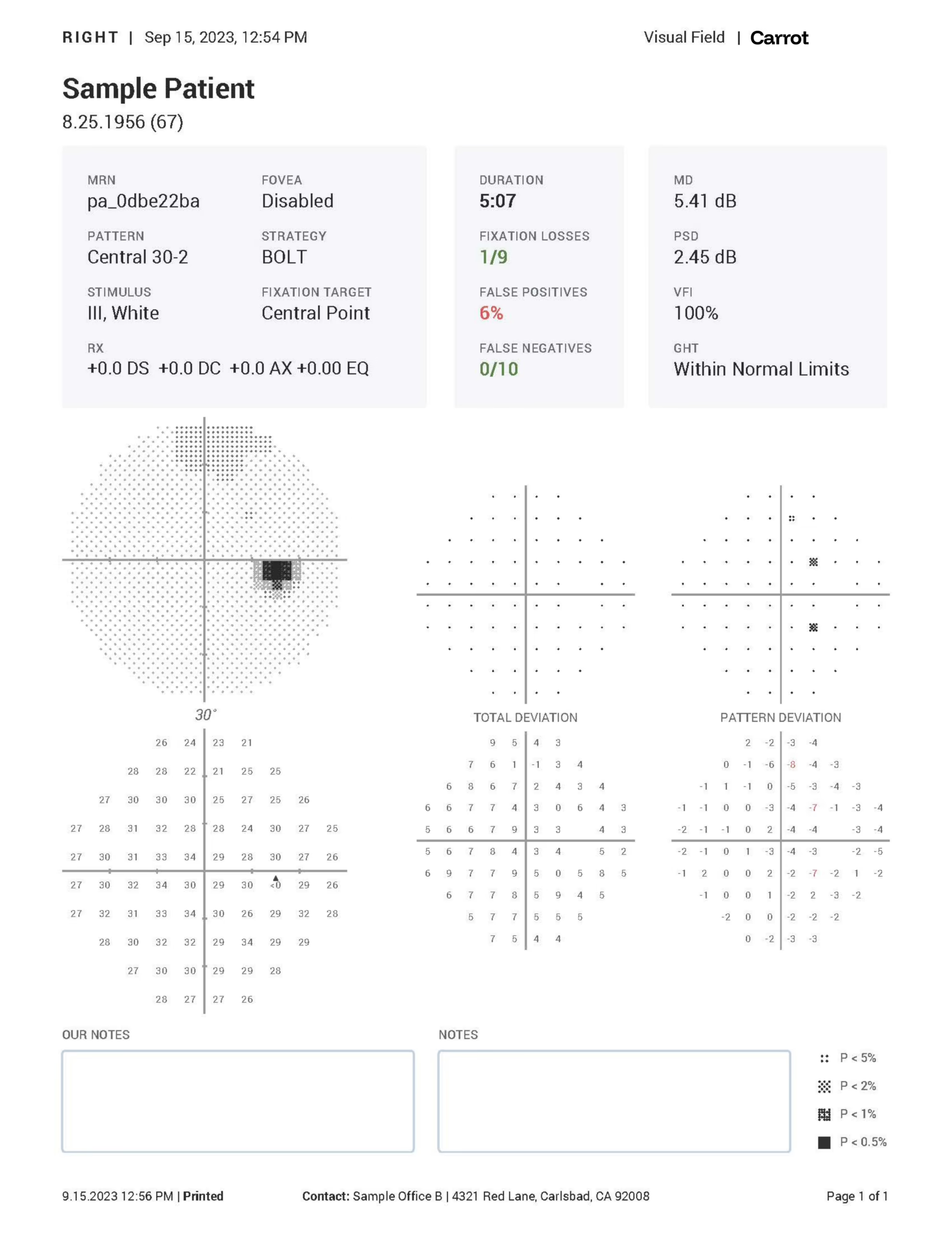
The Carrot 30-2 test assesses 76 points across the central and peripheral visual field, covering an area from the central 0° to 30° in all directions. This test creates a more complete map of the visual field compared to the 24-2 or narrower visual field tests. The 30-2 takes both the central and peripheral vision into account.
The 30-2 test is commonly used for glaucoma patients because it can detect peripheral defects and subtle changes that might otherwise be overlooked in tests that focus exclusively on central vision. It’s also useful for optic neuropathy, retinal disease, migraine, and neurological disorders. Because the 30-2 is so broad, it can also help eliminate underlying conditions that contribute to vision changes.
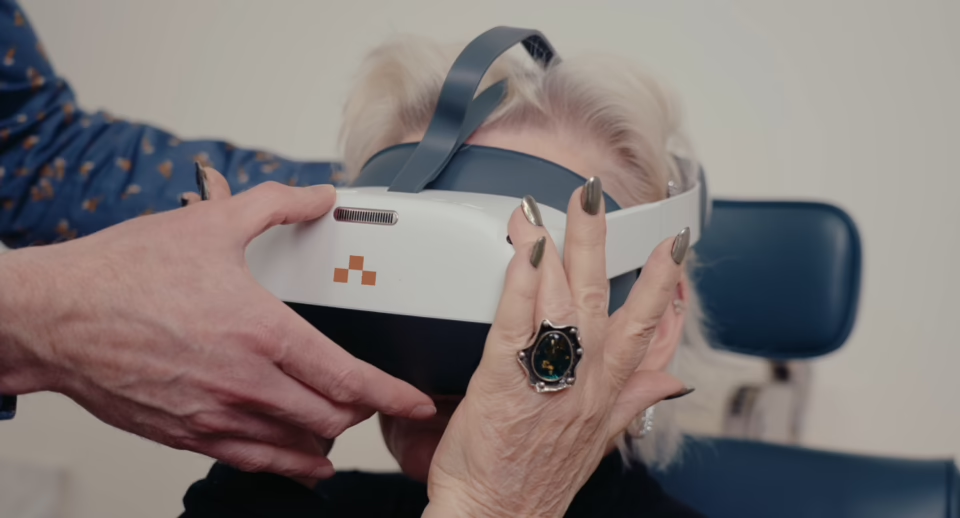
Traditionally, the 30-2 visual field test was performed in a darkened room using a tabletop perimeter device. This can be uncomfortable for patients, especially those with mobility issues or those who struggle to maintain focus. Today, a portable threshold perimeter — like Carrot’s neuro‑ophthalmology visual field device — delivers the same data in a headset form factor.
Bonus use‑case: The 30‑2 protocol also serves as a quick hemianopia assessment for stroke and tumor patients.
Academic references and clinical validation

|
A study published in the Journal of Glaucoma demonstrated that the 30-2 visual field test is effective in detecting and measuring clinically meaningful visual field progression in glaucoma patients. This emphasizes that even a 30% reduction in visual field progression could impact patients’ quality of life. |
|
|
This smaller study used the 30-2 visual field test, specifically short wavelength amplitude perimetry, to assess visual field changes in migraine patients. It revealed significant deficits in the migraine group, with some showing early signs of glaucomatous visual field loss. |
|
|
This study compared the 30-2 and 24-2 Humphrey visual field tests and found that, in most cases, the 24-2 strategy gave similar results but with less testing time and variability. However, the 30-2 test was better at detecting very subtle nerve fiber defects, making it especially useful for monitoring conditions like idiopathic intracranial hypertension. |
Clinics that implement Carrot experience an average return on investment of 902%

The 30-2 Visual Field Exam at a Glance – Ideal for Hemianopia Assessment
The 30-2 is known for being the broadest visual field exam, other than Full Field tests. This makes it an excellent tool for eliminating underlying conditions and establishing an overview of a patient’s central and peripheral vision. Patients who complain of unexplained, vague, or hard-to-pinpoint visual changes may get answers with a 30-2 exam. However, because it’s so broad, subtle visual field changes may not register with this test. Any borderline test results should be re-examined with a more sensitive test. If you’re using traditional tabletop perimeters, this could be time-consuming and exhausting for the patient.
Pros and Cons of the 30-2 Exam
The Carrot 30‑2 test helps diagnose or monitor:
|
Pros
|
Cons
|

List of Ocular Diseases Monitored and Diagnoses Identified by the 30-2 Visual Field Exam
The Carrot 30‑2 test helps diagnose or monitor:
|
|

Example 30-2 Report
Billing and Coding for the 30-2 Visual Field Exam
You can bill for the 30-2 visual field exam using CPT code 92083. This code is designated for extended visual field exams and applies to the most common tests in this category.
In the United States, the Medicare Physician Fee Schedule (MPFS) indicates reimbursement at $40 to $90, with an average of $62 per test. This amount will vary depending on location, practice setting, and other factors.
When is the 30-2 visual field exam required?
This test best detects and monitors glaucoma and other optic nerve diseases. For patients with neurological conditions, ocular hypertension, or unspecified vision changes, the 30-2 can be revealing. You may need to administer further tests for more definitive results, but the 30-2 tests have more points, so you can begin to uncover issues that would otherwise go unnoticed.
Is the 30-2 visual field test required for driver’s licenses?
Vision screening is part of the driver’s licensing process in the United States and Canada, but the 30-2 visual field exam isn’t explicitly mandated in all states. It offers valuable information relevant to driving ability, including details about blind spots. For this reason, some states specify that 30-2 test results are acceptable. For example, in Virginia, when the DMV requires a detailed visual field test, only a threshold perimetry test that measures the central 24–30° of vision is acceptable. This includes the 30‑2 or 24‑2.
Start Conducting the Carrot 30-2 Visual Field Test on a Portable Threshold Perimeter
The Carrot 30‑2 test’s applications are almost as wide‑reaching as its testing range. Collecting 76 data points from the central and peripheral fields of vision can reveal early-stage glaucoma, optic neuropathies, and AMD, and help rule out other conditions that affect vision.
The exam is highly valuable, but it can be exhausting or unreliable for patients when performed on outdated equipment. Carrot makes the 30-2 testing process much faster, more precise, and efficient with our patient-friendly headset and advanced algorithm.
Want all 23 of our comprehensive test guides in your inbox? Fill out the form below.

Frequently Asked Questions
Select 30-2 for chiasmal, optic-tract, or parietal lobe lesions or any other pathology that may cause defects beyond 24°.
Expect ≈ 5 min per eye, comparable to a Humphrey but without fixation-light fatigue.
Yes. Each eye is isolated inside the Carrot headset, eliminating the need for patching and the risk of patch slippage and enhancing fixation stability.
You can bill CPT code 92083 for any automated threshold test, including the 30-2 visual field test.
Adaptive retest logic lowers stimulus intensity only if the patient misses > 15% false-negatives, shortening total test time.
Yes, in certain contexts, you can effectively overlay data from a 30-2 visual field test on a previous MRI, especially when examining neurological conditions affecting vision. Our data export includes polar coordinates that you can import into neuro-ophth imaging suites for lesion mapping.