When you chose to be an eye care hero, you probably didn’t realize how much of your time would need to be spent worrying about technology and whether or not your systems share data and, effectively, talk to one another. The reality in today’s environment, where modern tools are patient acquisition differentiators and every minute spent searching for a patient file is lost revenue, is that technology interconnectivity — or interoperability — matters.
From streamlining workflows to preventing costly data errors, your systems’ ability to integrate and share records and images directly impacts patient care, staff efficiency, and compliance.
So, what does interoperability mean in medical imaging? And why has it been such a challenge for so long? This article provides an overview of the essential elements of this topic and introduces Carrot’s DICOM 360 Sync, a critical interoperability feature transforming what true interoperability looks like in eyecare.
What Interoperability Means in Medical Imaging
Interoperability refers to the seamless exchange of data among different systems and software used in your clinic, such as your Electronic Health Record (EHR), Picture Archiving and Communication System (PACS), and diagnostic devices, such as OCTs or visual field analyzers. When these systems connect smoothly, they automatically and accurately share patient data, images, and reports without human intervention.
In simple terms, interoperability ensures that your devices, records, and reports speak the same language.
When imaging data flows directly into the patient record, there’s no risk of lost reports, misfiled results, or wasted time retyping information. It means clinicians always have the full picture of a patient’s medical history and treatment plan easily accessible,, empowering faster, more informed care decisions.
Why Imaging Interoperability Is So Hard
The healthcare industry has made enormous strides toward digital transformation, but imaging has always presented unique challenges. Unlike text-based medical data, images are large, complex, and often generated by devices from multiple manufacturers.
Several standards have emerged to address this problem, but each plays a distinct role:
- Digital Imaging and Communications in Medicine (DICOM): The universal standard for storing and transmitting medical images and associated information. Think of DICOM as the language that imaging systems speak to exchange visual data.
- Health Level Seven (HL7): A standard for exchanging clinical and administrative data, such as patient demographics, appointments, and orders, between hospital systems.
- Fast Healthcare Interoperability Resources (FHIR): A modern evolution of HL7, designed for web-based and cloud-ready data exchange, essential for the next generation of connected health platforms.
Despite these frameworks, true interoperability can still feel improbable. Many devices in eye care are technically DICOM-compliant but require manual steps to leverage interoperability. Steps like exporting, uploading, or rekeying patient information to complete the workflow. This not only wastes time but also opens the door to human error.
The Vision: A Fully Connected, Zero-Touch Workflow
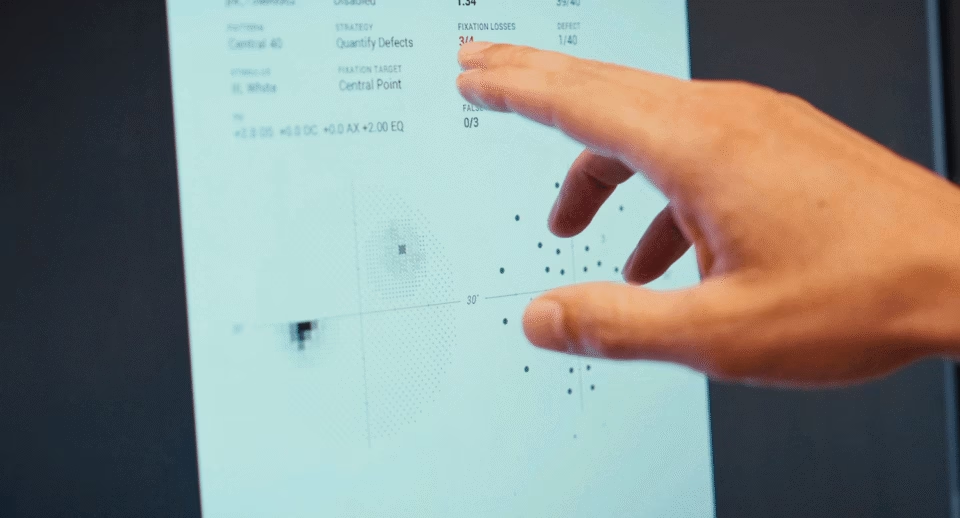
Imagine this: A patient checks in for a visual field test. Your system already knows who they are, why they’re here, and what test they need. The imaging device automatically pulls in their data, performs the test, and seconds after it’s complete, the report is securely filed in their chart, ready for the doctor to review.
Introducing DICOM 360 Sync: Interoperability That Just Works
Carrot’s DICOM 360 Sync was designed to make imaging interoperability effortless. It’s the industry’s first real-time, bi-directional sync engine that connects your imaging devices, EMR/EHR, and PACS for a true zero-touch workflow—no manual uploads, no lost files, and no waiting.
Here’s how it works:
1. Realtime Modality Worklist
DICOM 360 Sync automatically pulls patient demographics and exam orders from your EMR/EHR via PACS. There’s no typing, toggling, or guesswork—your technician simply selects the right name from the list. The correct data flows instantly into the imaging device, eliminating setup delays and transcription errors.
2. Realtime Report Sync
As soon as a test concludes, the finalized report is pushed directly back into the patient’s record. No more exporting PDFs or manual uploads. Doctors can review results immediately, improving turnaround time and care collaboration.
3. Realtime Match and Attach
DICOM 360 Sync automatically matches each report with the correct patient file. This intelligent pairing system guarantees accuracy, prevents compliance risks, and ensures that no report ever ends up in the wrong chart.
The result of this process is a fully automated imaging workflow that saves minutes per exam, eliminates manual errors, and allows clinicians to focus on what really
Matters — patient care.
Why Interoperability Matters for the Future of Eye Care
Interoperability isn’t just an IT buzzword. It’s the backbone of an efficient, profitable, and patient-centric medical practice. As the healthcare ecosystem evolves toward greater connectivity, eye care practices that embrace interoperable technology will gain a competitive edge.
Systems like DICOM 360 Sync not only streamline your workflow but also prepare your clinic for future innovations, including cloud-based imaging, AI diagnostics, and teleophthalmology. With every report syncing automatically and every dataset connected, your practice becomes more agile, more efficient, and more patient-centered.
The Takeaway
True interoperability bridges the gap between people and technology. It’s what transforms data from a burden into a tool and your imaging workflow from manual to magical. With Carrot’s DICOM 360 Sync, interoperability isn’t just a feature. It’s the foundation of a smarter, faster, and more connected eye care practice.