Your Guide to Fast Glaucoma Detection with Carrot
When patients need medical clearance for work or driver’s licensing, or are at high risk for vision loss, the C-40 visual field screening may offer the ideal balance of speed, documentation, and clinical accuracy. This fast glaucoma screening tool uses suprathreshold stimuli and fewer points than threshold exams — making it an efficient choice in busy clinics, occupational evaluations, and primary care settings with limited time or space. The Carrot C-40 test improves the patient experience by delivering this screening with a portable visual field screener that’s quick, comfortable, and EHR-integrated.
The C-40 is most often used to identify considerable vision loss among patients at high risk of moderate to severe glaucoma or optic neuropathy. It’s also ideal for follow-up assessments of patients with ongoing conditions that affect their vision. The C-40 is already fast and convenient, and when you conduct these exams using Carrot, it fits seamlessly into your patient exam workflows.
C-40 Visual Field Screening Overview
The C-40 visual field test is an efficient way to check for major vision loss in the central field, so it’s often used for occupational screenings. It measures 40 points across the central 30 degrees to detect deficiencies that may indicate glaucoma, optic nerve damage, or neurological conditions. Other visual field exams offer more insight into peripheral vision, while others have higher sensitivity. However, the C-40 is reliable for an initial screening or quick follow-up assessment. From there, targeted testing can provide more conclusive results.
Because the C-40 focuses on moderate to severe vision loss, it might not catch early symptoms, but it can flag potential problems that need further testing. Traditionally, this test was done with a tabletop perimetry device that required patients to sit in a darkened room for about five minutes per eye. Today, Carrot makes it even faster. For patients who physically can’t or resist using a tabletop perimeter, virtual reality visual field testing offers an accessible, comfortable option you can conduct anywhere in your practice.
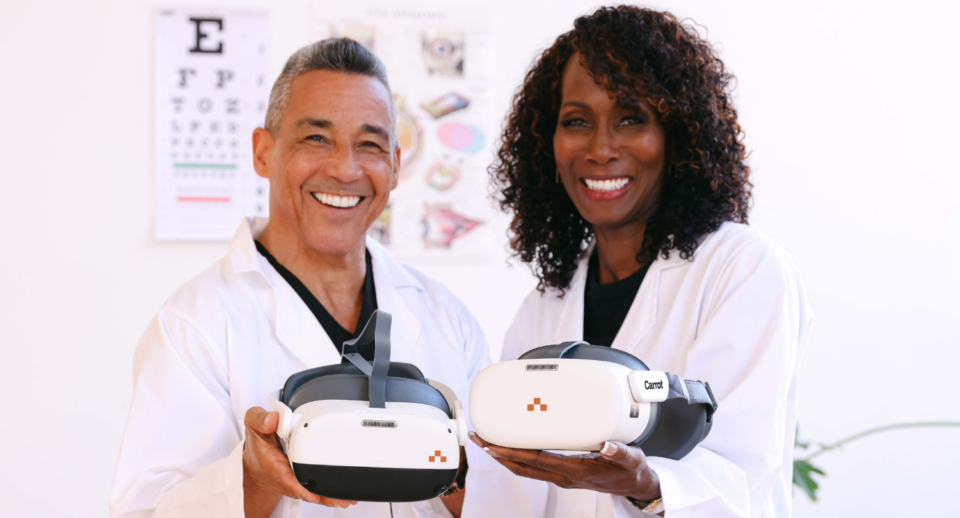
Carrot’s portable visual field screener brings this time-tested exam into the digital age — ideal for practices seeking a visual field device for primary care use.
Academic references and clinical validation
The C-40 is often cited as a reference standard or benchmark when exploring the feasibility and accuracy of techniques like SVOP.

The Carrot C-40 Test at a Glance
For new patients, those with known defects, and those needing basic clearance for occupational screenings, the C-40 is ideal for identifying more apparent issues in the central field of vision. It’s fast, low-cost, and will identify the most pressing issues affecting a patient’s vision. The exam is efficient and convenient when added to routine screenings for moderate to severe vision loss, but it lacks sensitivity for subtler defects and peripheral vision loss.
The C-40 is often used to detect glaucoma, but it can also monitor optic neuropathy, macular degeneration, and post-stroke visual impairments. If the C-40 identifies visual field deficiencies, you can administer more comprehensive tests for further details.
Because of its speed and simplicity, the Carrot C-40 test is an excellent addition to routine exams in optometry, ophthalmology, and primary care practices needing a visual field screening solution.
Pros and Cons of the C-40 Visual Field Screening
The pros and cons that follow can help guide you toward the ideal scenarios to incorporate this suprathreshold test into your patients’ diagnostic assessments.
|
Pros
|
Cons
|


List of Ocular Diseases Monitored and Diagnoses Identified by the C-40 Exam
|
|

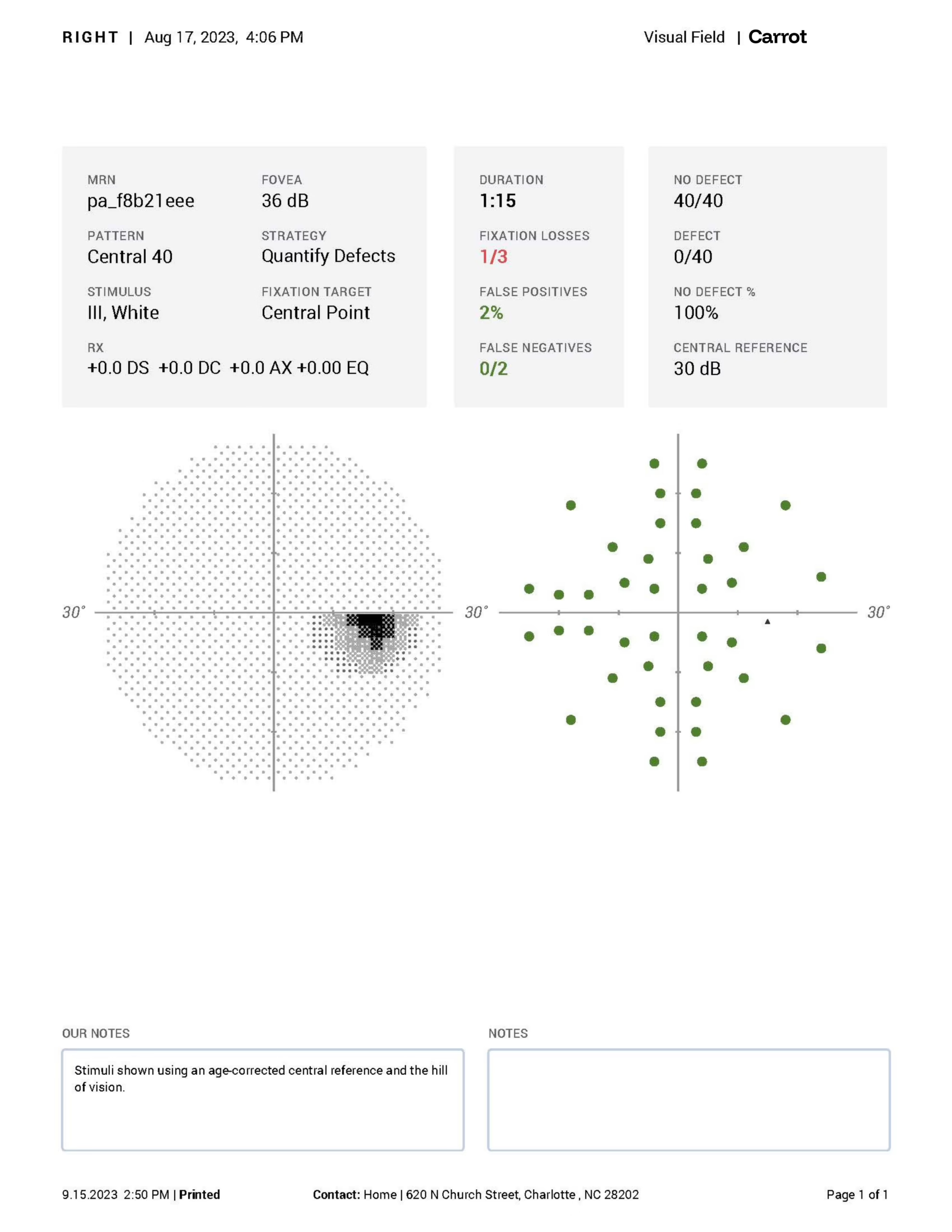
Example C-40 Report
Billing and Coding for the C-40 Eye Test
You can bill insurance for the C-40 visual field exam. This screening test falls under CPT code 92081, which is used for limited visual field exams.
The Medicare Physician Fee Schedule (MPFS) indicates reimbursement ranging from $15 to $42 per test. Your fee will vary depending on modifiers, your location, practice setting, purpose of the screening, and other factors.
When is the C-40 visual field exam required?
The C-40 is a fast, basic visual field exam that identifies moderate or severe deficiencies, so it’s well-suited for occupational screenings and driver’s licensing.
It’s often used in routine eye exams, especially for patients at risk for glaucoma, optic nerve damage, or neurological conditions. The C-40 visual field test is not as detailed as comprehensive tests, so this is typically treated as an initial screening. For patients with severe glaucoma or optic neuropathy, you may wish to offer the C-40 annually or semi-annually to monitor changes in vision.
Is the C-40 visual field test required for driver’s licenses?
No state explicitly names the C-40 as a required test for driver’s licensing, but in most states, drivers are expected to pass a visual field test. The C-40, or the Esterman, is usually used for driver’s licensing because it provides quick, concise results that identify the most serious deficiencies. For patients with borderline vision, you may wish to follow up with a more comprehensive test, such as the 24-2.
Start Fast, Effective Visual Field Screening with Carrot C-40
The C-40 visual field screening was one of the first exams added to the Carrot Visual Diagnostics Platform — and with good reason. Designed for speed, comfort, and broad application, the Carrot C-40 test brings perimetry into the modern age with a portable visual field screener that fits into your workflow and your exam room. Whether you’re performing a fast glaucoma screening, tracking vision loss from stroke, or offering a basic visual field test during a primary care visit, the C-40 is a reliable first line of assessment.
Save time, get a broad understanding of your patients’ vision, and monitor your highest-risk patients. Carrot helps you collect the most precise C-40 data possible so you can make informed decisions and give your patients a modern, comfortable experience.
Want all 23 of our comprehensive test guides in your inbox? Fill out the form below.

Frequently Asked Questions
C-40 is ideal for primary care glaucoma triage. The C-40 visual field test quickly spots arcuate or nasal-step defects that warrant full threshold testing.
Typically under 90 seconds total (≈ 45s per eye).
Use CPT code 92081 to bill for a C-40 screening as it’s an automated suprathreshold field.
No, not with a Carrot headset. Ambient light is sealed out, and the headset’s calibrated background keeps luminance constant.
≤ 5 missed points or any miss within central 10° triggers a “refer” flag. You can customize this to your preference in the Settings feature.
Carrot’s C-40 tests can be integrated into your Electronic Medical Record (EMR) system. After the test, results can be downloaded and transferred into the patient’s EMR record. Also, with DICOM 360 Sync, available with a Pro subscription, Carrot pushes finalized exam reports automatically to your EMR/EHR. The moment the test ends, the report is securely filed in the correct PACS record and automatically paired with the correct patient record, giving doctors immediate access with zero manual uploads.