Your Comprehensive Guide
Extraocular motility, or EOM, in eye exam lingo, refers to the muscular function of a patient’s eyes. Discoordination or unusual movements of the six extraocular muscles can reveal strabismus, nystagmus, or even point to underlying neurological conditions.
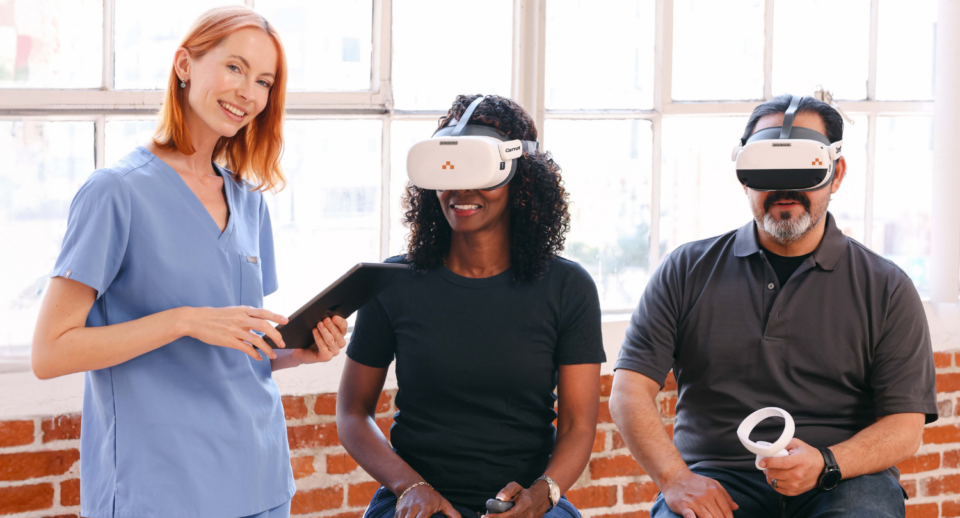
Extraocular motility testing is simple. Traditionally, this exam is performed with a penlight to observe the patient’s eye movements as they follow the light. This method is straightforward but doesn’t accurately measure subtle abnormalities. Moving this exam to Carrot’s virtual motility tool — a portable EOM testing device with real-time eye tracking — adds a pinpoint-accurate moving stimulus. Video and still images provide a clear, objective record for more accurate and efficient testing.
Extraocular Motility Exam Overview
Extraocular motility testing is a standard part of almost any comprehensive eye exam and the cornerstone of extraocular motility assessment. Moving a stimulus in an H-shaped pattern measures eye movement in up, down, left, right, and diagonal directions. The eye muscles’ movements are considered yoked to maintain coordinated vision, and uncoordinated or strained gaze can signal weakened muscles. Any disruption in extraocular muscle function can lead to misalignment of the eyes, compromising stereopsis and depth perception.
This exam is typically performed manually with a light or even a finger, but modern diagnostic tools, specifically a portal EOM test platform, enable you to improve patient throughput without sacrificing accuracy. Carrot’s eye–tracking–based eye-movement evaluation equipment removes the subjectivity inherent in traditional EOM testing methods. The stimulus is always correctly positioned, and even slight eye movements are trackable with our high-accuracy headset.
Academic references and clinical validation

|
The American Academy of Ophthalmology published a review on strabismus following extraocular muscle trauma. This resource emphasizes the importance of thorough extraocular motility testing to diagnose traumatic strabismus, which can result from injury. |
|
|
A 2021 study introduced a novel laser pointer technique for measuring ocular duction ranges. The researchers found this method was reproducible, accurate, and simple. They concluded that this technique, similar to Virtual Field, could be valuable for evaluating patients with ocular motility disorders. |
|
|
Video-oculography, or digital eye tracking technology, is a useful, objective way to test extraocular muscle function and collect objective measurements. This functionality is especially beneficial for myasthenia gravis patients. |
Did you know? Carrot is the most widely used Visual Diagnostics Platform in the United States and Canada.


The Portable EOM Test at a Glance
The extraocular motility exam is a straightforward process — patients must follow an H-shaped pattern with their eyes while you assess their muscular function. You can conduct the exam without tools, but accuracy will be lost. This test can detect misalignments and specific conditions that may not be apparent with other visual tests. EOM is a standard component of an eye exam, but it is not individually billable.
Pros and Cons of Eye Movement Evaluation Equipment
We know the EOM exam is a trusted diagnostic test leveraged by many providers, but there are pros and cons to this exam that dictate when it’s ideally used.
|
Pros
|
Cons
|

List of Ocular Diseases Monitored and Diagnoses Identified by the Extraocular Motility Exam
This extraocular motility assessment helps diagnose or monitor:
|
|

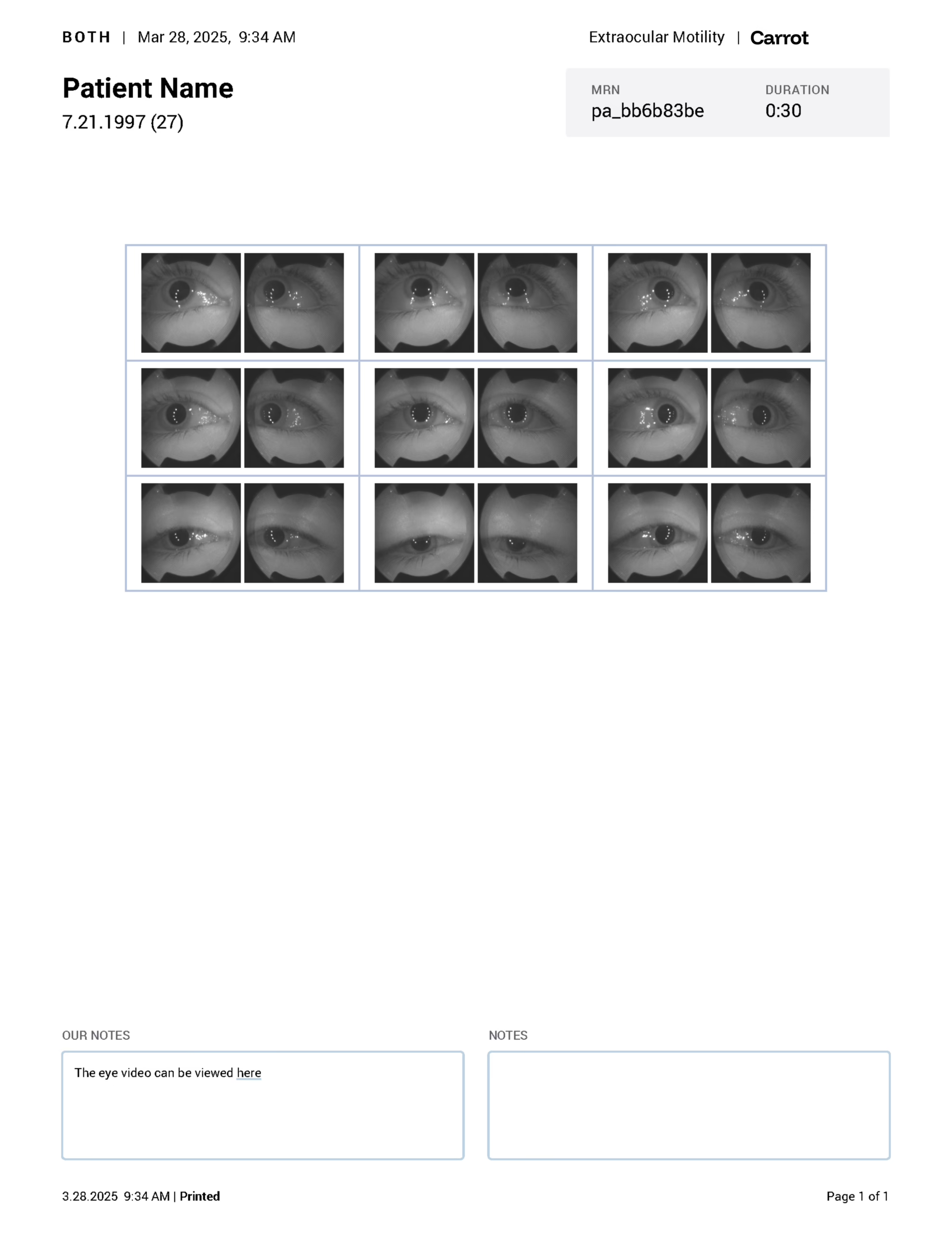
Example EOM Report
Extraocular Motility Exam Device | Buy Options and Pricing
When researching extraocular motility exam device buy options, you’ll see a steep price vs. technology curve.
A basic penlight or fixation target costs just $7–$20 but offers only a subjective glimpse of eye-muscle function. A Maddox rod/occluder kit is another low-tech option, costing roughly $20–$50, that combines tools to add phoria measurement but remains manual and lighting-dependent.
Taking a step up in capabilities, tabletop synoptophores provide comprehensive binocular analysis. An economy import starts at around $673, while branded clinical units and marketplace listings range from $2,900 to $4,500. If you want objective video records, infrared video-oculography (VOG) goggles, such as the Insight Pro+, retail for about $2,600.
Representing the most comprehensive, modern, and positive ROI technology options, Carrot’s Pro subscription with pinpoint eye tracking, automated stimuli, and instant video documentation, starting at a predictable monthly subscription cost of $359. There’s no bulky hardware to house and no maintenance contracts to sign. Whether you’re upgrading from a $20 pen-light or replacing a $3,000 synoptophore, Carrot supplies synoptophore-level objectivity and VOG-quality video at a fraction of the upfront cost, making it the most innovative way to modernize extraocular motility testing.
Billing and Coding for EOM Assessment
The extraocular motility exam is not an independently billable test. However, it can be included as one of the four exams required for billing under CPT code 92060, which covers sensorimotor examination with multiple measurements of ocular alignment and motility.
When is the extraocular motility exam required?
The extraocular motility exam is a routine part of eye care, but it’s especially important for patients at risk of eye movement disorders. If a patient reports double vision, eye strain, or trouble tracking moving objects, EOM testing can help uncover the underlying issue. It’s also a key exam for those with a history of neurological conditions, head trauma, or systemic diseases like thyroid eye disease and myasthenia gravis.
Is the EOM test required for driver’s licenses?
No, an extraocular motility exam isn’t required for a driver’s license, but that doesn’t mean it’s not relevant. Poor eye movement control can make it harder to scan the road, judge distances, or react quickly to hazards. Patients with conditions like strabismus, cranial nerve palsies, or orbital trauma may have trouble with stereopsis and depth perception. Standard driver’s licensing vision tests, like the Esterman exam or Full Field 120, are usually sufficient.
Start Conducting Extraocular Motility Exams with the Carrot Visual Diagnostics Platform
The extraocular motility exam gives a clear picture of how well the eyes move and work together. Patients with conditions such as stroke or multiple sclerosis benefit from routine testing to detect early changes in their eye movements. For those with strabismus, this exam helps measure deficiencies and inform a treatment plan.
With Carrot’s advanced eye-tracking capabilities, EOM testing is faster, more precise, and completely objective, eliminating the need for manual assessments. The controlled stimulus ensures accurate measurements, and if you’re already a Carrot Pro subscription customer, adding this test to your routine is effortless.
Want all 23 of our comprehensive test guides in your inbox? Fill out the form below.

Frequently Asked Questions
Limitation in abduction suggests CN VI palsy, elevation deficits imply CN III or IV, while isolated incyclotorsion points toward superior oblique dysfunction.
Eye tracking sensors record degrees of rotation.
No. With Carrot’s EOM test, pupil dilation and dark rooms are not necessary.
The nine-position sequence finishes in approximately 2 minutes, with immediate on-screen results for physician review.
A PDF report and video recording of the patient’s test can be exported from Carrot and saved in your EMR. Or, with DICOM 360 Sync, available with a Pro subscription, Carrot pushes finalized exam reports automatically to your EMR/EHR. The moment the test ends, the report is securely filed in the correct PACS record and paired with the correct patient record automatically, giving doctors immediate access with zero manual uploads.
Yes. Serial EOM graphs show progressive restriction or improvement after orbital decompression or steroid therapy, supporting objective treatment decisions.