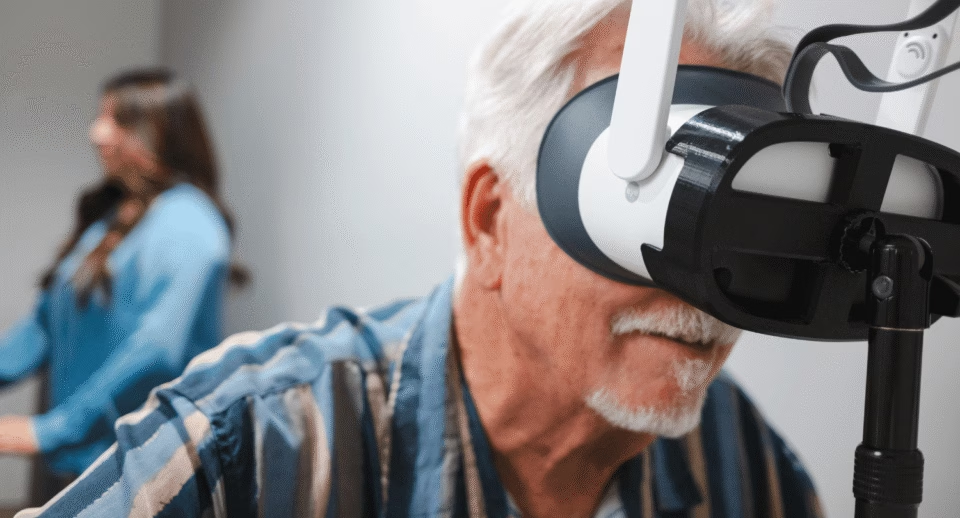
Your Comprehensive Guide to Peripheral Field Assessment with Carrot
Kinetic perimetry, often referred to as the Goldmann kinetic visual field test, uses a moving stimulus to reveal subtle and significant visual field defects. This test is especially effective for conducting a thorough peripheral field assessment, helping you detect conditions like glaucoma, stroke, and optic neuropathy before the patient experiences noticeable symptoms. With Carrot’s virtual kinetic perimeter, you can perform this dynamic test using a portable Goldmann device that fits into any modern practice setting.
This test assesses your patient’s entire visual field to identify peripheral vision loss and central scotomas. Kinetic perimetry is ideal for the Carrot headset, a Goldmann perimetry alternative device. Our high-resolution screen, automated eye-tracking, and real-time measurements translate to accurate data for quick interpretation and a smooth workflow.
What Is the Goldmann Kinetic Visual Field Test? (Overview)
In kinetic perimetry, a suprathreshold stimulus is moved across the visual field, starting outside its edge. The patient watches the stimulus move while the perimeter maps eye movements. This technique reveals the approximate size and location of scotomas to help diagnose glaucoma, macular degeneration, optic nerve damage, and other common conditions.
The Goldmann perimeter was first developed in 1945. In its day, this manual technique was an advanced method for mapping visual fields, but of course, it’s since been refined.
Carrot’s Pro subscription advances kinetic visual testing with automated eye tracking and immediate data capture. This virtual kinetic perimeter transforms how practices conduct dynamic field assessments. It’s the first portable Goldmann device of its kind, eliminating the space and labor constraints of traditional perimeters.
Academic references and clinical validation

|
Outside research shows that using virtual reality for kinetic perimetry is comparable to using a Goldmann kinetic perimeter in results, but superior in accessibility. |
|
|
When compared to static perimetry, kinetic visual field testing is shown to provide quality results — especially at the arcuate border. |
|
|
Research shows that kinetic visual field testing is useful for patients with severe visual and neurologic deficits or rare genetic conditions like choroideremia. |
Carrot is proud of its commitment to the highest security and quality assurance standards. We are SOC 2 Type 2, HIPAA, FDA, and Health Canada compliant.

The Carrot Kinetic Perimetry Exam at a Glance
Sometimes called the Goldmann perimetry test, the kinetic visual field exam measures peripheral vision by tracking eye movements as a patient views a moving stimulus. This test is especially useful to detect blind spots that static tests might miss. During this exam, the VF3 Pro allows you to observe the patient’s eye movements in real time via a camera. This capability is as close to a real-world vision test as it’s possible to get.
This test does require more patient cooperation and understanding than other exams, so it may be time-consuming or limiting for patients with language or physical barriers.
The Carrot headset uses real-time eye tracking and provides an intuitive interface for both clinician and patient. This allows you to conduct a peripheral field assessment that feels natural — as close to real-world vision testing as it gets.
Pros and Cons of the Kinetic Visual Field Test
The pros and cons that follow can help guide you toward the ideal scenarios to incorporate this test into your patients’ diagnostic assessments.
|
Pros
|
Cons
|

Conditions Diagnosed with the Goldmann Kinetic Visual Field Test Exam
Because the test is ideal for mapping how patients respond to dynamic stimuli across the entire field of vision, it functions as both a diagnostic and monitoring isopter mapping tool, especially in progressive or neuro-ophthalmic conditions.
|
|

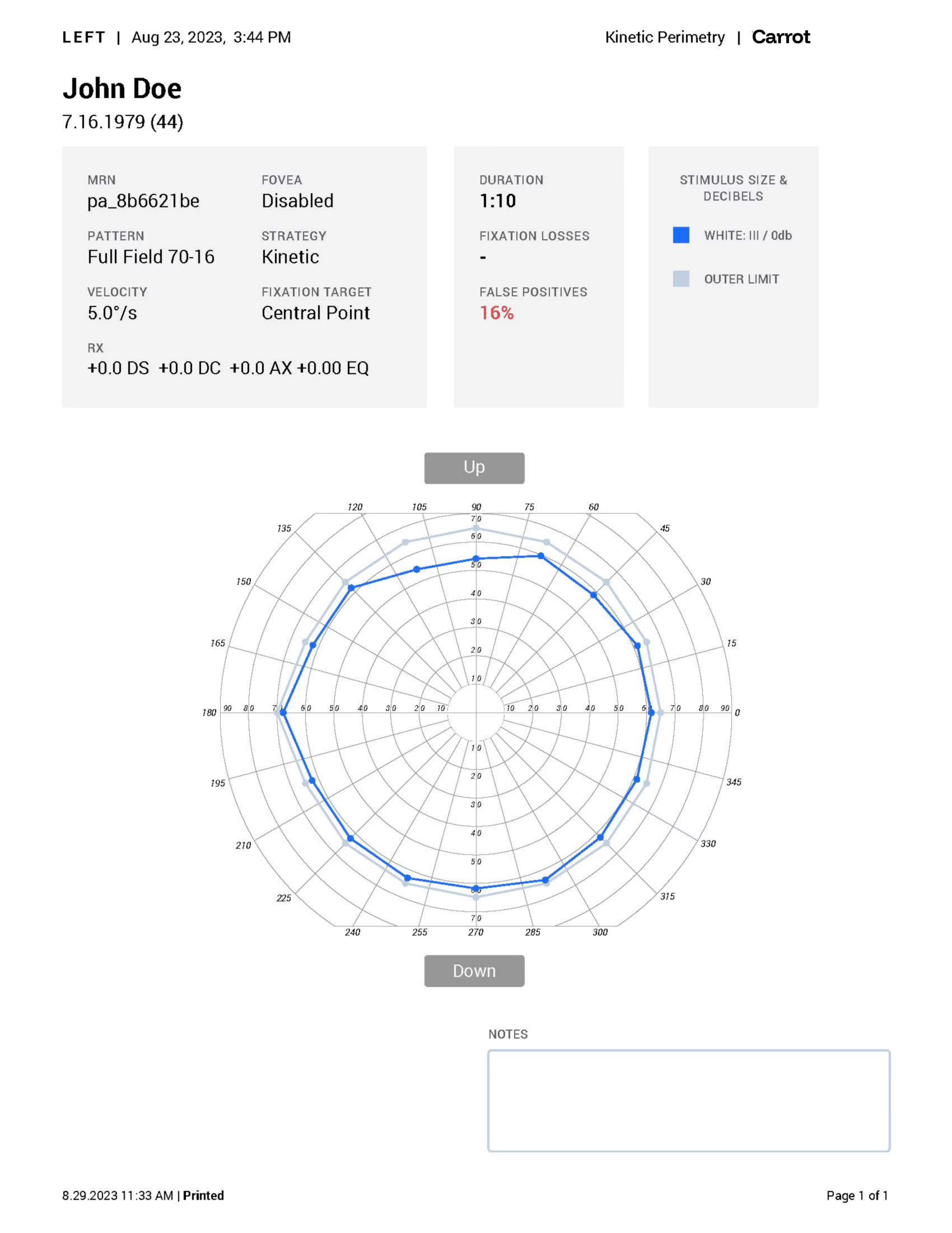
Example Goldmann Perimetry Reports
Kinetic Visual Field Tester Price
When considering your kinetic visual field tester price options, it’s crucial to consider the full range of testing devices available on the market. A traditional tabletop device, such as the Goldmann perimeter, may cost $2,500 to $6,000 upfront. A new Haag-Streit Octopus 900 Pro costs around $35,500.
Alternatively, a Goldmann perimetry alternative device and modern VR-based solution, such as the Carrot headset with a Pro subscription, delivers Goldmann-style kinetic perimetry in a portable headset at a low, affordable monthly subscription cost with no additional hardware maintenance requirements. By replacing bulky legacy equipment with advanced wearables, clinics can expand access to kinetic visual field exams without the high overhead or space requirements, giving more patients the benefits of comprehensive kinetic testing at a sustainable price.
Billing and Coding for Kinetic Visual Field Testing
Whether you use traditional Goldmann visual field assessments or a Goldmann perimetry alternative device like our Carrot headset with a Pro subscription, kinetic testing is billable to insurance.
CPT codes 92082 and 92083 apply to Goldmann kinetic visual field exams, whether conducted manually or with a virtual kinetic perimeter like the Carrot headset. For an intermediate exam with two isopters, use CPT code 92082. For extended exams with 3 or more isopters and additional details, use CPT code 92083.
Intermediate exams are reimbursed at $19 to $60 per exam, while extended tests are reimbursed at $40 to $90 per exam. Refer to the Medicare Physician Fee Schedule (MPFS) for fee details, and remember that your location, practice setting, modifiers, and other details will impact your reimbursement amount.
When is kinetic testing required?
Use the kinetic visual field exam to screen patients with suspected or known glaucoma, stroke, pituitary tumors, or optic neuropathy. This test is beneficial among patients who have defects in their peripheral vision or complain of tunnel vision. For patients with progressive conditions, you may wish to repeat this exam regularly to collect data about how the patient’s visual field changes over time.
Is the Goldmann perimetry test required for driver’s licenses?
No, this exam isn’t standard for driver’s license evaluations. That said, peripheral vision is crucial to licensing in all states, and patients with suspected or diagnosed peripheral vision loss may need additional testing before getting a driver’s license. In these cases, the Esterman or FullField 120 exams are usually recommended.
Start Kinetic Testing with the Carrot Visual Diagnostics Platform
The Carrot Visual Diagnostics Platform modernizes the traditional Goldmann kinetic visual field exam, bringing real-time tracking, portability, and improved patient comfort to your workflow. With this portable Goldmann device, you can provide dynamic assessments that detect peripheral and central vision loss earlier, without the need for a dedicated testing room.
The kinetic visual field exam provides a dynamic, real-world assessment of visual function. You can use it to diagnose and monitor a whole host of conditions, and with Carrot’s accurate, automated eye-tracking technology, your workflow will be even faster. Patients prefer our comfortable, portable headset over bulky tabletop machinery, so you can provide a better patient experience while collecting all the data you need to make informed treatment decisions.
Want all 23 of our comprehensive test guides in your inbox? Fill out the form below.

Frequently Asked Questions
The Carrot headset projects moving stimuli into a head-mounted display, while the patient presses a controller when targets enter the patient’s field of view. Built-in eye-tracking records isopters just as a tabletop Goldmann would, minus room-size hardware.
Kinetic mapping is crucial for retinitis pigmentosa, chiasmal tumors, bitemporal hemianopia, and peripheral constriction from advanced glaucoma, because it plots far-peripheral isopters unreachable by static patterns like 24-2.
With two isopters per eye, average chair-time is 5–7 minutes total, about half the time of manual bowl perimetry.
Yes. Software sliders let you select stimulus sizes III, V, or I and speeds from 2°/sec to 5°/sec, matching legacy Goldmann settings.
A PDF overlay of plotted isopters, along with raw coordinates (CSV), is generated automatically for upload to any EHR/EMR. Also, with DICOM 360 Sync, available in Pro, Virtual Field pushes finalized exam reports automatically to your EMR/EHR. The moment the test ends, the report is securely filed in the correct PACS record and automatically paired with the correct patient record, giving doctors immediate access with zero manual uploads.
Bill 92082 (visual field, intermediate) once per session, as it bundles both eyes and the physician’s interpretation.