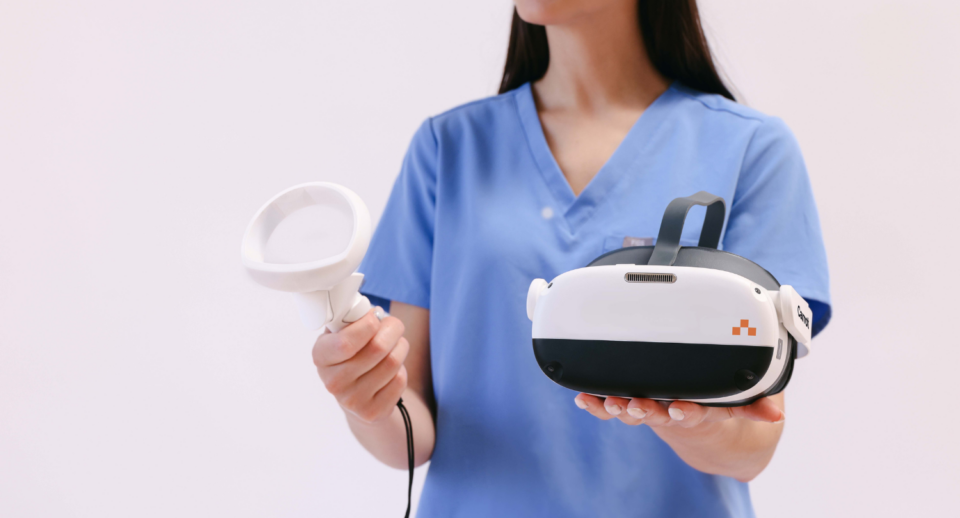
Your Comprehensive Guide to Virtual Color Vision Screening
Patients can go their entire lives without noticing color blindness, but you can identify over 90% of cases with a single two-minute test. The Ishihara screening tool remains one of the most widely trusted methods for identifying red-green deficiencies — and with a digital Ishihara color test, you can now eliminate guesswork and lighting inconsistencies entirely.
While curious patients may come across virtual color vision plates online or in apps, these at-home tests don’t match the accuracy of a professional, standardized platform like Carrot’s portable headset.
This guide will cover the fundamentals of the Ishihara test from an eye care professional’s perspective and highlight how the Carrot Visual Diagnostics Platform improves on this hundred-year-old testing process.
Digital Ishihara Color Vision Test Overview
As a diagnostic tool, the Ishihara color vision test is simple: patients are provided a series of images and asked to identify what they see. Each image presents colored dots arranged in a pattern that obscures a number or shape. Depending on the patient’s color vision, the image will be visible, invisible, or altered.
The Ishihara color vision test is iconic. Patients may not know it by name, but it’s so common and recognizable that there’s a good chance your patients have already seen and completed an Ishihara test on their own. They may even have concluded that they’re experiencing red-green colorblindness.
Of course, self-diagnosis isn’t reliable — especially when patients experiment with images online or in printed materials. Carrot’s virtual color vision plates eliminate the variables of poor lighting, printing errors, screen inconsistencies, or damaged charts — all within a portable color blindness device that makes testing more precise, accessible, and clinically reliable.
Academic references and clinical validation

|
A longstanding study evaluated the efficiency of the Ishihara test’s transformation and vanishing plates and revealed that it was accurate in 95.5% – 99% of cases. Hidden digit plates required additional testing. |
|
|
Research shows that the Ishihara test is accessible and effective, even among young children. A population study showed that 96.5% of children ages 3 to 6 could complete this test. |
|
|
The Ishihara test is versatile. Studies show that it can be effectively administered in multiple formats — traditional printed plates, digital versions on the internet or smartphone apps, and virtual reality. |
Did you know? The Carrot headset includes automated audio translation in over 40 languages to support inclusive patient engagement.

The Ishihara Color Vision Test at a Glance
The Ishihara test is so straightforward that patients can, and often do, use it to self-diagnose color blindness. Of course, their methodology is probably not accurate, so you’ll need to confirm with your own exam. Patients tend to appreciate this test’s simplicity and familiarity, but optometrists may feel constrained by its limitations. It can only identify red-green color vision deficiencies, and it can’t provide insight into visual acuity, so positive Ishihara test results will require additional testing.
With a digital Ishihara screening tool, you can deliver consistent results no matter where testing takes place, which is ideal for mobile eye clinics, pediatric vision screenings, or high-volume practices.
Pros and Cons of the Ishihara Test
The pros and cons that follow can help guide you toward the ideal scenarios to incorporate this test into your patients’ diagnostic assessments.
|
Pros
|
Cons
|

List of Ocular Diseases Monitored and Diagnoses Identified by the Ishihara Color Vision Test
The Carrot Ishihara Color Vision test helps diagnose or monitor:
|
|

For clinicians looking to buy digital Ishihara solutions, digital platforms like Carrot offer a reliable upgrade over worn booklets or outdated materials.
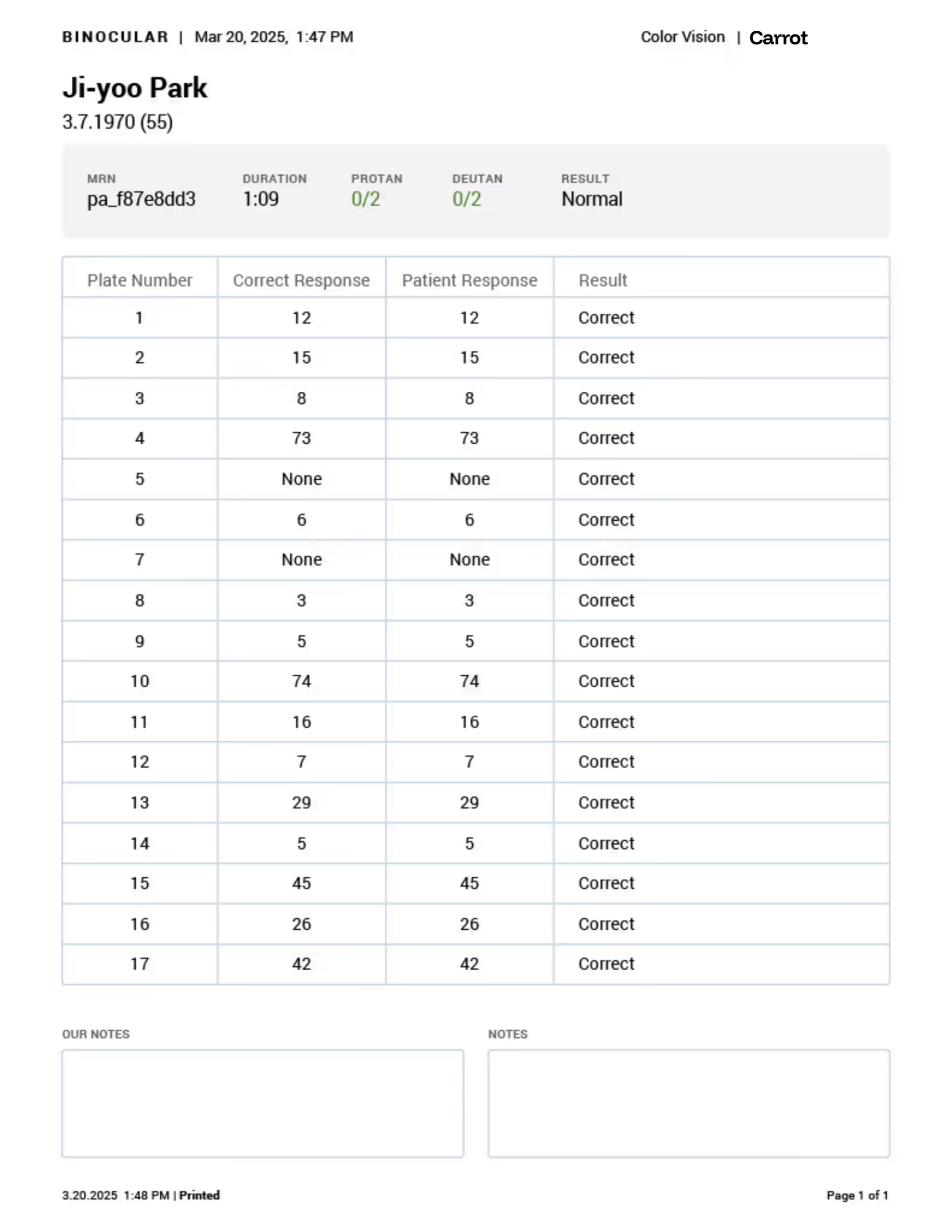
Example Ishihara Color Vision Test Report
Color Vision Testing Device Cost: Traditional vs. Virtual Reality Solutions
When evaluating color vision testing device cost options, many eye care professionals consider traditional Ishihara color plates alongside the benefits of an advanced digital solution that offers comprehensive vision and visual field testing.
While printed Ishihara test booklets are relatively inexpensive upfront, costing only a few hundred dollars, they can degrade over time and require ideal lighting conditions for accurate results.
In contrast, a virtual reality-based solution like Carrot delivers consistent, high-quality testing environments and eliminates variables such as screen color calibration or physical wear. The subscription includes not only the Ishihara test but a full suite of functional vision and visual field exams in a single device. Best of all, the Carrot Visual Diagnostics Platform is available through a cost-effective monthly subscription model, making it accessible for practices of all sizes.
Billing and Coding for the Ishihara Test
The Ishihara color vision test isn’t billable on its own. It does not qualify for the extended color vision examination (CPT code 92283) and isn’t reimbursed.
However, the Ishihara test is often part of a routine, comprehensive eye exam. For new or existing patients, this would be categorized under CPT codes 92004 or 92014, respectively.
When is the Ishihara color vision test required?
The Ishihara color vision test was originally developed in 1918 for the military, and it’s still useful today. The United States military currently administers the Ishihara test as part of its color vision testing standards for military special duty occupations.
This color accuracy test may be required for specific occupations, like pilots and air traffic controllers, police, electricians, engineers, certain healthcare professionals, and even artists. Many optometrists consider it a standard part of routine exams, and it’s often administered to children to ensure accommodations at school.
For many healthy patients, one color vision test is sufficient. But for people with certain professions or those who experience changes in their visual acuity, it may be repeated. Patients with diabetes, glaucoma, macular degeneration, neurological conditions, or eye injuries could need additional testing. People who are exposed to heavy metals, chemicals, or medications that impact vision may be at risk of acquired color vision deficiency.
Is the Ishihara test required for driver’s licenses?
In most states, regular driver’s licenses do not require an Ishihara color vision test, despite the need to distinguish red and green colored stoplights. Massachusetts and Hawaii require all drivers to distinguish traffic colors, but other states only have color vision requirements for commercial drivers. Most U.S. states prioritize visual acuity, field of vision, and the ability to identify the sequence of signal lights, rather than the colors themselves.
Modernize Your Ishihara Screening Tool with
Carrot
Eye care professionals around the world have trusted the Ishihara test for over a century. The Carrot headset gets the brightness just right — every time. With virtual color vision plates, there’s never a smudge, misprint, or missing plate. You’ll deliver repeatable, accurate results using a portable color blindness device built for today’s practices. Lighting conditions, screen variations, and wear and tear will eventually lead to less accurate results.
Modernize this time-tested tool to deliver more accurate, conclusive test results that integrate seamlessly into your workflow. Save your patients’ Ishihara test results in your EHR, and if your patient needs additional testing, you can quickly move on to more advanced assessments, such as the Farnsworth D-15. Carrot brings the Ishihara test into the digital age — and now it’s even more reliable and accessible.
Want all 23 of our comprehensive test guides in your inbox? Fill out the form below.

Frequently Asked Questions
Missing 4 or more plates on the first 21 diagnostic plates indicates abnormal red-green color vision.
The Ishihara Color Vision Test is generally not billed separately when performed as part of a routine eye exam. It’s considered part of the comprehensive or ophthalmological service (CPT codes 92002-92014).
No, the Ishihara Color Vision test does not detect blue-yellow defects. Use a D-15 hue test or HRR plates for tritan evaluation.
With Carrot, the test takes approximately two minutes.
As of January 1, 2025, the FAA requires new pilot applicants to undergo computerized color vision exams for their initial medical certificates. Traditional Ishihara plates, whether physical or virtual, are no longer permitted for this purpose. The U.S. Coast Guard (USCG) accepts a variety of color vision tests for the Merchant Mariner Credential (MMC) License, including Ishihara plates.