Your Comprehensive Guide to Eyelid Surgery Visual Field Assessment
The Superior 36 visual field exam may not be an everyday screening in your practice, but it plays a key role in diagnosing ptosis and supporting medical necessity for eyelid surgery visual field evaluations. Conducting even an occasional visual field test for eyelid obstruction can have a tremendous impact on your patients’ quality of life. Ptosis, or blepharoptosis, is characterized by a droopy eyelid. For many people, it’s a cosmetic complaint, but for others, it can interfere with their field of vision.
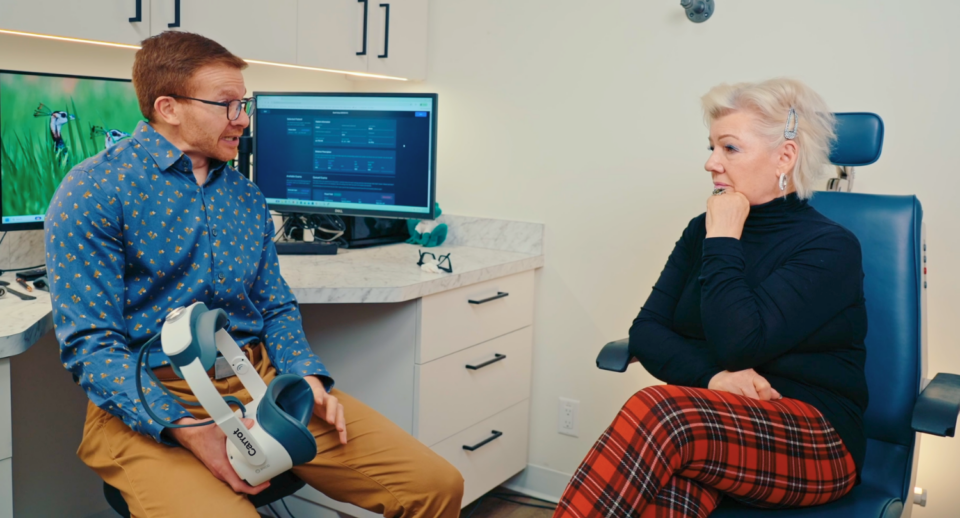
Carrot’s Superior 36 visual field exam is the fast, portable way to measure the impact of ptosis. Our patient-friendly headset collects the data you need to guide treatment and, if necessary, support medical necessity for oculoplastic referrals.
Superior 36 Visual Field Test for Ptosis Overview
The most obvious signs of ptosis don’t require a specialized exam. Patients may have a visibly drooping eyelid, sometimes with a habit of raising an eyebrow to see better. They may even tilt their head to see under their weakened eyelids, which can lead to neck complaints or headaches. Blepharoptosis can be a congenital condition, but more often, it is acquired due to aging, injury, or following surgery.
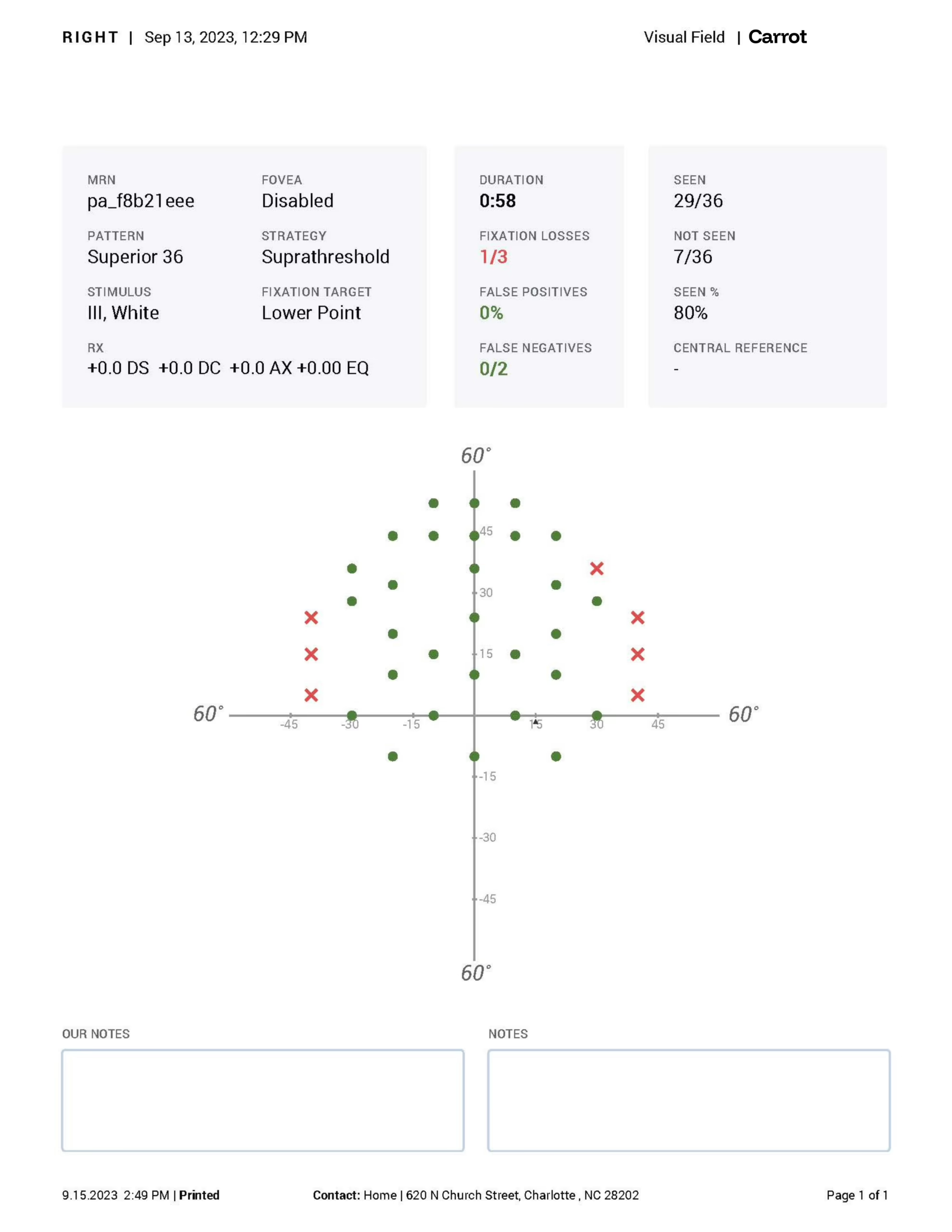
For ptosis requiring surgical correction, you must complete a field of vision test for blepharoplasty. The Superior 36 is an abbreviated exam, not a complete visual field assessment, consisting of 36 data points collected from the upper 52 degrees of the visual field.
In addition to these data points, documentation usually includes photographs of the patient’s eye and eyelid, as well as a detailed description of the impact of ptosis on the patient’s quality of life. Carrot can collect all the photos and data you need using our portable Superior 36 screen, then upload it directly to your EHR, where you can add clinical details with ease. As a suprathreshold visual field device, the Carrot headset simplifies ptosis assessment by focusing on the relevant upper field loss, speeding up the entire process.
Academic references and clinical validation

|
Drooping eyelids are sometimes unnoticed or disregarded as unremarkable cosmetic complaints, but they can lead to other conditions. An older study of patients with blepharoptosis found that surgical treatment helped reduce dry eye symptoms for 86% of patients. |
|
|
Treating ptosis with surgical intervention requires a specific test, like the Superior 36. CMS has outlined the definitions and requirements for intervention. |
|
|
Following a Superior 36 exam, ptosis patients may find relief with drops like oxymetazoline, which is a recently approved treatment. |
As part of the Carrot ptosis test offering, the Superior 36 makes it easy to perform targeted, insurance-aligned exams without relying on cumbersome legacy equipment.
Did You Know?
The average Carrot customer gets an extra 62 working hours back thanks to the workflow efficiencies from our Visual Diagnostics Platform.
The Superior 36 at a Glance
For patients who complain of drooping eyelids, the Superior 36 visual field test can be vital to getting them treatment. It’s a fast, simple Carrot ptosis test that streamlines diagnosis and supports surgical decision-making. Patients usually don’t find it fatiguing, but it can be uncomfortable if you need to tape their eyelids. It is an effective test for diagnosing and guiding the treatment of blepharoptosis, but it’s not a complete visual field exam. The Superior 36 is available with Carrot Pro and Basic subscriptions, so you can quickly access this specialized exam for any patient who struggles with their upper visual field.
Pros and Cons of the Superior 36 Visual Field Test
The pros and cons that follow can help guide you toward the ideal scenarios to incorporate this test into your patients’ diagnostic assessments.
|
Pros
|
Cons
|
List of Ocular Diseases Monitored and Diagnoses Identified by the Superior 36 Exam
|
|

Example Superior 36 Report
Billing and Coding for Superior 36 Blepharoptosis Visual Field Testing
Using Carrot’s suprathreshold visual field device, you can perform the exam quickly and bill CPT code 92081 for the Superior 36 exam. This test is reimbursable between $15 and $42, depending on your practice location, setting, modifiers, and other details. Refer to the Medical Physician Fee Schedule (MPFS) for updated fees.
When is the Superior 36 visual field exam required?
Patients who complain about drooping upper eyelids due to aging or after an injury should complete the Superior 36. This test is required to demonstrate superior visual field constriction, inform medical intervention, and support eligibility for insurance coverage. This pre-surgical assessment can be used to aid in the differential diagnosis of blepharoptosis, brow ptosis, dermatochalasis, and other visual field conditions. The Superior 36 is not typically used to monitor progressive conditions, but you may repeat it to follow up on ptosis treatments.
Is the Superior 36 test required for driver’s licenses?
The Superior 36 visual field exam is specifically used to diagnose and measure ptosis. It’s not relevant for driver’s licensing, but if the patient’s field of vision is highly occluded by ptosis, they may have trouble driving safely. It’s unlikely, but as part of your blepharoplasty consultation, you may discover that ptosis is limiting a patient’s field of vision below the state minimum for driver’s licensing.
Start Conducting the Superior 36 with Carrot
Adding the Superior 36 visual field test to your toolkit can help ensure sufficient documentation for insurance reimbursement while improving outcomes for patients with drooping lids. As a portable superior 36 screen and part of the broader Carrot ptosis test platform, this tool allows you to collect visual field data quickly and easily, right at the point of care.
Drooping eyelids may seem minor, but they can affect vision, posture, and quality of life for some. With Carrot, this already-abbreviated test is even faster, more portable, and easy to integrate into your workflow. In just a few minutes, you can help justify medical interventions and improve functional vision for patients struggling with ptosis.
Want all 23 of our comprehensive test guides in your inbox? Fill out the form below.

Frequently Asked Questions
The Superior 36 visual field test focuses on 36 suprathreshold targets in the superior hemifield, the region occluded by drooping lids, providing insurers with objective pre-/post-tape proof.
Run the first screen untaped, apply hypoallergenic tape to lift the lid, and repeat.
Most payers require ≥ 12 points (approximately 30%) improvement or a superior defect that encroaches within 15° of fixation.
Use 92081 with modifier -RT, -LT, or -50 (bilateral) as per carrier rules.
With Carrot, the Superior 36 test takes just 30 seconds per eye, minimizing patient fatigue.
Yes. The pattern aligns with AMA Guides 6th edition criteria for functional loss documentation.