Study Citation
Phu J, Kalloniatis M. Static automated perimetry using a new head-mounted virtual reality platform, Virtual Field, compared with the Humphrey Field Analyzer in glaucoma and optic nerve disease. Presented at the Association for Research in Vision and Ophthalmology (ARVO) Annual Meeting, 2021. Published in Investigative Ophthalmology & Visual Scienc. 2021;62.
The Challenge of Traditional Visual Field Testing
Visual field testing plays a critical role in diagnosing and monitoring glaucoma and optic nerve disease. The Humphrey Field Analyzer (HFA) has long been the gold standard for automated perimetry, helping clinicians detect functional vision loss and track disease progression.
However, the system requires large, specialized equipment, a dedicated testing space, and trained technicians. These factors can limit testing capacity and make it difficult for clinics to scale visual field monitoring.
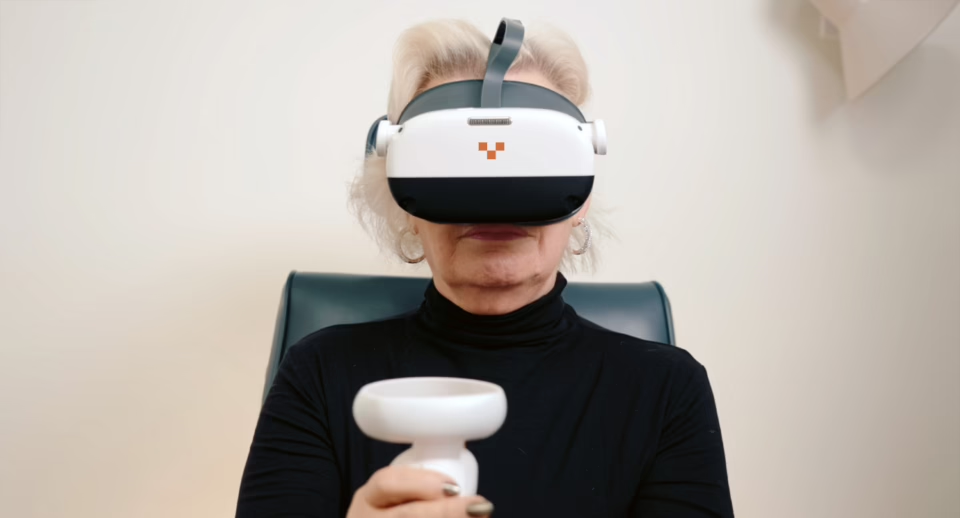
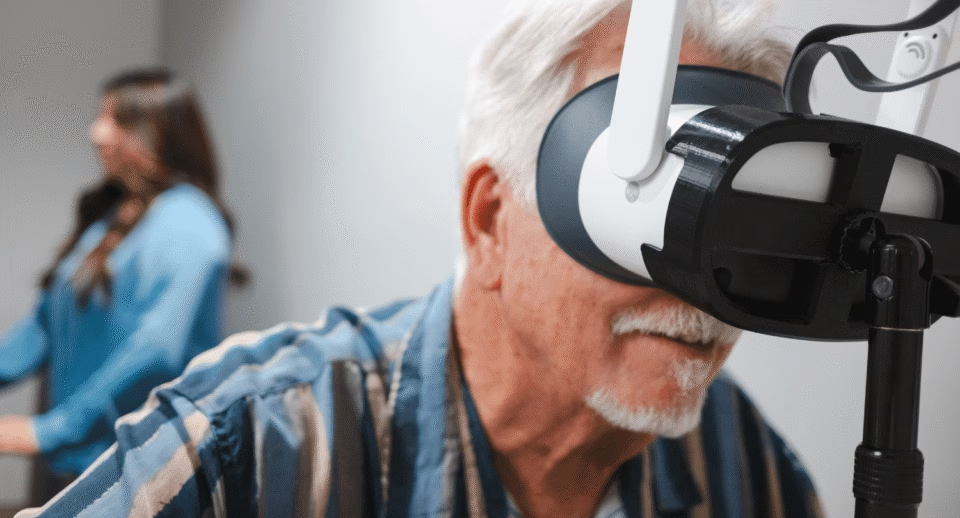
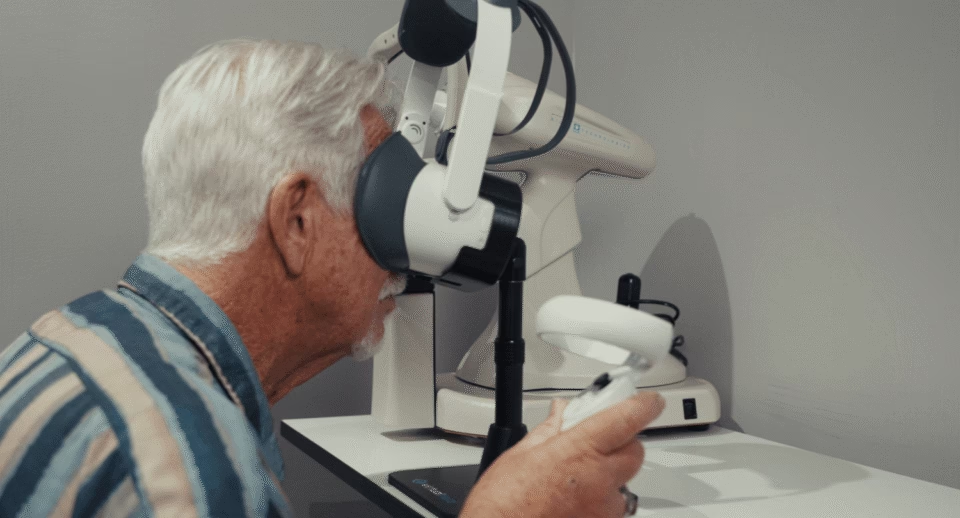
Advances in virtual reality (VR) technology have made it possible to deliver similar testing through lightweight head-mounted systems. Using a portable headset, clinicians may be able to perform visual field testing across a wider range of clinical environments while reducing equipment costs.
“Head-mounted virtual reality perimetry offers a portable and accessible alternative to traditional visual field testing.”
Study Overview
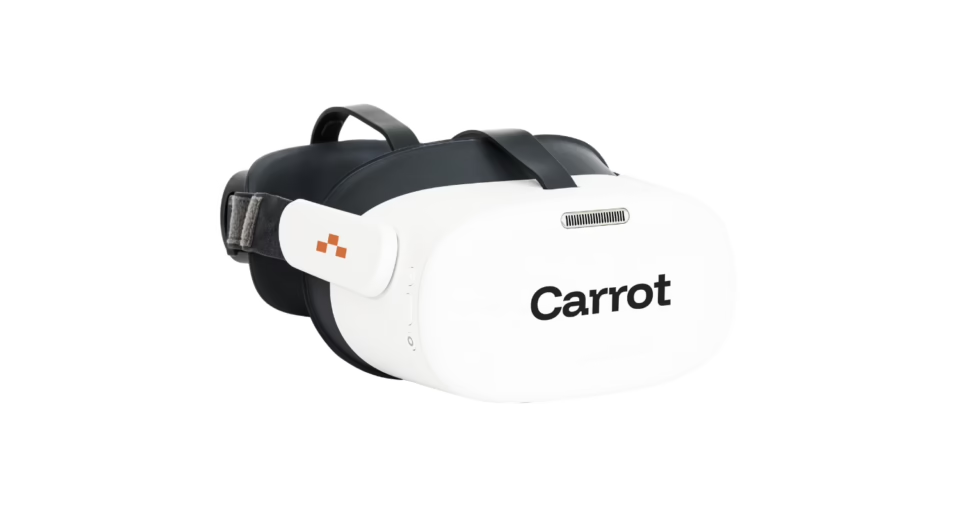
Researchers Jack Phu and Michael Kalloniatis evaluated the performance of the Virtual Field VR perimeter (now Carrot) compared with the Humphrey Field Analyzer in patients with glaucoma or optic nerve disease. Presented at the Association for Research in Vision and Ophthalmology (ARVO) Annual Meeting, 2021.
The goal was to determine whether the VR platform could produce clinically comparable visual field results while offering the advantages of portability and lower cost.
Study Population
The study included 43 participants with open-angle glaucoma or optic nerve disease.
Researchers tested one eye per participant, selecting the eye with more advanced disease.
Each participant completed three visual field tests on both devices, with testing order randomized to minimize bias.
Testing Method
Both devices used the 24-2 visual field testing grid with Goldmann size III stimuli, a standard configuration in automated perimetry.
Key technical differences included the display systems used by each platform:
- Virtual Field (Carrot): Head-mounted display with a background luminance of 0.218 cd/m²
- Humphrey Field Analyzer: Projection system with a background luminance of 10 cd/m²
Researchers compared several clinical metrics across the two systems, including:
- Mean deviation (MD)
- Pattern standard deviation (PSD)
- Glaucoma Hemifield Test (GHT) outcomes
- Cluster-based defect detection
- Pointwise sensitivity values
- Overall number of visual field defects detected
To improve reliability, the study averaged results across the three tests performed on each device.
Clinical Results
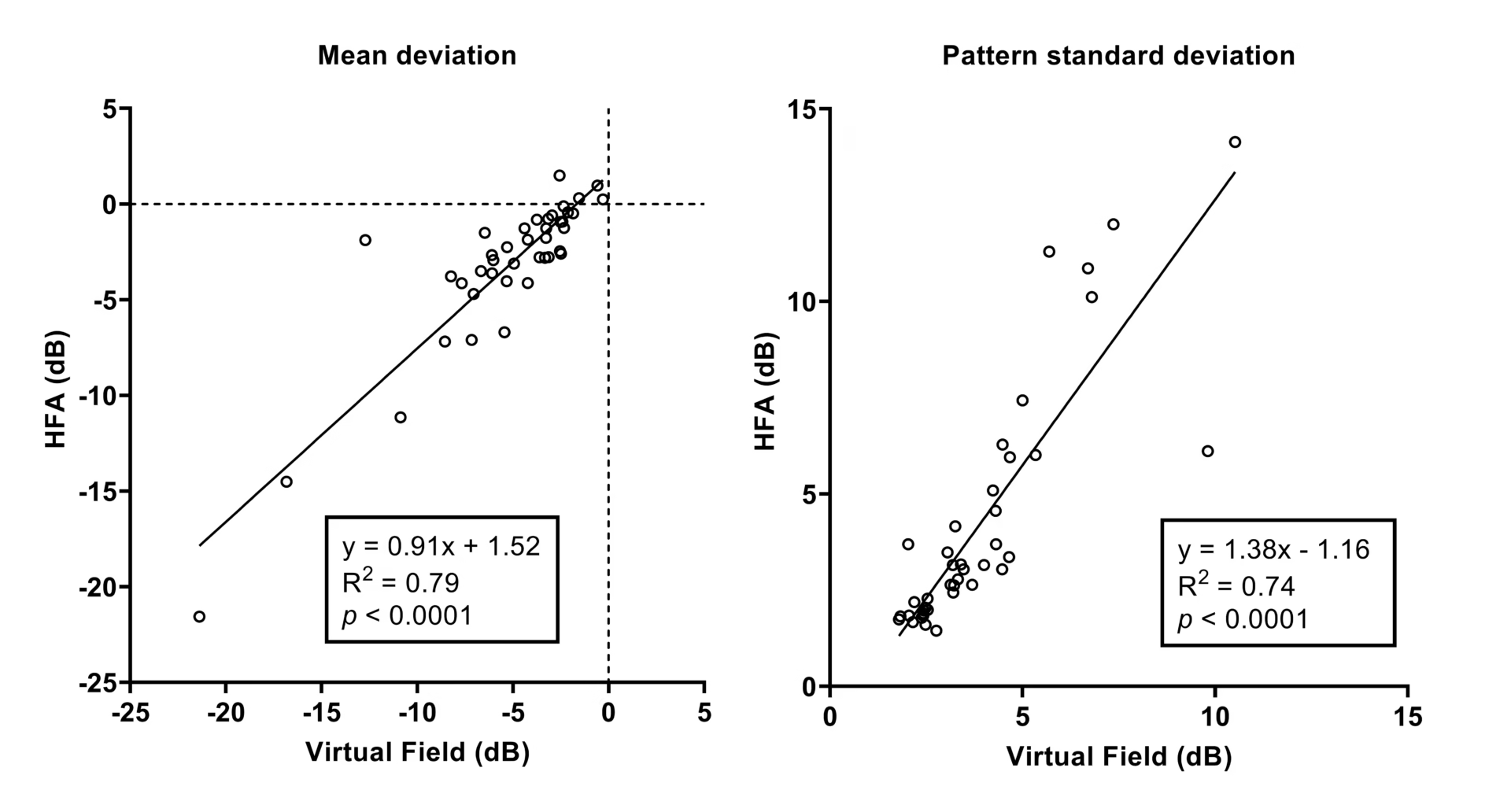
Overall, the study demonstrated strong agreement between the VR platform and the Humphrey Field Analyzer.
Correlation of Global Indices
Mean deviation and pattern standard deviation values were correlated between the two systems, indicating that the VR platform measured visual field loss in a way consistent with the traditional device.
Differences in absolute decibel values were observed due to differences in background luminance and retinal adaptation, but the overall clinical interpretation remained comparable.
Detection of Visual Field Defects
When evaluating pattern deviation maps:
- 10 patients (23%) showed more defects on the Humphrey device
- 3 patients (7%) showed more defects on Carrot
- The remaining patients showed no difference between devices
On average, the Humphrey device detected three additional defects, though these differences did not significantly affect disease classification.
Identification of Disease
Researchers also evaluated whether each system could identify glaucoma-related visual field abnormalities using combined diagnostic criteria, including:
- PSD greater than 2 dB
- Glaucoma Hemifield Test outside normal limits
- Cluster-based defect thresholds
Results showed no statistically significant difference between the devices in detecting the presence of disease.
Cases identified:
- 31 patients identified by both devices
- 6 identified only by Carrot
- 1 identified only by Humphrey
- 5 identified by neither device
These findings indicate that the VR system performed similarly to traditional automated perimetry in identifying visual field abnormalities.
Expanding Access to Visual Field Testing
The study highlights the potential of head-mounted VR perimetry to improve access to visual field testing.
Unlike traditional machines, VR platforms can be:
- Portable, allowing testing outside dedicated visual field rooms
- Lower cost, reducing equipment barriers for clinics
- Flexible, enabling testing in a variety of clinical settings
These advantages may allow practices to expand testing capacity and improve patient access to visual field monitoring, particularly in settings where traditional perimeters are difficult to deploy.
“Virtual Field demonstrated functionally indistinguishable results compared to the Humphrey Field Analyzer.”
Future Directions
While the findings support the clinical viability of VR-based perimetry, additional research is needed to further evaluate long-term performance.
Future studies may focus on:
- Test-retest reproducibility
- Longitudinal monitoring of glaucoma progression
- Larger prospective studies across multiple clinical centers
Continued research will help determine how VR visual field testing can complement or expand traditional glaucoma care workflows.