Product Features
A Complete End-to-End Visual Diagnostics Platform
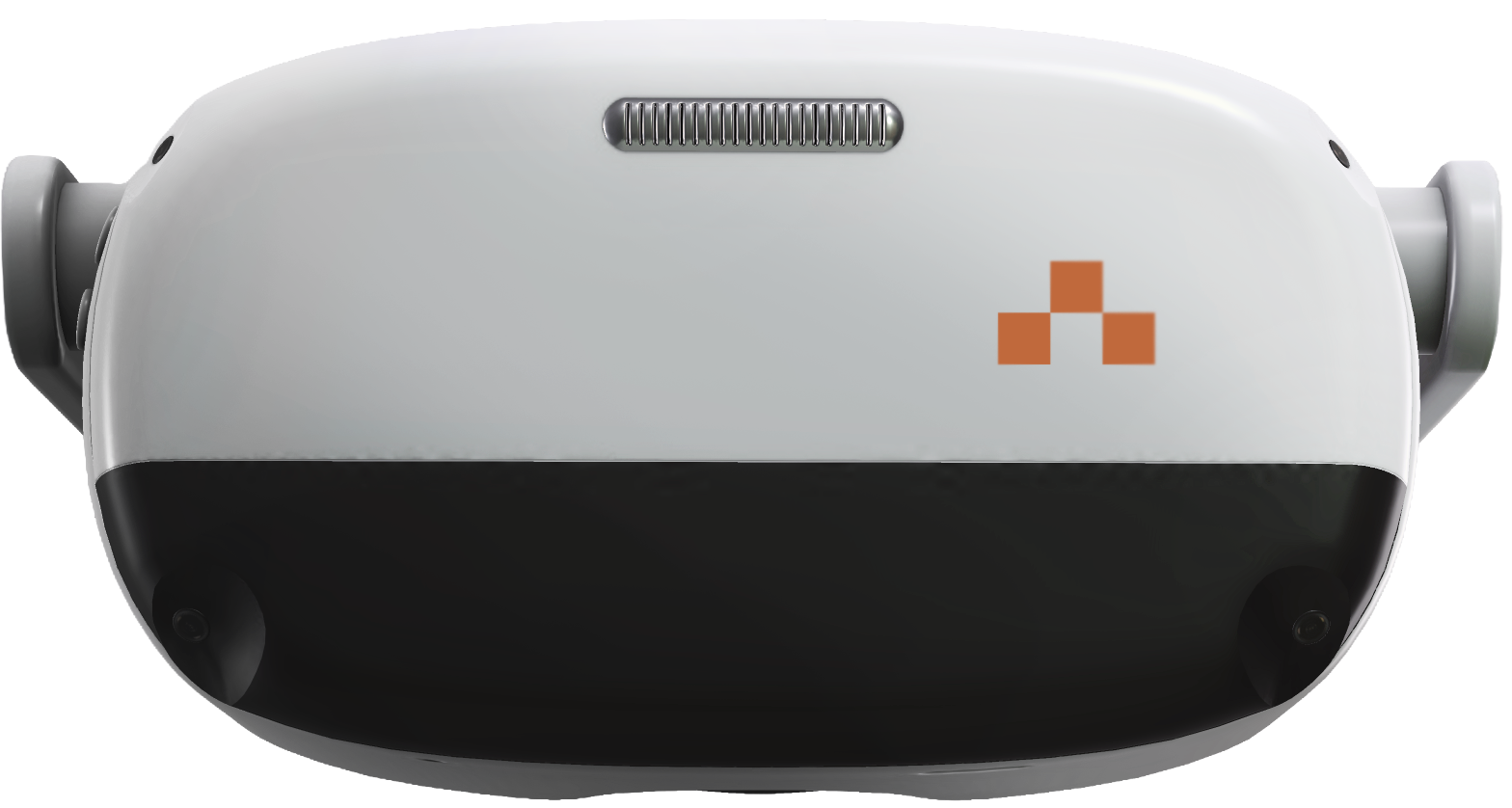

Product Overview
A Complete End-to-End Visual Diagnostic Platform
Tests
18 Essential Exams. 5 CPT Codes. One Platform.
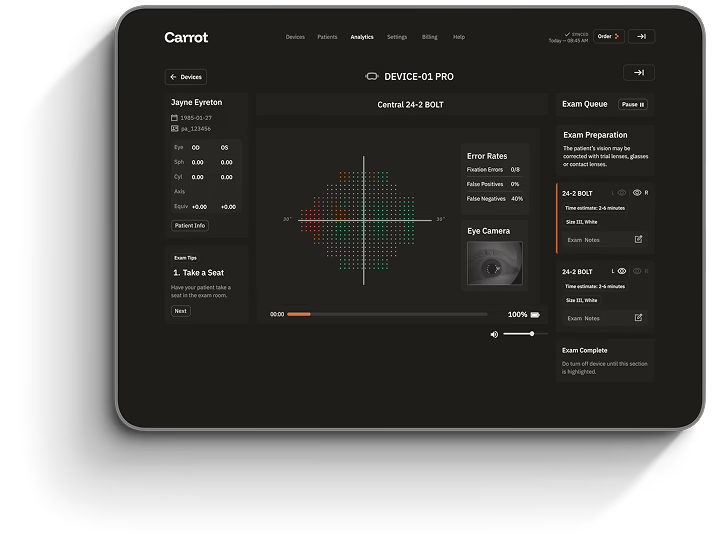
Insights
Diagnostic Data that Powers Exceptional Care
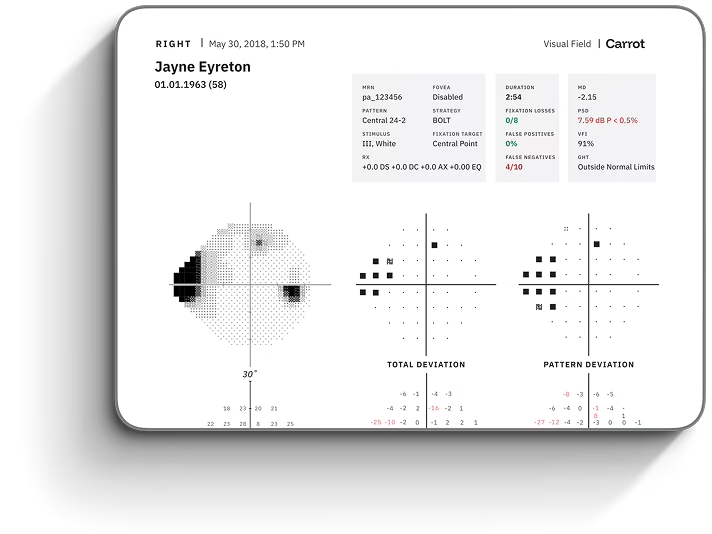
Connections
Built for Interoperability
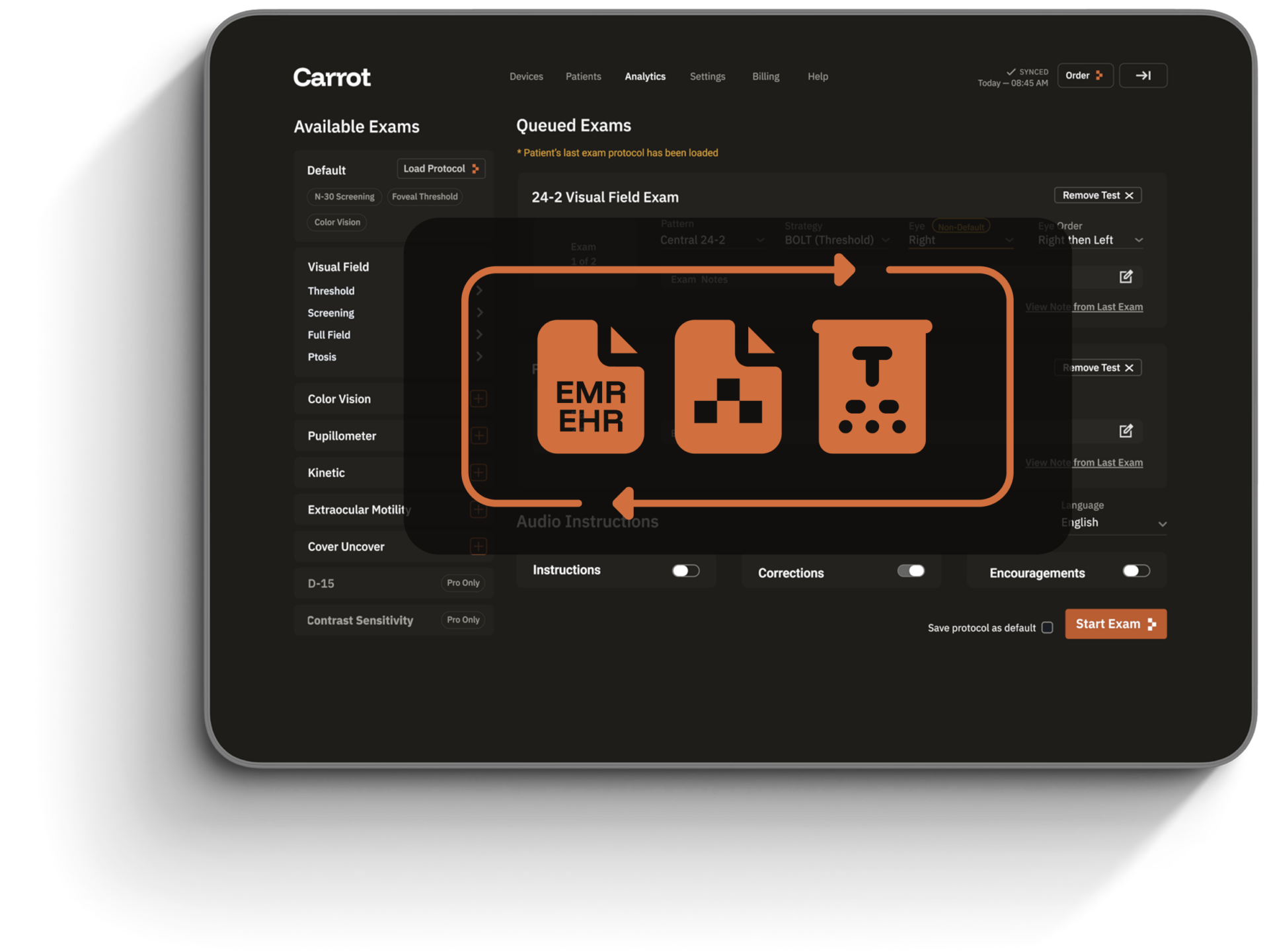
Automations
Increase Capacity without Increasing Staff
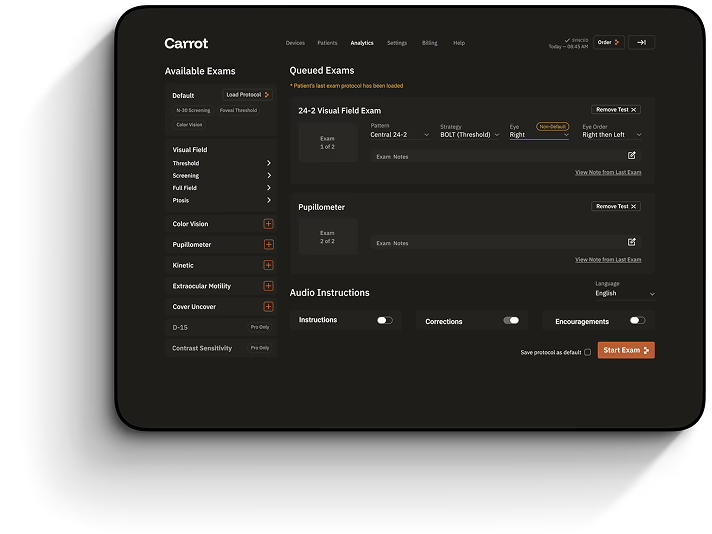
Support
Real, Human Help
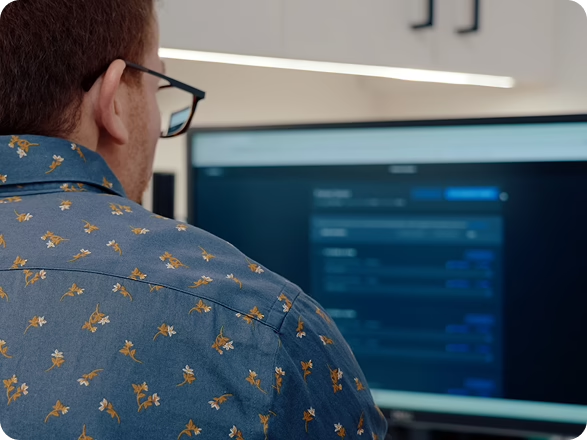
Components
Hardware That Works for Life
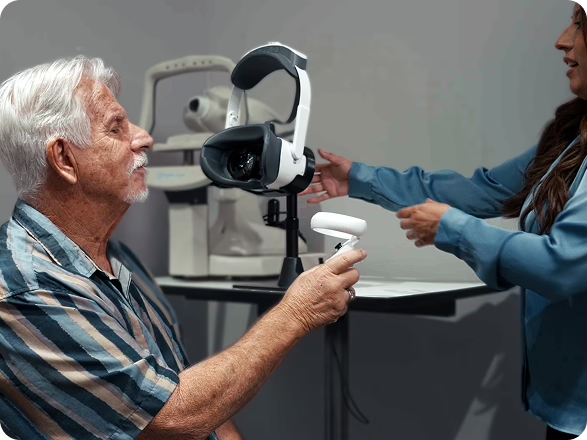
Free Trial
Bring Carrot Into Your Clinic—Free for 30 Days.
The New Gold Standard in Automated Perimetry
Carrot set the standard for VR visual fields when we introduced the first virtual visual field system in 2018. Today, our clinically validated testing is benchmarked against SITA, delivering accurate, repeatable results that support confident diagnosis and a seamless transition to modern visual diagnostics.
Enterprise-Grade Security & Compliance
Confidence You Can Trust. Security You Don’t Have to Think About.
From SOC 2 Type II and MDSAP to encrypted cloud storage, single sign-on, audit logs, and enterprise authentication, Carrot meets the security and compliance standards serious healthcare organizations require.
Don’t Settle for Less Than the Diagnostic Best
Carrot invented the virtual visual field analyzer. Now, we’re perfecting it. See how Carrot compares.
Feature | Carrot | Others |
|---|---|---|
| Advanced analytics | ||
| Clinical validation of every test by industry-leading doctors. | ||
| Custom branding | ||
| EMR/EHR integration; bi-directional DICOM data sync, DICOM/PDF/JPEG exports; cloud-based results sharing. | ||
| Storage integrations | ||
| Enterprise-grade security; including SOC 2 Type II, MDSAP, and ISO 13485:2016 | ||
| AI assistant | ||
| Configurable, insightful dashboard for practice, patient, and professional level insights. | ||
| Automated reports | ||
| Role-based access, automated exam routing, and integrated reporting. | ||
| Automated reports | ||
| Accessible, caring, dedicated support team members who onboard every practice and team. | ||
| Automated reports | ||
| Positive ROI in as few as four exams due to our flexible subscription model | ||
Testimonials
Why Your Peers Choose Carrot
FAQs
Questions about Carrot?
What is included in the Carrot visual diagnostic platform?
Carrot is an end-to-end visual field testing and perimetry platform built for modern eye care practices.
You get a wireless visual field analyzer delivered through a clinical-grade VR visual field headset, paired with cloud software that manages automated perimetry, reporting, progression analysis, and data exchange. Our visual diagnostic platform includes virtual field visual testing, insurance-ready reports, EMR/EHR integration, and secure centralized storage.
Unlike legacy visual field machines, Carrot combines portable visual field testing, automated workflows, and interoperable data in one system. Built-in quality controls, CPT support, and longitudinal analysis help you run more exams, protect revenue, and make confident clinical decisions as your practice scales.
What vision tests can I perform on Carrot?
Carrot supports a comprehensive suite of visual field tests, perimetry exams, and functional vision testing, all from a single visual field device.
You can run:
- Automated perimetry: 24-2 visual field, 24-2C visual field, 10-2 visual field, and 30-2 visual field
- Suprathreshold visual field and screening exams
- Esterman visual field and driving visual field tests
- Goldmann visual field testing via kinetic perimetry
- Extraocular motility exams (EOM testing)
- Color vision testing, including Ishihara color plates
- Automated pupillometry
All exams are delivered through the same VR visual field headset, allowing you to expand diagnostic scope without adding devices, rooms, or staff complexity.
How much does a Carrot visual field analyzer cost?
Carrot replaces high-cost visual field machines with a flexible subscription model.
Plans start at $199/month for Basic and $399/month for Pro, giving you access to the complete visual field analyzer, software platform, updates, and support. There’s no large upfront purchase, making it easier to deploy portable visual field testing and see ROI quickly, often in just a few billable exams.
This approach reduces financial risk while providing you with a scalable visual field testing solution that grows with your clinic.
Is Carrot FDA registered and cleared for clinical use?
Yes. Carrot is FDA-registered and listed as a medical device in the United States, and is authorized for clinical visual field testing and perimetry. The platform is also registered as a Class I medical device in the U.S. and a Class II medical device in Canada, with SOC 2–attested, HIPAA-compliant infrastructure.
This means you can confidently use Carrot’s visual field analyzer for routine perimetry, glaucoma monitoring, and functional vision testing while meeting regulatory, security, and compliance requirements.
How much staff training is required?
Very little. Most staff can be fully trained to run visual field tests on Carrot in under one hour.
Carrot’s VR visual field headset uses self-guided, multilingual instructions and automated workflows, reducing reliance on technician expertise. Built-in quality controls and guided exam flows make automated perimetry easier to run consistently, even for new hires or non-clinical staff.
Can Carrot replace my existing visual field machine?
Yes. Many practices use Carrot as their primary visual field machine, while others deploy it alongside a legacy perimeter during transition.
Carrot delivers clinically validated automated perimetry comparable to traditional tabletop devices, with added benefits like portable visual field testing, faster exams, and improved patient comfort. Because it’s wireless and room-agnostic, Carrot often replaces multiple legacy visual field devices with fewer, more flexible units.
Does Carrot support progression analysis over time?
Yes. Carrot includes built-in longitudinal progression analysis for visual field testing.
The platform automatically captures results from exams like 10-2, 24-2, 24-2C, 30-2, and other perimetry protocols, then organizes them into structured reports with trendlines and comparison views. Such data helps you track disease progression, monitor treatment response, and make confident clinical decisions over time.
Can Carrot be used in a hospital setting?
Absolutely. Carrot is used across private practices, multi-clinic practice groups, hospitals, and health centers.
Its portable VR visual field system makes it easy to perform visual field testing at chairside, bedside, or in shared clinical spaces without dedicated dark rooms or fixed equipment. Secure data handling, role-based access, and enterprise interoperability make Carrot well-suited for hospital workflows and large care teams.
How long does a typical visual field test take with Carrot?
Most visual field tests on Carrot are 2-4 minutes faster per eye than traditional tabletop perimeters.
Carrot’s automated perimetry algorithms, headset-guided instructions, and real-time fixation monitoring reduce restarts and false positives. Shorter, more efficient exams improve patient tolerance, increase throughput, and help clinics reduce backlogs without sacrificing accuracy.
Does Carrot work for high-volume or multi-lane clinics?
Yes. Carrot is designed specifically for high-volume visual field testing environments.
Because the wireless visual field analyzer is portable and self-guided, clinics can run multiple exams in parallel across lanes or rooms without adding staff or exam lanes.
Which EMR/EHR systems does Carrot integrate with?
Carrot integrates with major EMR and EHR systems and supports structured data exchange, including DICOM, PDF, and image exports.
Patient demographics can be automatically imported, and test results flow securely back into the chart, reducing manual data entry, billing errors, and administrative overhead. These integrations ensure your visual field testing data is accessible across locations and specialists, not in silos.
Does Carrot support multi-site reporting and oversight?
Yes. Carrot is built for multi-site practices and enterprise-level oversight.
You get centralized dashboards that provide visibility into patient results, testing volume, utilization, and performance across locations. Role-based access, standardized reporting, and secure cloud storage make it easy to maintain consistency, compliance, and quality, whether you manage two clinics or fifty.