Introduction
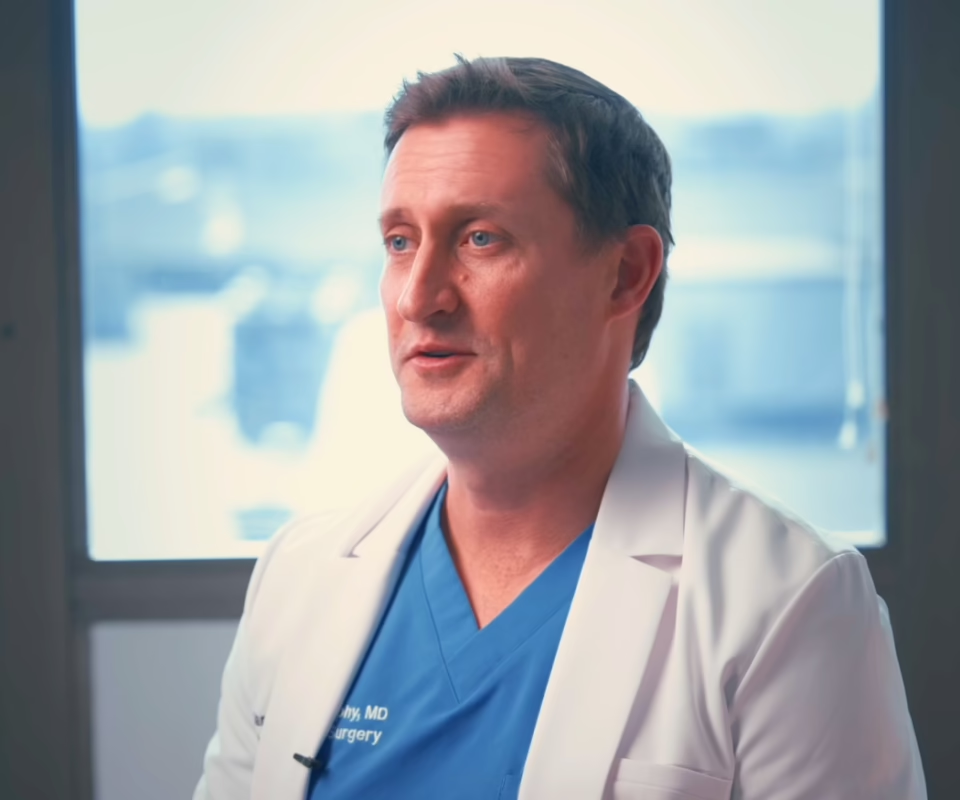
Dr. James Murphy is a board-certified ophthalmologist and a fellowship-trained glaucoma specialist practicing in New York and Connecticut. His experience spans several decades, with a focus on a patient population that includes many elderly individuals with mobility and physical limitations.
Challenges in Traditional Visual Field Testing
- Patient Comfort and Accessibility: Dr. Murphy highlights significant challenges with traditional tabletop perimeters, particularly for his elderly patients who struggle with spine and neck issues or those who are wheelchair-bound. The physical setup of traditional tests, requiring patients to maintain uncomfortable positions, often proved infeasible and led to patient dissatisfaction and non-compliance.
Implementation of Carrot
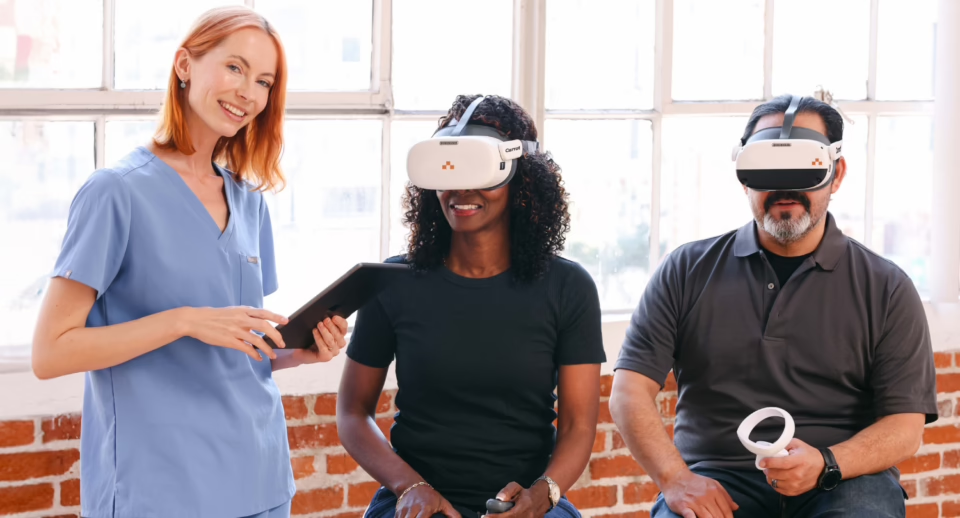
Initially skeptical about the technological demands of virtual reality headsets for an older patient base, Dr. Murphy found that his patients were well-received by the intuitive design and ease of use of Carrot (formerly Virtual Field), contrary to his expectations.
Benefits of Carrot
There are several aspects of the [Carrot] experience that patients enjoy, but comfort is a big one. I serve a population of patients who are in their 70s, 80s, and 90s. Many of them have spine and neck issues, are wheelchair-bound, or otherwise have mobility and stamina limitations. Elderly patients love the experience of a wearable headset and, contrary to what one might assume, are very capable of reliably performing SAP if allowed a higher degree of comfort for the duration of the test compared to traditional, tabletop perimetry. There are a lot of benefits to having this technology in your office simply from a patient satisfaction perspective.”
This enhanced comfort and user-friendly design have significantly reduced complaints and increased compliance among patients, who previously dreaded conventional visual field tests.
The built-in audio instructions, available in multiple languages, have particularly benefited Dr. Murphy’s diverse patient base, including non-English speakers who struggled with traditional tests. This feature has improved the reliability of test results by enhancing patient understanding and engagement during the procedure.
“[Carrot] saves staff time. Staff members are able to set patients up pretty quickly and let the audio instructions from the headset guide the patient in their native language, which automates the one-on-one coaching they usually have to do and increases the reliability of the results,” Dr. Murphy explains.
This feature has streamlined the visual field testing process in his practices, allowing staff to manage multiple patients more efficiently and addressing staffing shortages and the need for experienced personnel.
Clinical Accuracy and Reliability
Dr. Murphy addresses common concerns about the accuracy of new diagnostic tools compared to the “gold standard” tabletop perimeters. He notes that while the devices are fundamentally different, Carrot has shown comparable, if not superior, accuracy in clinical evaluations.
Economic Impact
The all-inclusive subscription model of Carrot, combined with its efficiency and reduced staffing needs, has provided a significant return on investment. Dr. Murphy highlights that even with a modest number of monthly tests, the savings in staffing and operational efficiency make the technology a financially viable option for any practice.
Conclusion
Dr. Murphy’s transition to the Carrot Visual Diagnostics Platform has transformed the visual field testing experience in his practice, making it more patient-friendly, operationally efficient, and clinically reliable. His case illustrates the substantial benefits of adopting modern, patient-centered technologies in specialized areas like glaucoma care.