Color Vision Testing

Standardized Ishihara

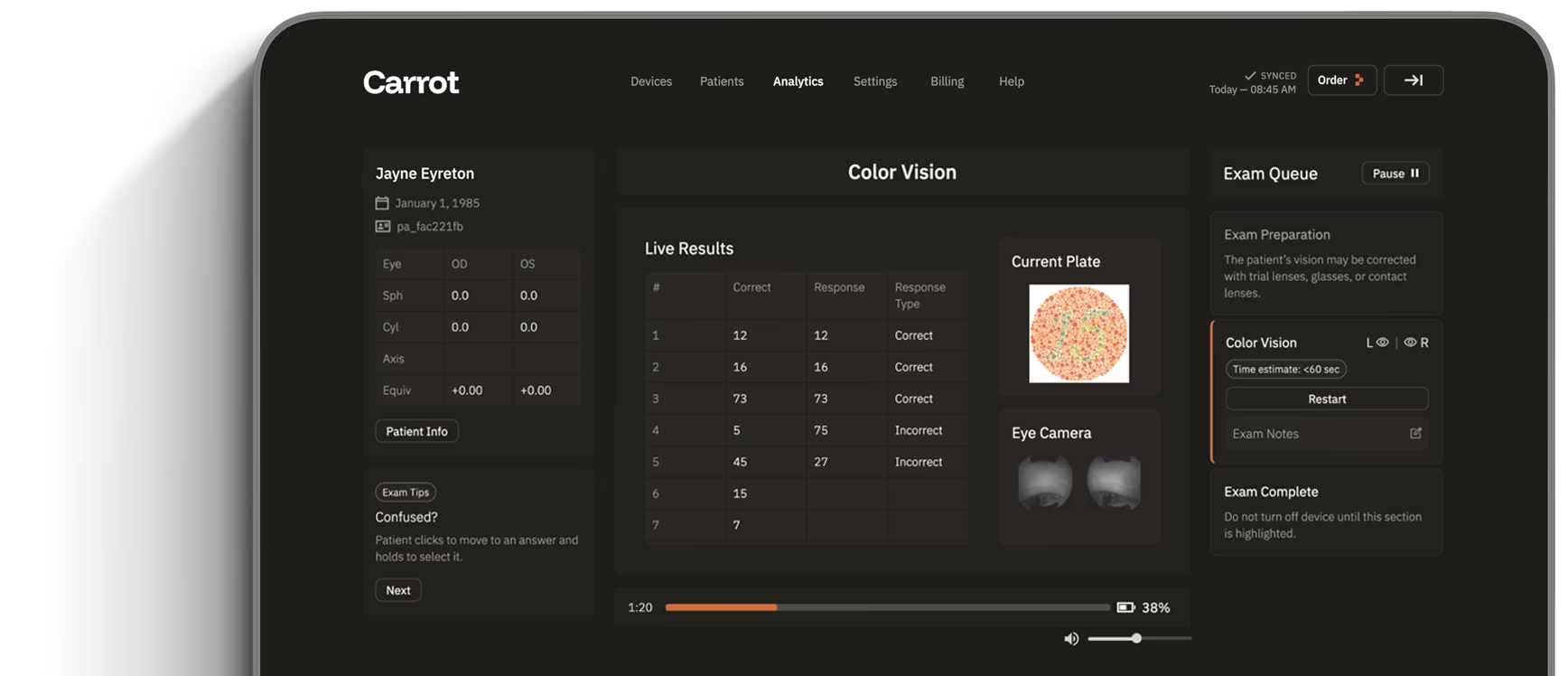
The most recognized color vision screening test in the world, delivered with calibrated color rendering, controlled luminance, and automated plate-by-plate scoring on the same VR headset that runs your visual fields. No fading plates, no lighting variability, no examiner subjectivity.
2Min to test both eyes
24Plates
2400Clinics use Carrot

In Good Company

Scott & Christie Eyecare Assoc Logo
Eye South Parnters
Total Vision Logo
Nvision Logo
Veterans Evaluation Services Logo
Vision Source Village Optometry
Georgia Center For Sight Logo
Pacific Eye Associate Logo
Hillsboro Vision clini

What it measures

Every Plate. Every Response. Automatically Scored.

Carrot presents the standard Ishihara plate sequence with calibrated colors and controlled luminance, captures the patient's response to each plate, and produces an automatically scored report—no examiner reading "yes/no" off a paper chart, no plate-by-plate hand-tally.
Plate-by-Plate Results
Calibrated Color Rendering
Per-Eye Independent Testing
Multi-Language Audio Prompts

Color Vision Testing Features

Plate-by-Plate Results
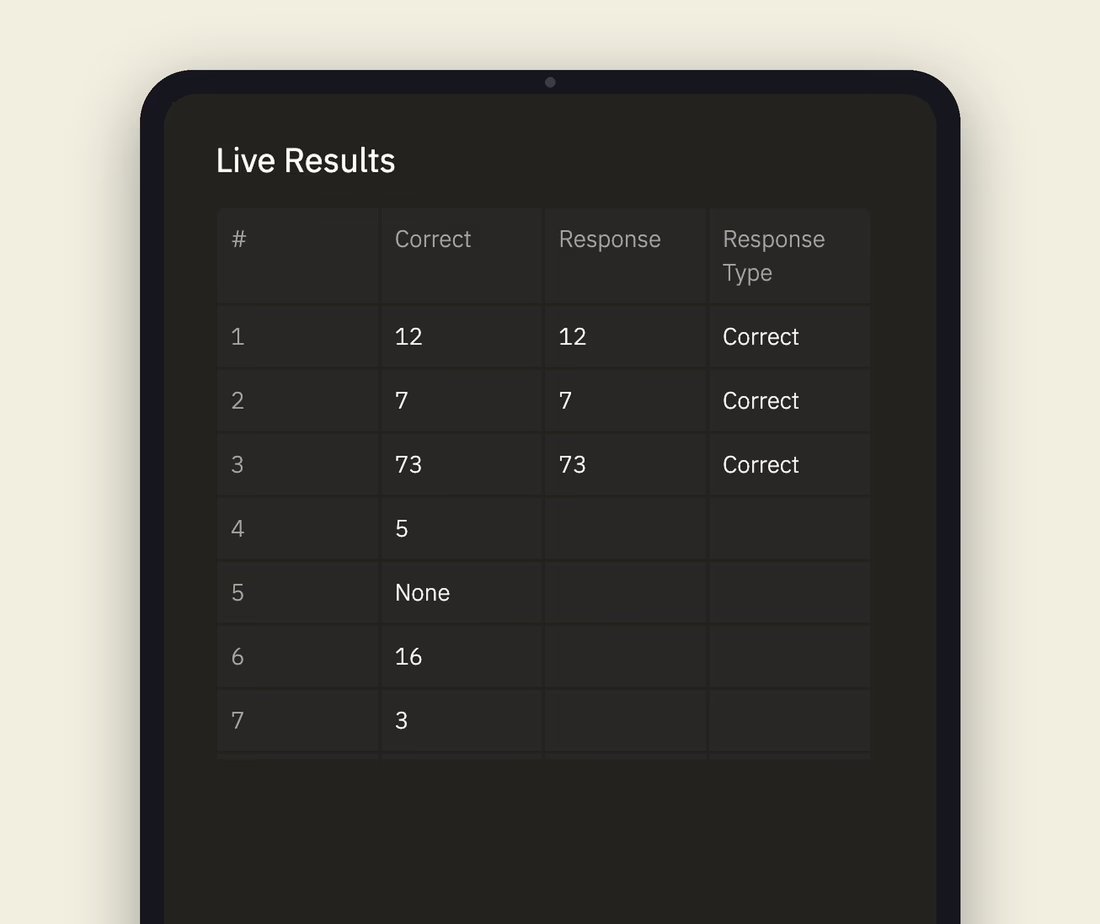
Every response automatically tracked and scored against the standard answer key. The report shows which plates were missed giving clinicians the response pattern needed to flag possible red-green deficiency for follow-up testing.
plate by plate results

Color Vision Testing Features

Calibrated Color Rendering
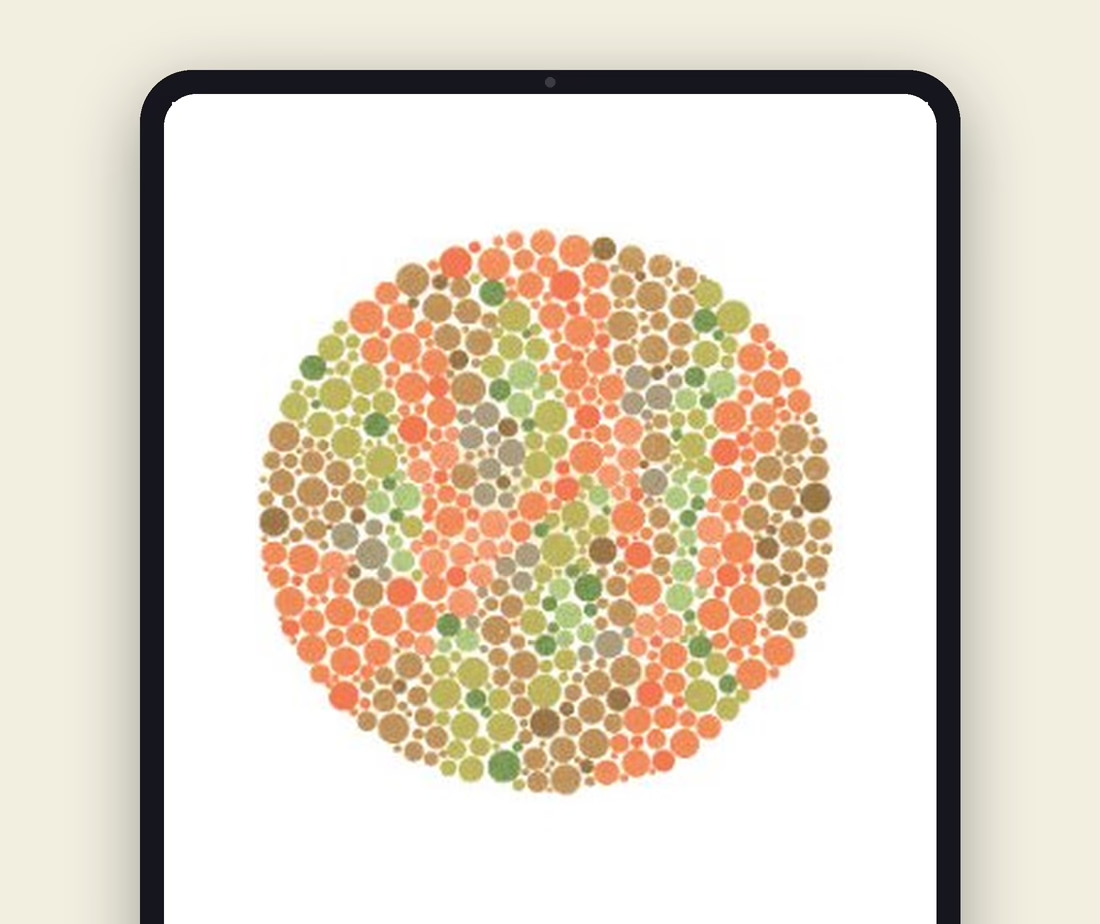
VR optics deliver the same colors, the same luminance, and the same viewing distance for every patient and every visit. No fading plates, no fluorescent-vs-daylight scoring shifts, no examiner holding the chart at a slightly different angle each time.
calibrated color rendering

Color Vision Testing Features

Per-Eye Independent Testing

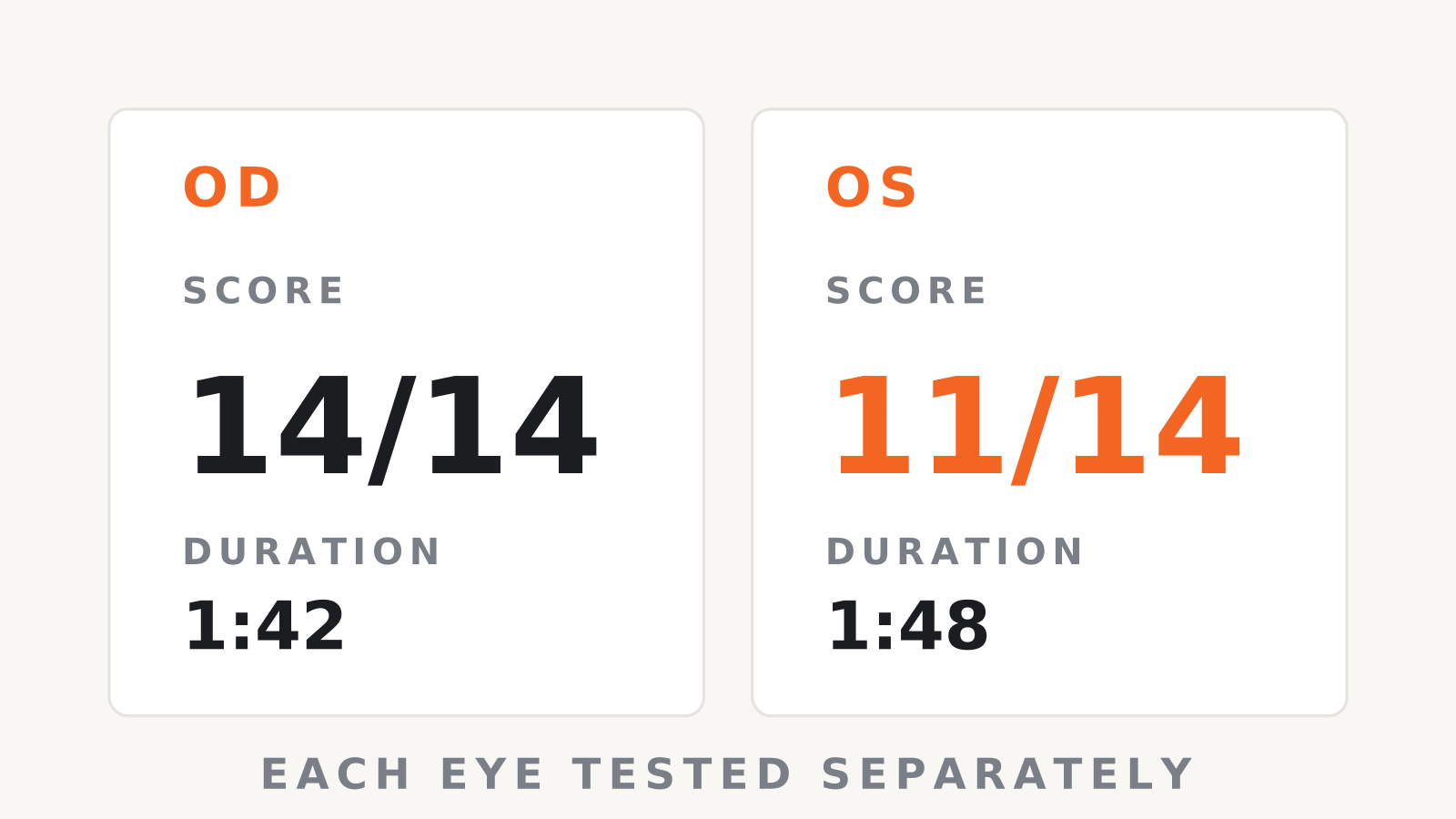
Each eye scored separately rather than binocularly. Congenital color deficiency is symmetric; an acquired unilateral defect—the kind that appears in optic neuritis, ischemic optic neuropathy, and early toxic optic neuropathy—shows up immediately against the other-eye baseline.
per eye independent testing

Color Vision Testing Features

Multi-Language Audio Prompts
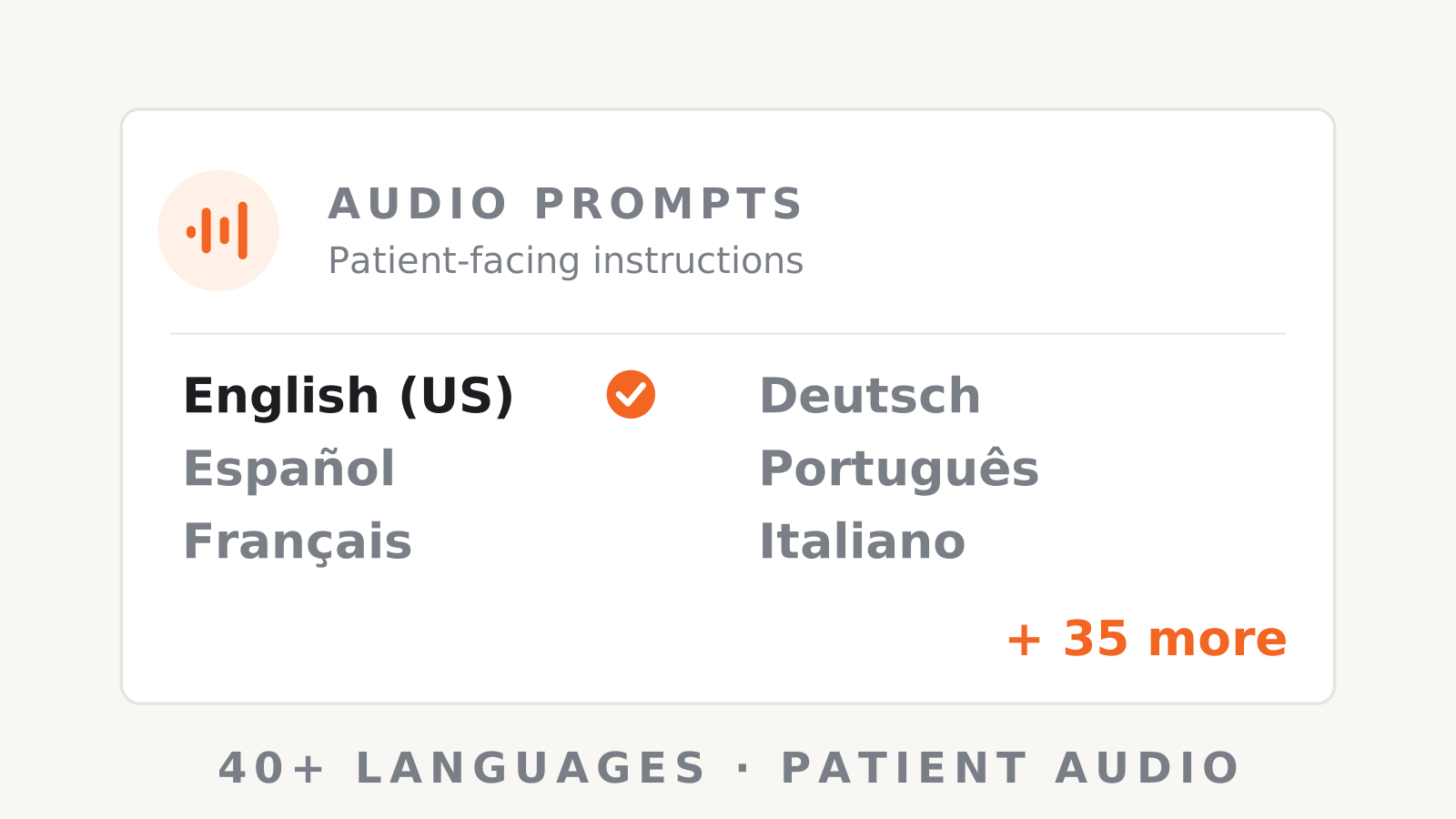
Patient instructions and prompts in over forty languages, essential for occupational color vision testing in diverse workforces, pediatric screening across multilingual schools, and DMV testing in border regions where English-only paper plates create access barriers.
multi language audio

From Fading Plates to Calibrated Pixels.

Carrot VR Headset

Free Trial

Bring Carrot Into Your Clinic—Free for 30 Days.

Free Trial
Clinical Studies

The New Gold Standard in Automated Perimetry

Carrot set the standard for VR visual fields when we introduced the first virtual visual field system in 2018. Today, our clinically validated testing is benchmarked against SITA, delivering accurate, repeatable results that support confident diagnosis and a seamless transition to modern visual diagnostics.

Patient Experience with Virtual Reality-Based Visual Field Test | Weill Cornell Medicine; American Geriatrics Society (AGS)

Learn More

Why Dr. Rosa Chooses Carrot to Treat his Optometry Patients

Learn More

Checklist | What Future-Ready Eye Care Practices Do Differently

Learn More

Kinetic Visual Field Exam

Learn More

Virtual Field is Now Carrot. Celebrating Our Next Leap in Visual Diagnostic Leadership

Learn More

Eye Gallery Improves Patient Experience, Efficiency, and Diagnostic Confidence with Carrot

Learn More

How Scott & Christie Eyecare Associates Improves Glaucoma Care with Carrot

Learn More

How Dr. James Murphy Improved Visual Field Testing for Aging Patients with Carrot

Learn More

Why Dr. Lisa Timmerman, Optometrist at Centerville Family Eyecare, Chooses Carrot

Learn More

Akler Eye Center Improves Patient Experience, Clinic Efficiency, and Diagnostic Confidence with Carrot

Learn More

Why Dr. Copeland Uses Carrot for Efficient Visual Field Screening

Learn More

How Vision Clinic Delivers Consistent Care with Carrot

Learn More

Understanding Ptosis and the Role of the Superior 36 Visual Field Test

Learn More

Testimonials

Why Your Peers Choose Carrot

We’re proud to be the preferred partner of over 2,400 eye care leaders and the only VR diagnostic platform trusted to conduct over 5 million visual field and other vision tests. Whether you’re a single location O.D. or a hospital group CEO, you can be confident that our capabilities will scale to your needs.

“[Carrot] saves staff time. Staff members are able to set patients up pretty quickly and let the audio instructions from the headset guide the patient.”

Dr. James MurphyMD, Scarsdale Ophthalmology

FAQs

Questions about Carrot?

As a company that’s creating and innovating the category of virtual visual field testing, you likely have questions about what we offer, how it scales, and how we support our network of providers and practice administrators. Please browse our FAQs or contact our team.

Carrot delivers the same standard Ishihara plate sequence clinicians have used for over a century—but through calibrated VR optics that eliminate the three biggest sources of variability in paper-plate testing: plate fading (Ishihara himself recommended replacing plates every ten years as the inks shift), exam-room lighting differences (fluorescent vs daylight vs incandescent changes the scoring), and examiner-to-examiner subjectivity in marking responses. Carrot also scores plate-by-plate automatically and tests each eye independently, surfacing acquired asymmetric defects that binocular paper testing tends to miss.

Ishihara is fundamentally a screening test—it reliably flags the presence of red-green color deficiency and can suggest the depth of the deficit through the response pattern, but it doesn’t quantitatively classify protan vs deutan defects the way arrangement tests like Farnsworth D-15 do. For patients who screen positive on Ishihara and need formal classification—whether for occupational certification, neuro-ophthalmic workup, or hereditary disease evaluation—the Farnsworth D-15 protocol is on Carrot’s near-term roadmap and will deliver that classification through the same headset.

A complete Ishihara screening on Carrot typically takes approximately 1 minute per eye. Each plate is presented for a standardized exposure with the patient’s response captured before advancing.

Carrot’s color vision exam supports CPT 92283 (color vision examination, extended)—the standard reimbursable code for clinical color vision testing. The exam produces the documentation required to support the code: standardized presentation, plate-by-plate response capture, per-eye scoring, and timestamped exam metadata. Specific reimbursement rates and code applicability vary by payer and clinical scenario—consult your billing team or the most recent Medicare Physician Fee Schedule for current figures.

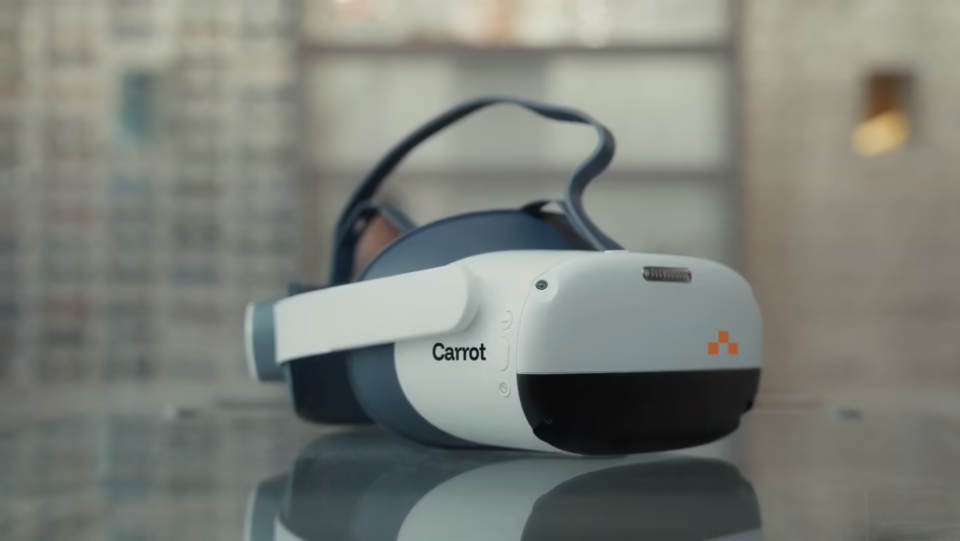
Yes. Color vision testing runs on the same wireless Carrot headset as visual field testing, contrast sensitivity, pupillometry, and ocular motility. Technicians can queue multiple exams in a single patient session through the Carrot portal—one device, one setup, one consolidated report set—without moving the patient between rooms or relaunching the headset between tests. This is particularly useful for neuro-ophthalmic workups where color vision pairs naturally with visual field and pupillometry testing.

Yes, it is included in all subscription tiers.