Contrast Sensitivity
Quantitative Contrast Sensitivity Testing










How it works
Letter Charts Out. Calibrated Vision In.
Contrast Sensitivity Features
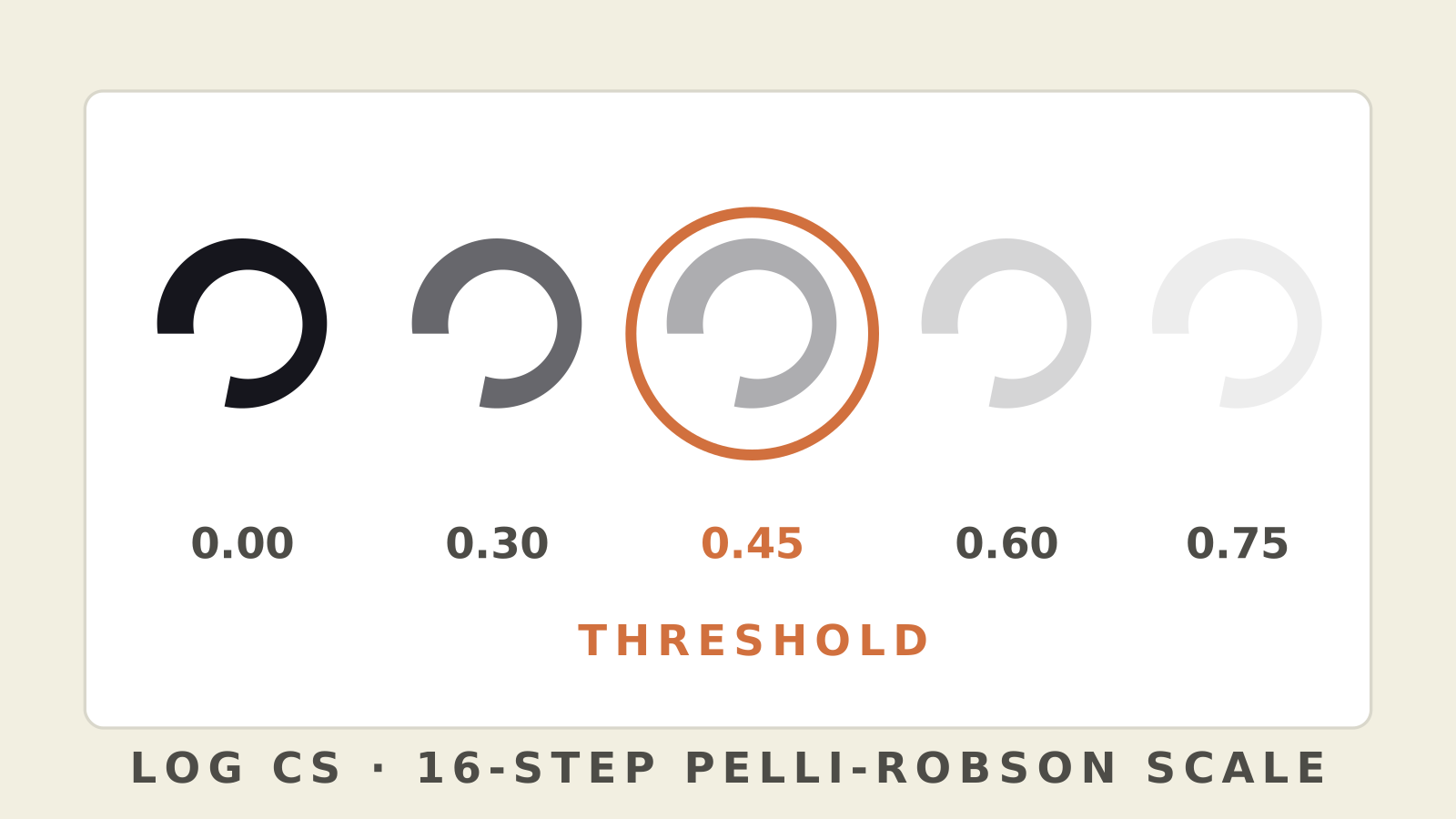
Contrast Threshold Score
Contrast Sensitivity Features
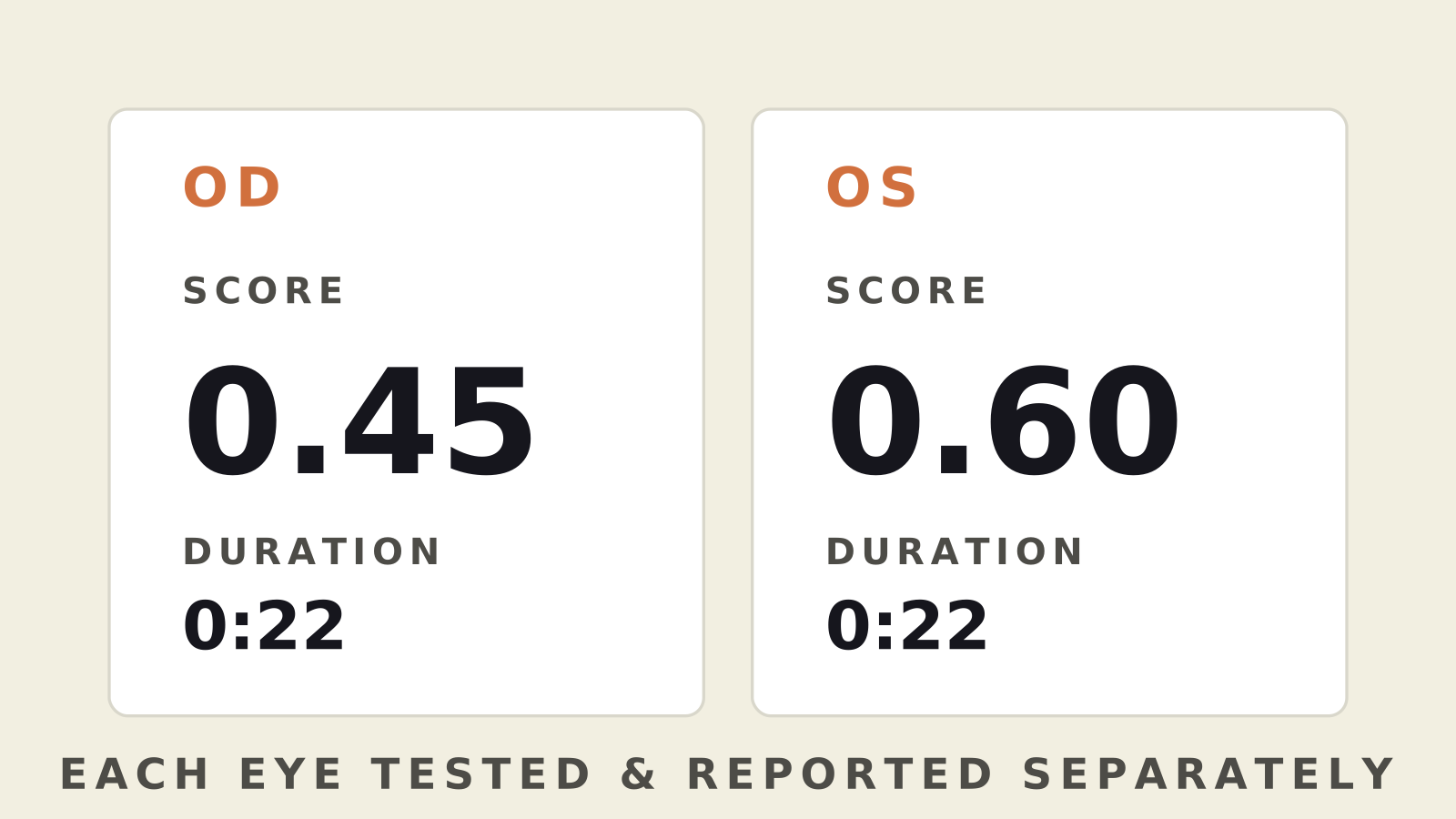
Per-Eye or Binocular Testing
Contrast Sensitivity Features
Forced-Choice Methodology

Contrast Sensitivity Features
Clinically Equivalent to the Pelli-Robson

Free Trial
Bring Carrot Into Your Clinic—Free for 30 Days.
The New Gold Standard in Automated Perimetry
Carrot set the standard for VR visual fields when we introduced the first virtual visual field system in 2018. Today, our clinically validated testing is benchmarked against SITA, delivering accurate, repeatable results that support confident diagnosis and a seamless transition to modern visual diagnostics.
Testimonials
Why Your Peers Choose Carrot
FAQs
Questions about Carrot?
How does Carrot's contrast sensitivity testing compare to a Pelli-Robson chart?
Carrot’s contrast sensitivity test is clinically equivalent to the Pelli-Robson chart and validated against it. Results are reported on the same 0.00–2.25 log CS scale Pelli-Robson uses, so clinical norms, interpretation thresholds, and existing patient histories carry forward. The methodology differs—Carrot uses a Landolt C optotype with four-alternative forced-choice response and an adaptive staircase, where Pelli-Robson uses letter triplets read aloud by the patient. The result is the same diagnostic information without the printed chart’s fading, lighting dependence, or examiner-scored subjectivity.
How long does the contrast sensitivity test take?
Carrot’s contrast sensitivity exam takes approximately 22 seconds per eye, with the adaptive staircase algorithm converging on threshold without testing every level. Full setup, instructions, and bilateral testing typically completes in 1–2 minutes.
Why does contrast sensitivity matter if my patient sees 20/20?
Snellen visual acuity measures how small a high-contrast letter a patient can resolve, but most real-world vision tasks like reading low-contrast text, driving at night, recognizing faces, navigating dim environments depends on contrast at lower spatial frequencies. A patient who reads 20/20 on the chart can still have measurable functional vision loss from early glaucoma, AMD, cataracts, or optic neuropathy. Contrast sensitivity quantifies that gap and produces a clinically actionable score where Snellen produces a pass.
Is contrast sensitivity testing reimbursable?
Contrast sensitivity doesn’t have a dedicated, broadly-reimbursed CPT code today. Some practices document it under 92499 (unlisted ophthalmological service). The stronger value case lives in clinical and competitive impact: contrast sensitivity supports premium IOL conversations and outcome documentation, strengthens glaucoma progression tracking alongside visual fields, and provides objective documentation for patient counseling on driving and low-light performance. For current billing guidance specific to your practice, consult your RCM or billing team.
Can I run contrast sensitivity alongside a visual field exam in the same session?
Yes. Contrast sensitivity runs on the same Carrot headset as 24-2, 24-2C, 10-2, color vision, ocular motility, pupillometry, and other exams on the platform. Technicians can queue multiple tests in a single patient session through the Carrot portal—one device, one setup, one consolidated report—without moving the patient between rooms or devices. Audio instructions guide the patient through each test in over 40 languages.
Is contrast sensitivity included in all Carrot subscriptions or is it an add-on?
Contrast sensitivity is included in Pro subscriptions. See our pricing page or speak with your account manager for full subscription details.