Compare
Humphrey Visual Field Analyzer (HVFA) vs. Carrot: Cost, Price & Alternatives
Product Overview
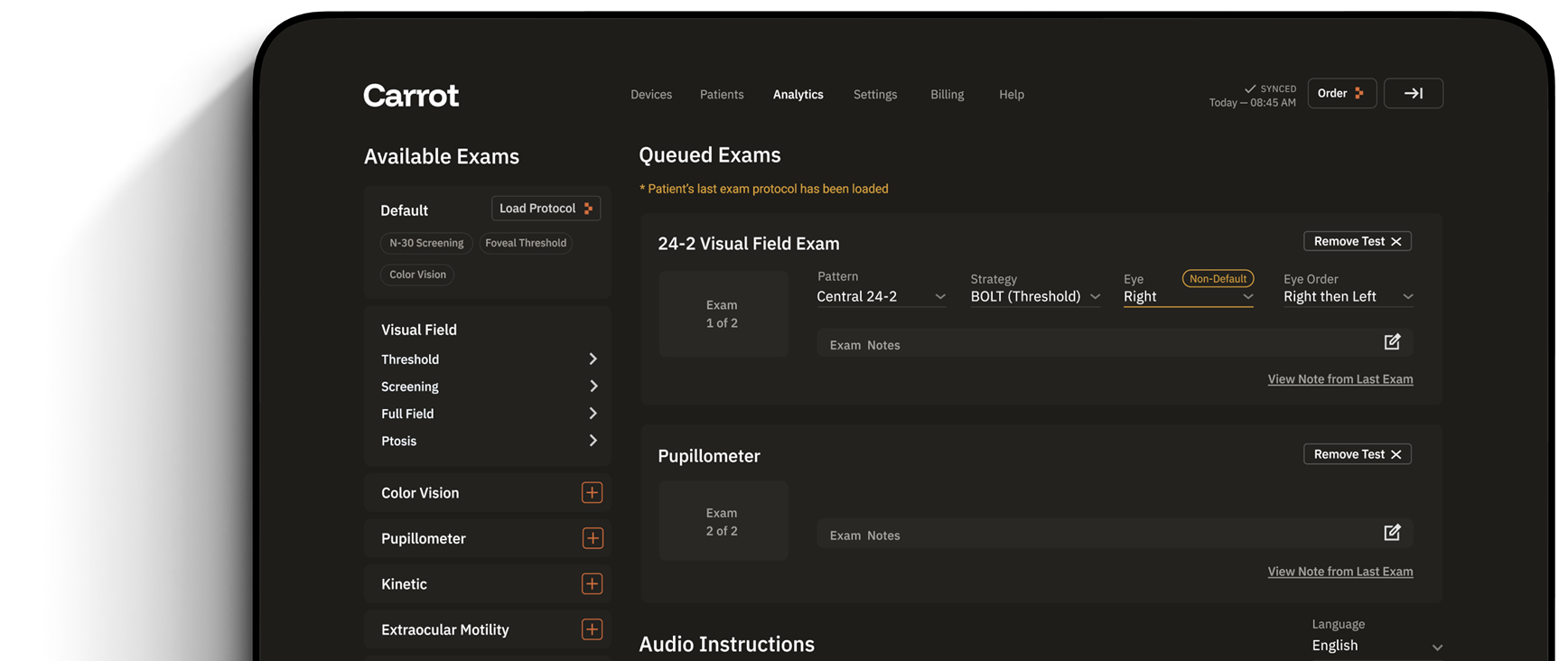
A Complete End-to-End Visual Diagnostic Platform
Tests
15 Essential Exams. 5 CPT Codes. One Platform.
Insights
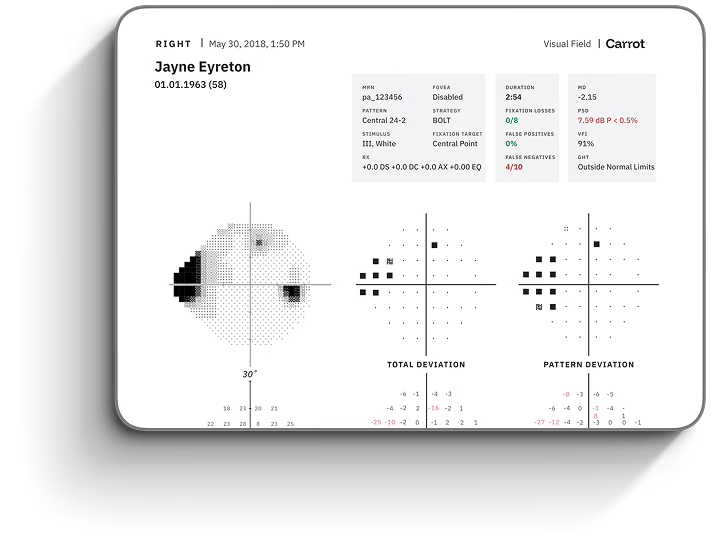
Diagnostic Data that Powers Exceptional Care
Connections
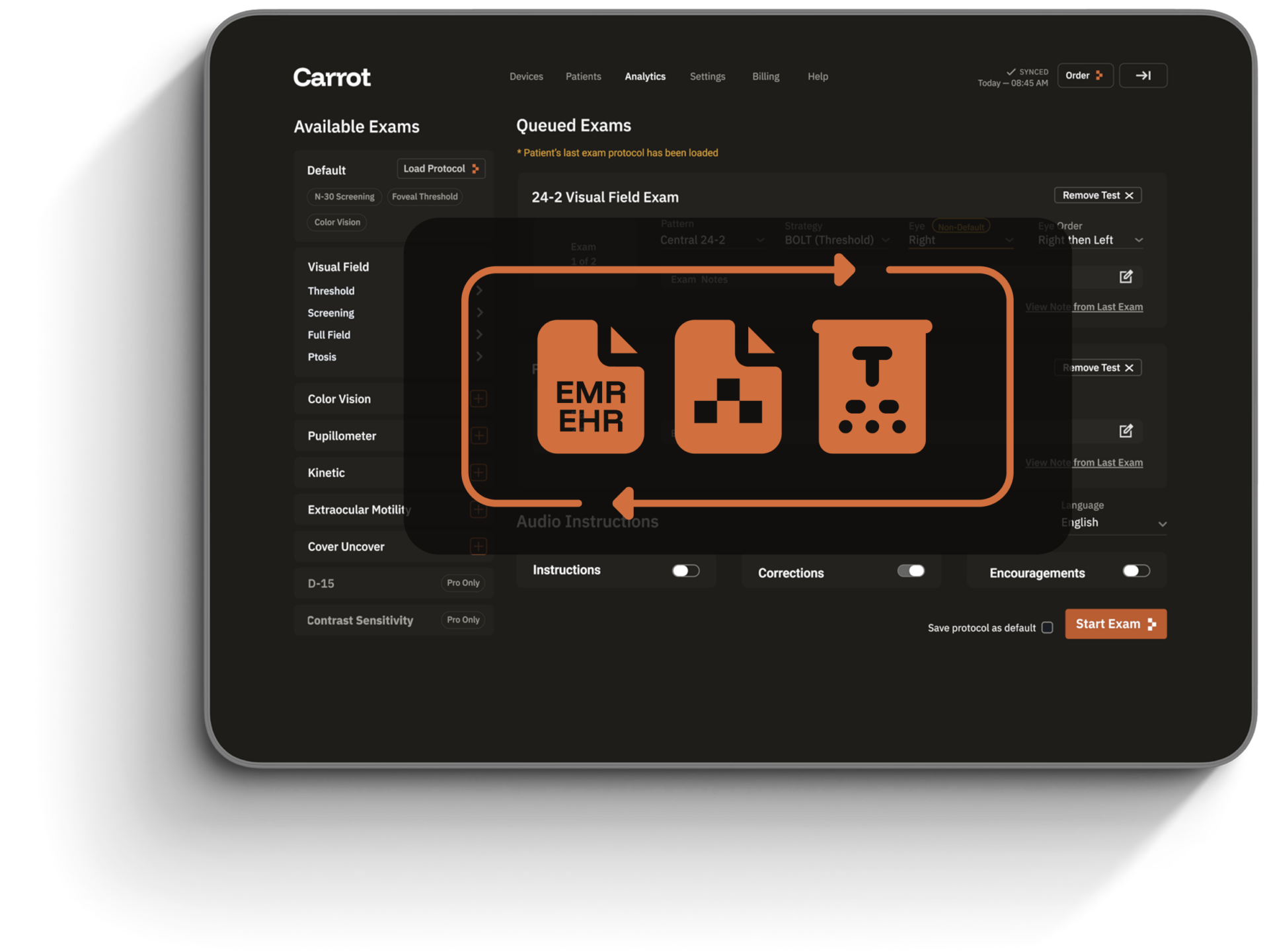
Built for Interoperability
Automations
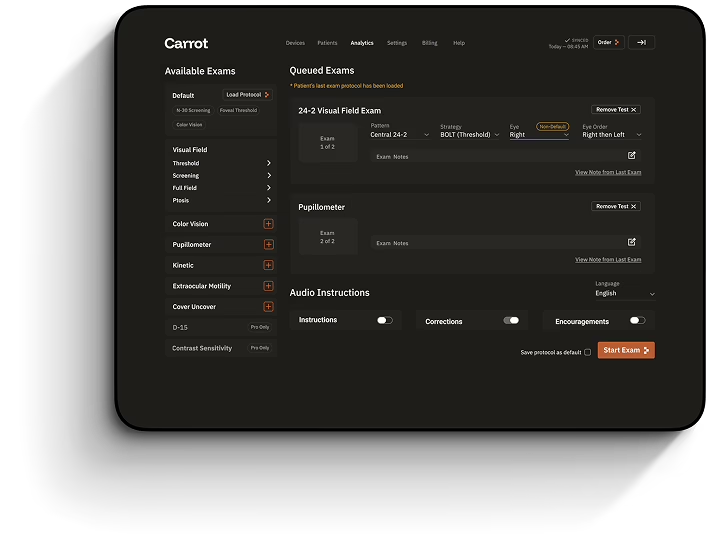
Increase Capacity without Increasing Staff
Support
Real, Human Help
Components
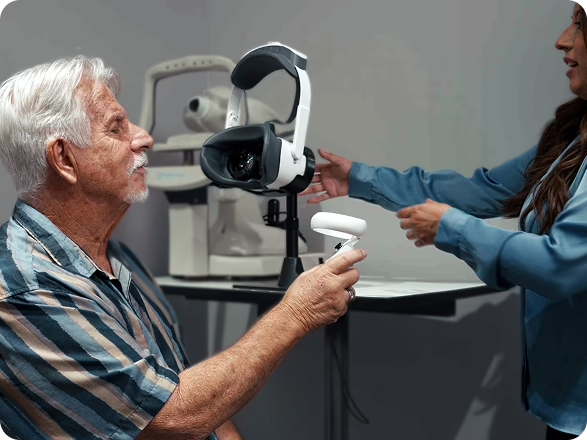
Hardware That Works for Life
Carrot vs. Humphrey: Side-by-Side Comparison
Accuracy Is Expected. Carrot Is Exceptional.


Accuracy plus automation, comfort, scalability, and modern workflows

Accurate, but with lower patient completion and satisfaction rates
Complete end-to-end visual diagnostics platform—perimetry, pupillometry, EOM, and functional vision testing

Limited to visual field testing only
Patient-guided exams and automated quality controls reduce technician time

Technician-heavy setup and in-room supervision required
Faster exams and parallel testing increase daily capacity
One patient per device; throughput tied to room availability

Portable headset—no dedicated dark room required
Large tabletop device requiring permanent space
Published studies show higher comfort and clarity scores vs traditional perimetry
Chin rest and bowl posture may reduce comfort, patching is a pain
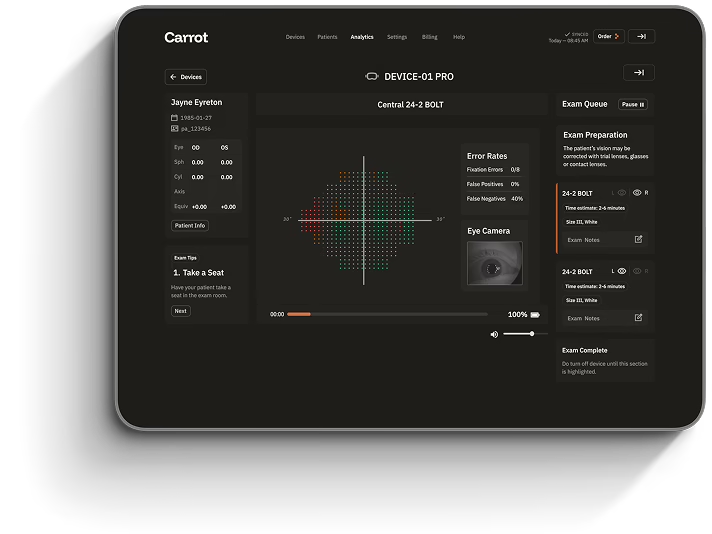
Real-time eye view + automatic photo/video documentation
Lorem ipsum dolor sit amet, consectetur adipiscing elit, sed do eiusmod tempor incididunt ut labore et dolore magna aliqua.
Networked platform enabling parallel testing across locations with centralized data, reporting, and utilization analytics
Isolated devices with no unified system for cross-location data, reporting, or performance tracking
Cloud-enabled access + DICOM 360° real-time sync
Primarily workstation-based; limited remote access (some still require floppy disks)
Built-in analytics dashboards for utilization and performance
Limited operational reporting and no clarity on adoption and usage across locations or exam lanes
Software updates and new exams added regularly
Hardware-centric upgrade cycles are expensive and leave you without a visual field machine
Multiple reimbursable exams per visit (VF, pupillometry, EOM, color vision)
Single reimbursable test (perimetry only)
Monthly or annual subscriptions starting as low as $199/mo ensures ROI in days or weeks, not months or years
$25K–$40K+ purchase price plus service contracts










Free Trial
Bring Carrot Into Your Clinic—Free for 30 Days.
Testimonials
Why Your Peers Choose Carrot
FAQs
Questions about Humphrey vs. Carrot?
Can Carrot replace a Humphrey visual field analyzer?
Yes. Many clinics use Carrot as their primary visual field system. In addition to validated perimetry accuracy, Carrot provides faster exams, automated workflows, better patient comfort, and the ability to scale testing without dedicated rooms or heavy capital investment.
How does Carrot compare to the Humphrey Visual Field Analyzer in accuracy?
Peer-reviewed studies demonstrate strong agreement between Carrot and legacy perimetry, including an r = 0.93 correlation on Visual Field Index. Accuracy is expected—Carrot builds beyond it with automation, efficiency, and modern workflow advantages.
What makes Carrot the new gold standard in visual diagnostics?
Accuracy is table stakes. The new gold standard includes intelligent automation, faster testing, patient-centered design, seamless interoperability, multi-exam capability, and scalable deployment. Carrot delivers it all in one modern platform.
How does Carrot improve clinic workflow compared to traditional perimetry?
Carrot uses patient-guided exams, automated quality controls, and streamlined setup to reduce technician time. Practices can test more patients per day without adding staff, dedicated rooms, or workflow bottlenecks.
Does Carrot require a dedicated visual field room?
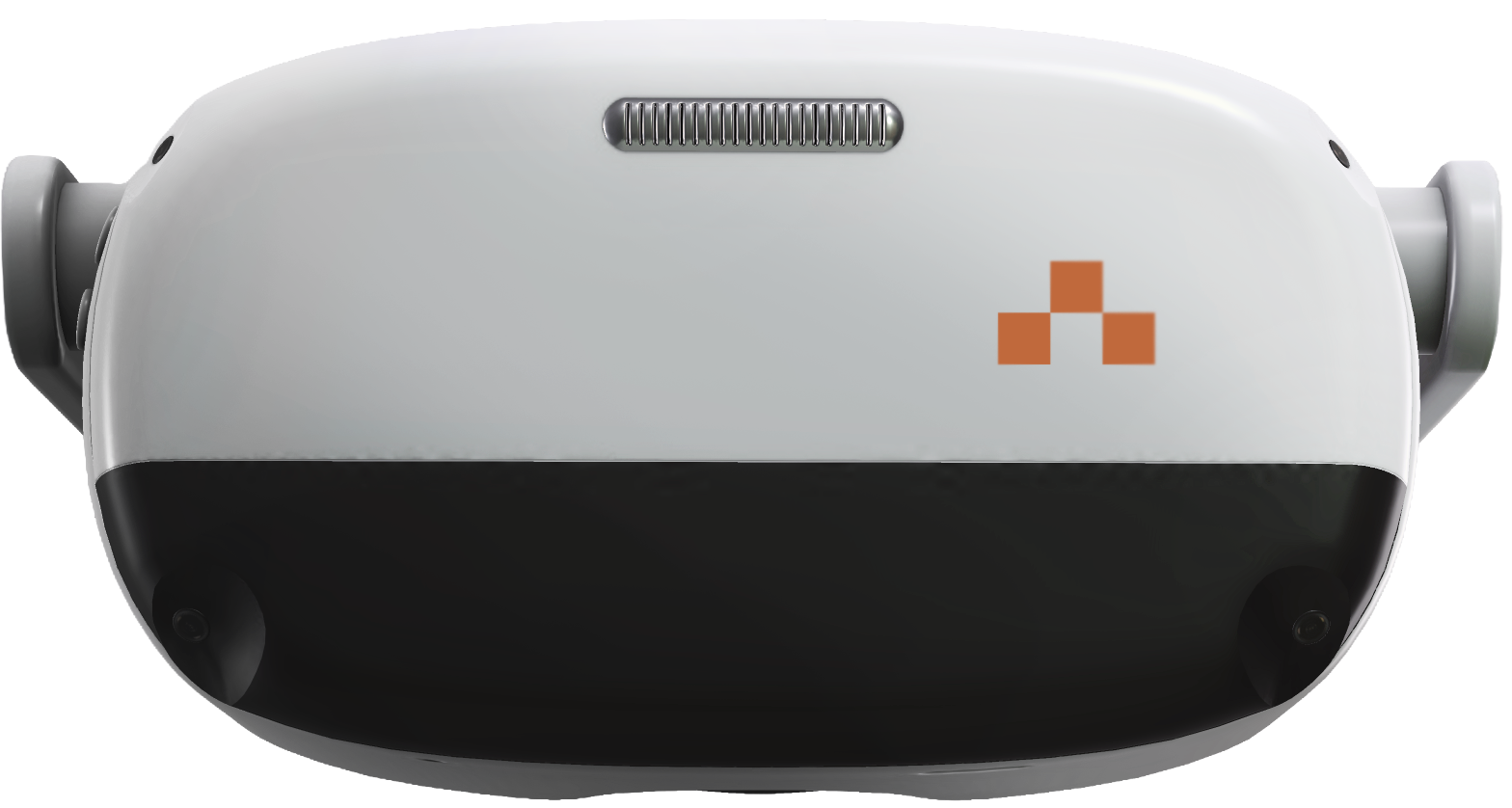
No. Carrot’s lightweight, portable, wireless headset works in any exam lane or open space. Many practices eliminate the need for a dedicated dark room entirely, freeing valuable square footage for revenue-generating care.
Is Carrot comfortable for patients compared to traditional bowl perimetry?
Published studies show higher patient comfort, clarity, and ease scores compared to traditional perimetry. Without a chin rest or rigid posture requirements, Carrot improves accessibility for mobility-limited patients and enhances overall experience.
Can Carrot scale across multiple clinic locations?
Yes. Carrot is designed for scalability. Practices can deploy multiple headsets across lanes or locations and manage them through centralized dashboards, making it ideal for growing multi-site organizations and health systems.
How does Carrot compare to portable perimetry devices?
Unlike basic portable perimeters, Carrot is a complete end-to-end visual diagnostics platform. It combines clinically validated testing with live exam oversight, automated reliability monitoring, cloud-based reporting, analytics, and scalable deployment.
Does Carrot require financing like a Humphrey Field Analyzer?
No. While many practices finance traditional capital equipment purchases, Carrot is offered as an affordable subscription model. This eliminates large upfront payments, long-term contracts, and reduces financial risk associated with depreciation and equipment replacement.
What is the cost of a Humphrey Visual Field Analyzer?
The purchase price of a Humphrey Visual Field Analyzer (HVFA) typically ranges from $25,000–$40,000+, depending on model and configuration. Additional costs may include service contracts, maintenance, software upgrades, and eventual replacement or depreciation.
What is the Zeiss Humphrey Visual Field Analyzer price?
Zeiss Humphrey Field Analyzer pricing varies by model and features, but new systems generally require a significant upfront capital investment. Practices should also factor in long-term service agreements and upgrade costs when evaluating total ownership expense.
Is it worth buying a used Humphrey visual field machine?
Used Humphrey visual field analyzers may be available for sale through secondary markets. However condition, calibration history, warranty status, and repair risk vary. Many clinics weigh the lower upfront cost against potential maintenance issues and limited future scalability.
How much does it cost to replace a Humphrey visual field analyzer?
Replacing a Humphrey visual field machine typically requires another capital purchase in the $25K–$40K+ range, plus installation and service agreements. Some practices instead evaluate modern subscription alternatives that avoid large replacement costs altogether.
What are the ongoing maintenance costs of a Humphrey visual field analyzer?
In addition to the purchase price, Humphrey systems may require service contracts, calibration, repairs, and eventual hardware upgrades. These long-term costs should be considered when evaluating total ownership expenses.