Introduction: The Overlooked Variable in Test Accuracy
Visual field testing plays a central role in diagnosing and managing conditions such as glaucoma and neurological disease. It is a routine part of care, and the results often guide critical decisions around treatment and long-term monitoring.
Conversations about test accuracy typically focus on the technology itself. Device capabilities, algorithms, and clinical validation are all important factors, and they are often used as primary benchmarks for performance evaluation.
However, another variable directly affects the quality of visual field test results and is often underappreciated in clinical discussions. Improved patient comfort during visual field testing influences how well a patient can engage with the exam and complete it as intended.
When patients experience discomfort, fatigue, or confusion during the test, their responses become less consistent, potentially leading to fixation issues, increased variability, and ultimately reduced data reliability.
To improve patient comfort during visual field testing, a more modern approach to test capture is required. Read on to learn about the patient discomfort realities of tabletop perimeters and how modern, portable virtual visual field devices provide a solution to this challenge.
Why Visual Field Testing Can Be Difficult to Complete
When visual field testing is performed with a tabletop perimeter such as the Humphrey visual field analyzer, it places unique demands on patients, both physical and mental. The process requires sustained attention, consistent positioning, and the ability to respond accurately to repeated visual stimuli over several minutes. For many patients, maintaining that level of engagement is difficult, even under ideal conditions.
From a physical standpoint, the testing environment associated with tabletop perimeters can be challenging to tolerate. Patients are required to remain in a fixed position throughout the exam, which can lead to discomfort in the neck, back, and shoulders. The length of the test further contributes to fatigue, particularly for patients with limited stamina or mobility.
These challenges are more pronounced in certain populations. Elderly patients, patients with neurological conditions, and those new to visual field testing often have more difficulty maintaining focus and comfort throughout the exam in a room-bound testing setup. Even small adjustments in positioning or posture can interrupt their ability to stay engaged.
Mental fatigue also plays a significant role. Visual field testing with a tabletop perimeter requires sustained concentration for up to 20 minutes and repeated responses to subtle, unpredictable stimuli. Over time, this can lead to lapses in attention, slower response times, and uncertainty about whether the test is being performed correctly. Anxiety around performance can further impact consistency.
These experiences are familiar in clinical practice. As Dr. James Murphy, an ophthalmologist and glaucoma specialist, explains, “I serve a population of patients who are in their 70s, 80s, and 90s. Many of them have spine and neck issues, are wheelchair-bound, or otherwise have mobility and stamina limitations.”
When patients are uncomfortable, fatigued, or unsure how to proceed, it becomes more difficult to complete a longer visual field test consistently and reliably.
When practices improve patient comfort during visual field testing, they help reduce these barriers and support better engagement throughout the exam.
The Direct Link Between Comfort and Accuracy
The impact of patient comfort during visual field testing is most apparent in the quality and reliability of the collected data.
In clinical practice, reduced comfort often presents as measurable variability in test performance. Patients who struggle to maintain focus may exhibit decreased fixation stability, increased variability in response patterns, and lower overall test reliability.
Anxiety can further influence how patients respond to stimuli. Some patients may overrespond, leading to elevated false-positive rates. Others may hesitate or miss stimuli entirely, contributing to false negatives. Both patterns make it more difficult to interpret results with confidence, particularly when monitoring for subtle progression.
Fatigue introduces additional variability as the test continues. Response times may slow, attention may drift, and sensitivity measurements may become less consistent across the visual field. These changes can reduce the repeatability of results from one visit to the next.
In many cases, these reliability issues lead to retesting, either during the same visit or at a future appointment, which adds time, increases patient burden, and delays clinical decision-making.
As Dr. Janelle Davison, OD, mentioned when discussing the challenge of obtaining a reliable visual field test for a patient using a tabletop perimeter, “We could never get a reliable field for her, and I’m assuming it was just that positioning wasn’t comfortable for her.”
Clinics that improve patient comfort during visual field testing create the conditions for more stable fixation, more consistent responses, and more reliable data that can be used with greater clinical confidence.
Common Patient Experiences that Negatively Impact Visual Field Test Results
| Patient Experience Factor | Impact on Test Results |
|---|---|
| Fatigue | Missed stimuli, unreliable fields |
| Anxiety | Over-clicking or hesitation |
| Poor positioning | Fixation loss |
| Confusing instructions | Inconsistent responses |
What Unreliable Results Mean for Patient Care and Practice Efficiency
When patient comfort during visual field testing is compromised, the impact extends beyond the test itself. It affects both clinical decision-making and the day-to-day efficiency of your practice.
Inconsistent or unreliable data often leads to repeat testing. A test that cannot be trusted clinically needs to be redone, adding time to the schedule, increasing staff involvement, and creating additional strain on the patient.
Delays in obtaining reliable results can also affect the timing of diagnosis and treatment decisions. When data is variable from one visit to the next, it becomes more difficult to confidently assess progression or determine whether a treatment plan is working as intended.
Over time, this variability introduces friction into the clinical workflow:
- Additional time is required to complete or repeat tests
- Technicians need to provide more hands-on support
- Schedules become less predictable as certain appointments run longer than expected
These inefficiencies compound throughout the day. A single unreliable test can delay subsequent appointments, reduce overall throughput, and increase pressure on both staff and providers.
There is also a broader impact on clinical confidence. When test results vary or require frequent repetition, it becomes harder to rely on the data when making decisions. This uncertainty can extend the time needed for patient conversations and follow-up planning.
Improving patient comfort during visual field testing helps reduce variability at the source. More reliable data support more confident clinical decisions and create a more efficient, predictable workflow across the practice.
What a Better Testing Experience Looks Like
Improving patient comfort during visual field testing starts with rethinking how the test is delivered. Many practices are moving toward virtual visual field testing, enabling the exam to be performed in a more flexible, patient-friendly manner.
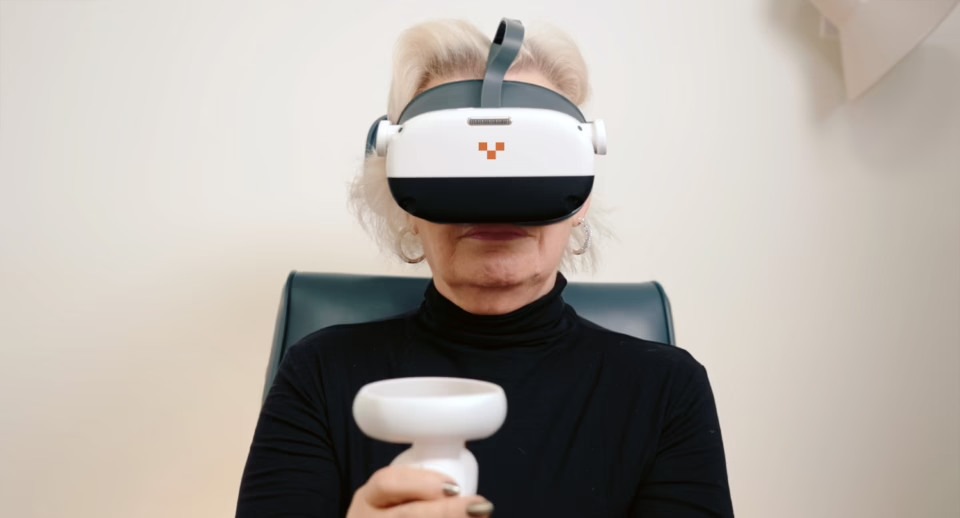
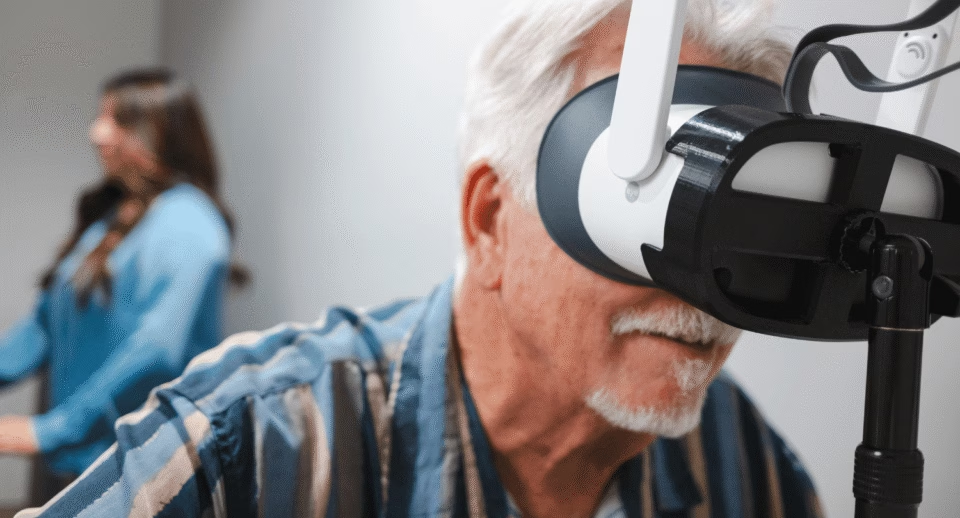
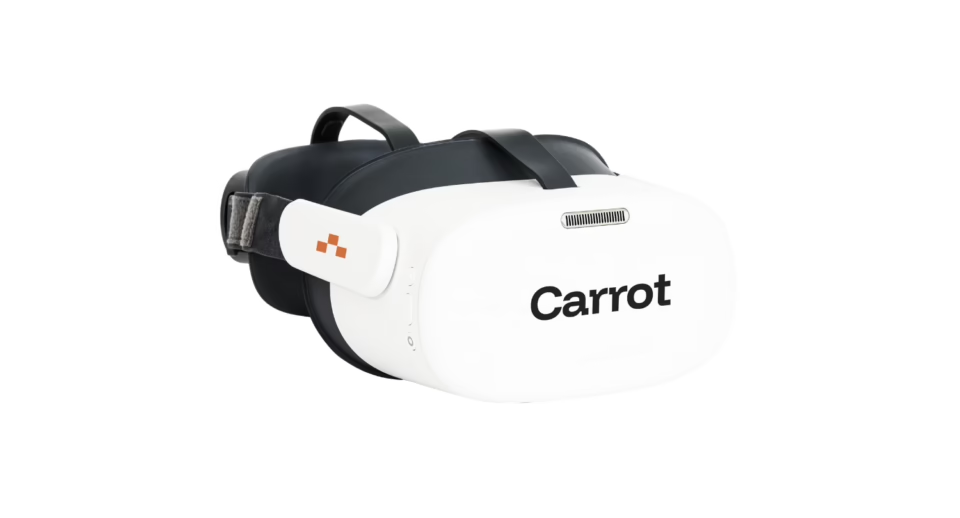
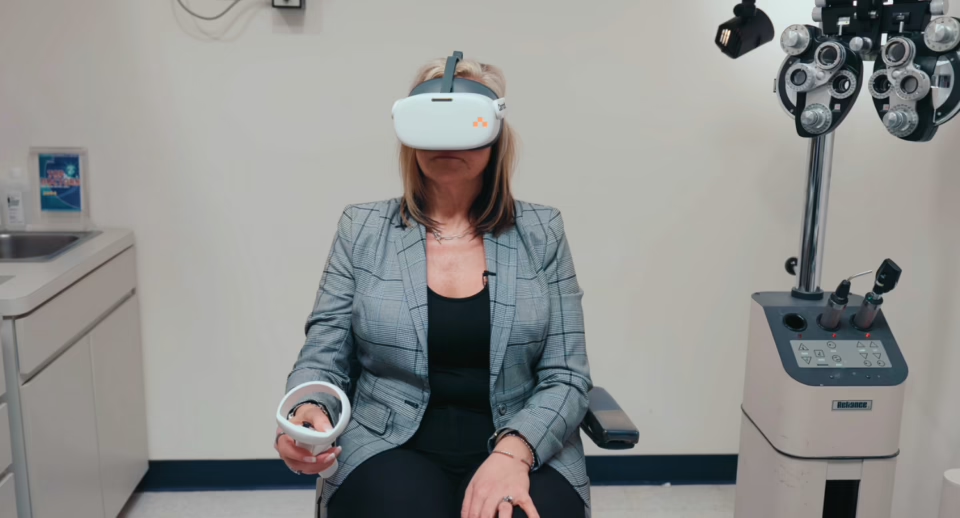
Instead of requiring patients to remain in a fixed position for the duration of the test, virtual visual field testing uses a wearable headset that allows a more natural posture. The headset modality reduces physical strain and allows patients to remain more comfortable throughout the exam.
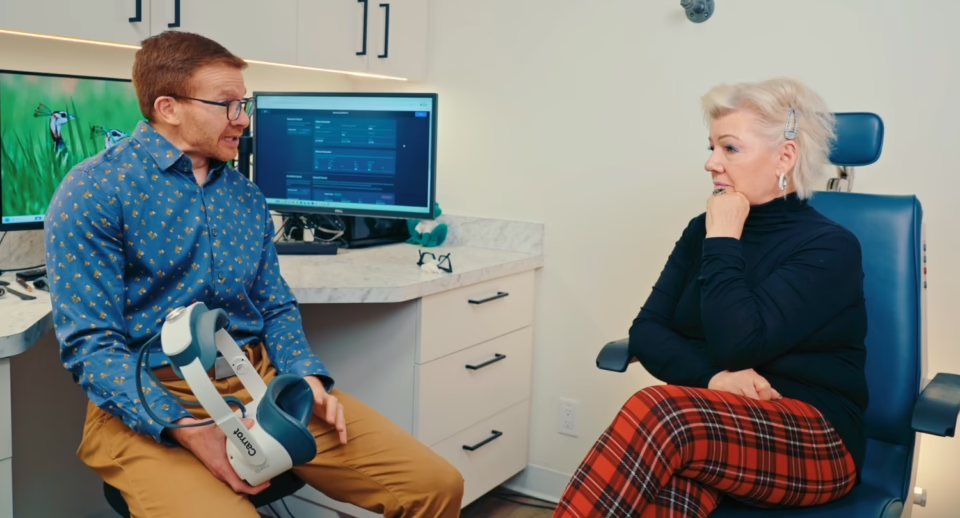
The testing experience itself is also more intuitive. With the Carrot Visual Diagnostic Platform, clear, guided instructions help patients understand what to expect and how to respond, reducing confusion and improving consistency. Patients can focus on the task without constant staff intervention.
Test duration also plays an important role. Shorter, more efficient exams reduce fatigue and make it easier for patients to stay engaged from start to finish, particularly for elderly patients and those with limited stamina.
As Dr. Adam Rosa, OD, explains, “Being able to… have them relax it back… We put it on their head. We let them kind of just chill… improves the flow when we’re not having to take breaks for patients who are feeling uncomfortable.”
Practices that use Carrot often see this shift in patient experience firsthand. Patients find the test easier to complete and are more willing to engage with the process. As Dr. Sismanis notes,
“Patients really do love [Carrot] and prefer it over tabletop perimeters for its ease of use and comfort.”
These improvements have a measurable impact on test performance. When patients are more comfortable, they can stay focused and respond more consistently, which leads to more reliable data and fewer interruptions during the exam.
Improving Comfort Improves Outcomes
Patient comfort during visual field testing is a significant factor in both clinical accuracy and day-to-day operations. When patients remain engaged and complete the test consistently, the data become more reliable and easier to interpret, reducing the need for repeat testing, supporting more confident decision-making, and helping keep the clinic running on schedule.
Small improvements in the testing experience can have a measurable impact across the entire practice. More consistent results lead to fewer delays, less staff intervention, and a more predictable workflow. Over time, this creates a better experience for both patients and care teams while improving overall efficiency.
See How Practices Are Improving Visual Field Testing Outcomes
Clinicians are already finding ways to improve patient comfort during visual field testing while strengthening accuracy and workflow efficiency.
Watch our webinar with Dr. Maria Sampalis, OD, and learn how to:
- Improve testing reliability
- Reduce retests and variability
- Streamline patient flow and staff workflows
👉 Access the webinar: Running an Efficient, High-Growth Eye Care Practice