The Bottleneck You Don’t See
Visual field testing is a critical part of how you deliver comprehensive care and manage conditions like glaucoma and neurological disease. It is a routine part of the visit and plays an essential role in the clinical decisions you make every day.
Yet many practices have not fully explored how to improve visual field testing workflows. The focus is often placed on accuracy and consistency of results, rather than on how the testing process fits into the broader flow of the visit.
In practice, that gap creates a meaningful challenge. A process that is essential for patient care can also introduce friction into the clinic day, affecting patient flow, staff efficiency, and overall throughput in ways that are not immediately obvious.
Most practices focus on scheduling, staffing, or patient volume when they think about efficiency. What often gets overlooked is how diagnostic workflows actually perform once the visit begins.
Where Workflow Breakdowns Start
Opportunities to improve visual field testing workflows rarely present themselves as clear, single-source solutions. Instead, workflow painpoints reveal themselves as small, compounding moments throughout the day, often in ways that feel routine or unavoidable.
Consider a typical clinic schedule that is running on time. Patients are moving through pre-testing, technicians are managing their workflows, and providers are staying on pace. Then an elderly patient arrives for an Esterman visual field test. She has difficulty getting comfortable with the setup and struggles to follow the testing process. A technician steps in to guide her more closely, spending additional time ensuring the test is completed correctly.
What is normally a 20-minute test becomes a 40-minute, high-supervision exam.
During that time, the technician is no longer available to start the next patient. That appointment begins 15 minutes late. From there, the delay carries forward. The schedule tightens. Staff begin adjusting in real time to keep things moving.
Lunch breaks are pushed back. Calls to care, partners are postponed until the next day. By 5 o’clock, the final appointment is expedited to stay on schedule, and the physician leaves with a sense that the last patient did not get the time or attention they deserved.
This type of workflow inefficiency is something no practice wants, yet it is often mentally categorized as an unavoidable aspect of eye care. The frustration is felt across the team and by patients, but it is not always traced back to its source. In this case, it began with a single visual field test that required more time, supervision, and coordination than the workflow could absorb.
How Visual Field Testing Constrains Clinic Flow
The scenario above is not an exception. It reflects a structural constraint within many eye care workflows.
Visual field testing is often a fixed, resource-intensive step. It requires dedicated equipment, can occupy a room when using a tabletop perimeter, and depends on hands-on staff involvement. As a result, it becomes a bottleneck that limits patients’ flexibility in moving through the clinic.
When one test takes longer than expected, the system has little ability to absorb the delay. The impact is not isolated to a single patient. It affects technician availability, room utilization, and provider schedules across the day.
This dynamic is why visual field testing has an outsized influence on clinic performance. It does not just add time to a visit. It defines the amount of variability the workflow can tolerate.
Improving visual field testing workflows is one of the most effective ways to increase capacity without adding staff or extending hours. When the constraint is reduced, patient flow becomes more predictable, wait times decrease, and the entire care team operates with less friction.
Workflow Bottlenecks in Eye Care Practices
Across clinics and practice groups of all sizes, the same workflow bottlenecks appear again and again:
| Workflow Step | Efficiency Weak Point | Impact |
|---|---|---|
| Setup | Manual, technician-led | Slows patient flow |
| Testing | One patient at a time | Limits throughput |
| Room usage | Dedicated testing space required | Creates bottlenecks |
| Staff time | Continuous supervision | Reduces efficiency |
These constraints are not always obvious in isolation. But together, they shape how your entire clinic operates.
What These Delays Are Really Costing You
These inefficiencies are not just operational. They affect performance across your entire practice.
When workflows slow down:
- You see fewer patients per day
- Staff spend more time managing logistics
- Schedules become less predictable
The impact extends beyond workflow into revenue.
Tests are being performed, but not always consistently. When visual field testing is skipped, delayed, or not completed under the right conditions, it can lead to lost or inconsistent billing, reduced reimbursement, and missed opportunities to capture the full value of each patient visit.
When workflows break down, revenue-generating moments are lost. A delayed test can push a patient out of the schedule entirely. A rushed exam can result in incomplete or lower-quality data that does not support appropriate coding. In some cases, testing that should occur simply does not happen because staff and rooms are tied up elsewhere.
Over time, these breakdowns create measurable financial gaps. Revenue that should be captured is left on the table. Capacity is underutilized even when demand is high. Because these issues occur in small, distributed moments throughout the day, they are difficult to track directly, making the true financial impact easy to underestimate and rarely addressed at the system level.
This point is where many practices get stuck. The work is happening, and the team is doing what they can to keep pace. But without a system designed to surface inefficiencies and support consistency, performance remains uneven, and the underlying issues remain largely invisible.
Small inefficiencies compound into meaningful constraints on throughput, revenue, and growth.
For more on The Financial Impact of Upgrading to Virtual Visual Field Testing: A Cost-Benefit Analysis, download our white paper.

Rethinking Visual Field Testing in the Clinical Workflow
So, what are forward-thinking eye care practices doing to break the cycle of visual field testing as an efficiency constraint?
They are turning to modern, purpose-built technology.
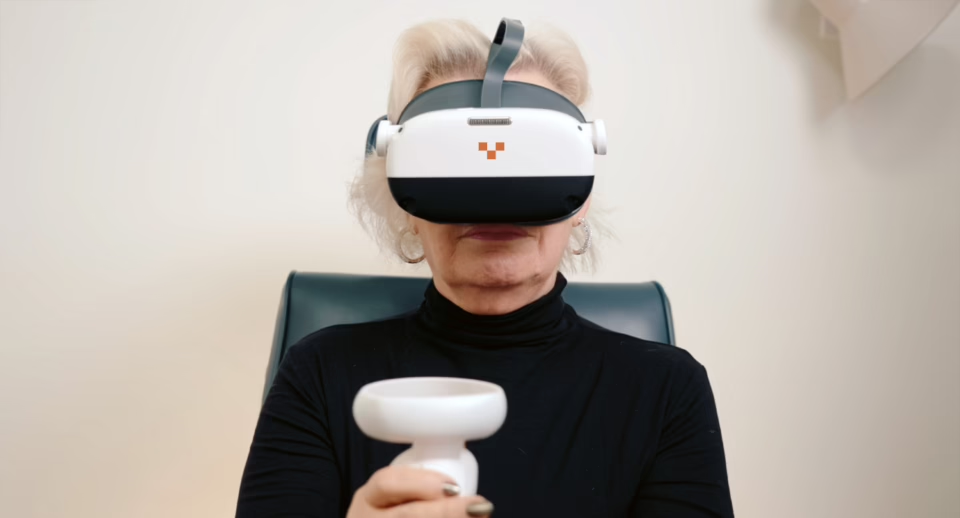
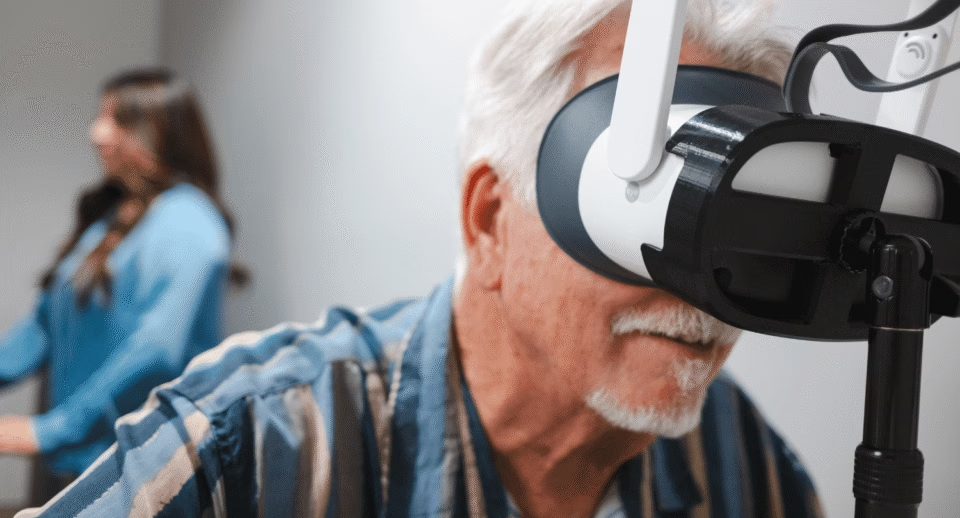
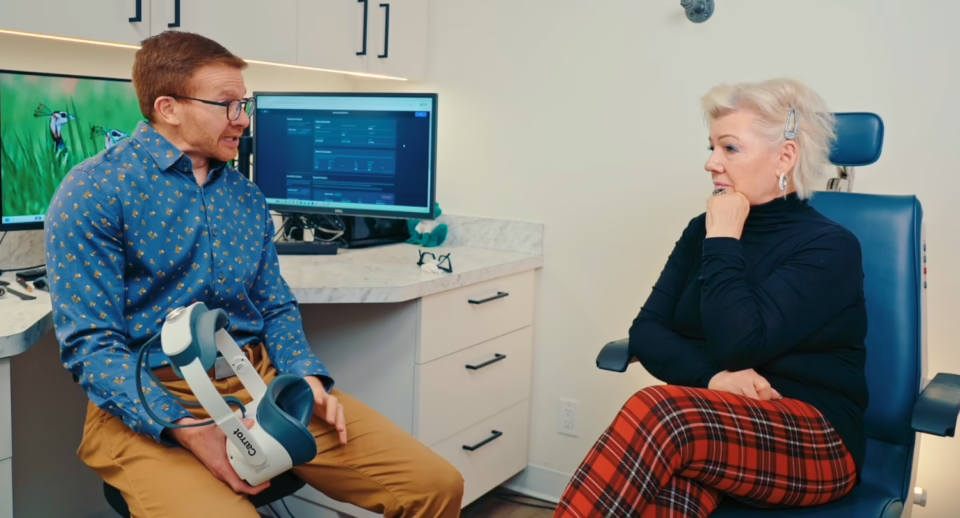
Virtual visual field testing changes vision diagnostic workflows function. Instead of being tied to a single room, a single device, and extended technician oversight, testing becomes portable, flexible, and easier to integrate into the natural flow of the visit.
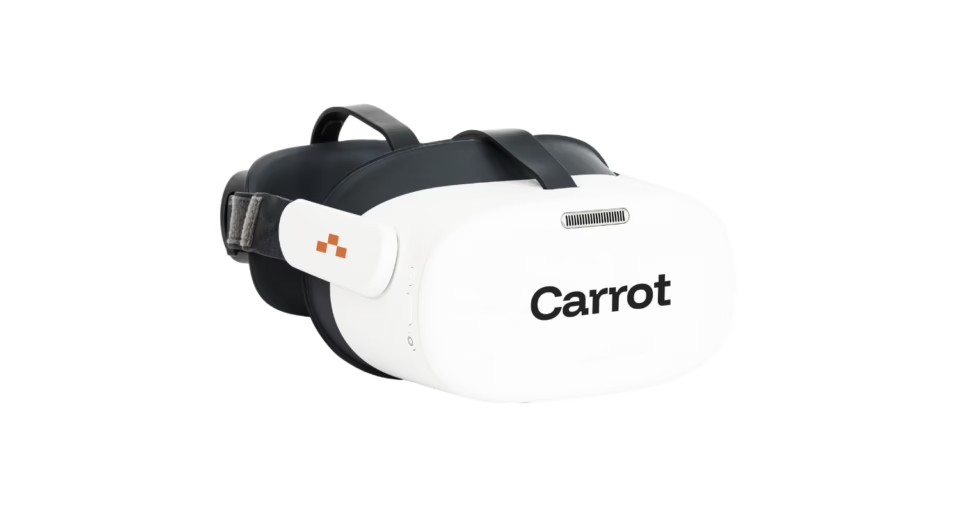
With Carrot, visual field testing shifts from a source of lost efficiency and revenue leakage to a consistent driver of both. Its portable hardware allows testing to happen in parallel with other parts of the exam rather than sequentially. Shorter test times reduce the variability that disrupts schedules. And seamless integration with over 100 EMR and EHR systems ensures that completed tests are automatically captured, documented, and available for clinical and billing workflows.
The result is an improved visual field testing workflow that can absorb variability instead of breaking under it. Patients move through the clinic more predictably. Staff can stay focused on higher-value tasks rather than constantly adjusting for delays. Providers have access to complete, timely data without added friction.
This outcome reflects what happens when visual field testing supports the workflow rather than constrains it.
See How High-Performing Practices Improve Workflow Efficiency
If you are looking to improve throughput, reduce bottlenecks, and run a more efficient clinic, proven approaches are already working in practices like yours.
Learn how clinicians are improving visual field testing workflows, improving patient flow, and increasing capacity without adding staff or space.
👉 Access the webinar: Running an Efficient, High-Growth Eye Care Practice